Fatigue Solutions for Ozempic and Wegovy Users

Fatigue is a common issue for those using Ozempic or Wegovy. These medications, designed to aid weight loss and manage blood sugar, often reduce calorie intake and hydration, leading to low energy. But there are practical ways to manage this side effect:
- Stay Hydrated: Drink 64–100 oz of fluids daily and replenish electrolytes through low-sugar drinks or water-rich foods.
- Prioritize Balanced Meals: Include protein, complex carbs, and healthy fats in your meals. Stick to a regular eating schedule, even if you’re not hungry.
- Incorporate Light Exercise: Gentle activities like walking or yoga can help improve energy.
- Focus on Sleep: Maintain a consistent sleep schedule and reduce stress with relaxation techniques.
If fatigue persists beyond 4–12 weeks or disrupts your life, consult your doctor. Personalized programs like TrimRX can also help with tailored dosing, nutrition plans, and supplements to address specific needs.
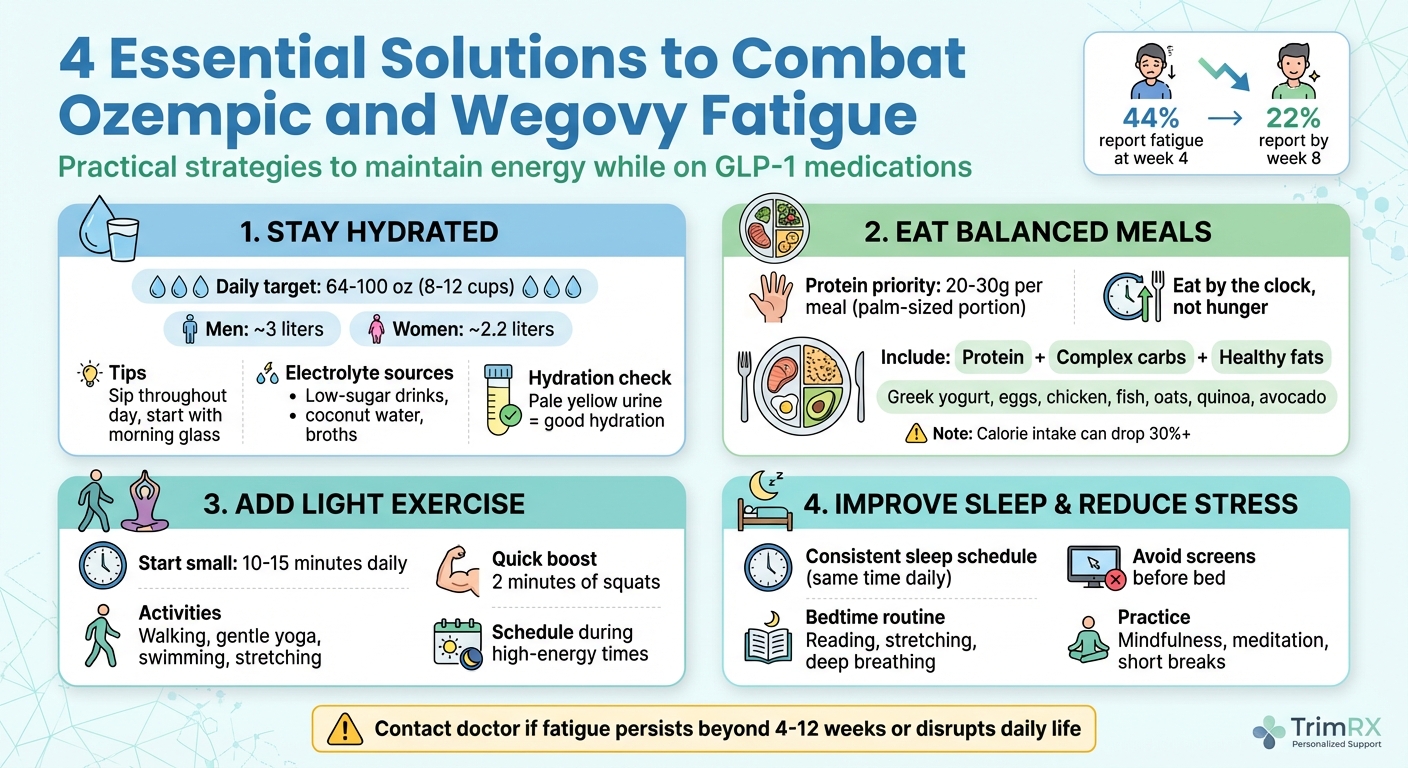
4 Essential Solutions to Combat Ozempic and Wegovy Fatigue
Common Causes of Fatigue
Reduced Calorie Intake and Appetite Loss
Using medications like Ozempic or Wegovy often leads to a noticeable drop in appetite. For many, calorie intake can decrease by 30% or more, leaving the body operating on far less energy than it needs.
Scott Keatley, a registered dietitian and co-owner of Keatley MNT, explains:
"This lower energy intake can result in less fuel for the body to convert into energy, thereby potentially causing feelings of tiredness or fatigue."
In simpler terms, when your body doesn’t get enough calories, it doesn’t have the fuel it needs to keep you energized, which can leave you feeling exhausted.
Vitamin and Mineral Deficiencies
Eating less doesn’t just mean fewer calories; it often means fewer nutrients too. Essential vitamins and minerals play a key role in energy production, and when your diet lacks these, your energy levels can take a hit. Dr. Rekha B. Kumar highlights the issue:
"If the reduced quantity they are eating is not nutrient-dense, then they may not get all the vitamins and minerals they need."
Iron and vitamin B12 are especially critical for maintaining energy. However, nausea or a lack of appetite can lead to skipping nutrient-rich foods, and over time, deficiencies in these nutrients may develop. If you’re also dealing with vomiting or diarrhea due to the medication, your body might struggle to absorb nutrients from the food you do manage to eat, compounding the problem.
Dehydration and Electrolyte Loss
Dehydration is another common issue with GLP-1 medications. Reduced thirst, along with side effects like nausea, vomiting, or diarrhea, can cause you to lose fluids and essential electrolytes – such as sodium, potassium, and magnesium – faster than you can replace them. These electrolytes are crucial for functions like nerve signaling, muscle movement, and energy production.
Without enough hydration and proper electrolyte levels, your body can’t function efficiently. While it’s often overlooked, dehydration is one of the simplest causes of fatigue to address once you identify it.
Practical Solutions for Managing Fatigue
Drink Enough Water and Replace Electrolytes
Staying hydrated is a simple yet effective way to combat fatigue when taking Ozempic or Wegovy. Aim to drink 64 to 100 ounces of fluids daily – that’s about 8 to 12 cups of water, herbal teas, or broths. For men, this translates to around 3 liters per day, while women should target about 2.2 liters.
Rather than gulping down large amounts at once, sip water consistently throughout the day to avoid feeling bloated or nauseous. Start your day with a full glass of water to kickstart your digestion, and keep a reusable water bottle handy as a reminder. If plain water isn’t appealing, enhance it with natural flavors like lemon slices, cucumber, mint, or berries for a refreshing twist without added sugar.
Electrolytes are crucial, especially if you’re experiencing vomiting, diarrhea, or heavy sweating. Try low-sugar electrolyte drinks, diluted coconut water, or warm vegetable broths to replenish sodium, potassium, and magnesium. Water-rich foods like watermelon, oranges, cucumbers, and spinach can also contribute to hydration. A quick hydration check: pale yellow urine means you’re on track, while darker shades suggest you need more fluids.
Once you’re hydrated, the next step is focusing on balanced nutrition.
Eat Balanced, Protein-Rich Meals
When your appetite takes a hit, the nutritional quality of your meals becomes even more important. Make protein a priority at every meal, aiming for 20 to 30 grams. This is about the size of your palm or roughly 25% of your plate. Excellent protein options include Greek yogurt, eggs, chicken, fish, tofu, and lean red meat. Protein helps maintain muscle mass and provides the energy you need to stay active.
Registered dietitian Sarah Nash advises:
"I encourage clients to prioritize consistent meals with protein, fiber, and healthy fats, as well as avoid skipping meals, stay well-hydrated, and evaluate their sleep habits."
Stick to a schedule – eat by the clock, not your hunger cues. Plan three balanced meals daily, even if you’re not feeling particularly hungry. If large meals feel overwhelming, break them into smaller portions or try protein-packed smoothies. Don’t skip out on complex carbohydrates, which are essential for sustained energy. Include options like oats, sweet potatoes, quinoa, and whole grains, and round out your meals with healthy fats from sources like olive oil, nuts, and avocado.
To complement good nutrition, adding light physical activity can further boost your energy levels.
Add Light Exercise to Your Routine
Gentle movement can work wonders for your energy. Even a 15-minute walk can make a noticeable difference, and regular activity amplifies these benefits over time. Start small, with just 10 minutes of light exercise or stretching, to improve circulation without overexerting yourself.
Low-impact activities like gentle yoga, chair yoga, or water aerobics are great options. Swimming is particularly refreshing and easy on the joints. Even something as simple as two minutes of squats can help wake up your body and sharpen your focus.
The key is to choose activities you enjoy and schedule them during times when you feel most energized. On particularly tough days, aim for just 10 minutes of movement – if it leaves you feeling worse, give yourself permission to rest for the remainder of the day.
Improve Sleep Quality and Manage Stress
Poor sleep and high stress can intensify fatigue, making it even harder to adjust to your medication. Stick to a consistent sleep schedule, going to bed and waking up at the same time every day, even on weekends. This helps regulate your body’s internal clock and promotes better rest.
Develop a calming bedtime routine to signal that it’s time to wind down. This could include reading, light stretching, or practicing relaxation techniques like deep breathing. Avoid screens before bed to minimize blue light exposure, which can interfere with your sleep cycle.
Managing stress is equally important. Incorporate mindfulness practices, meditation, or take short breaks during the day to ease mental fatigue. These small adjustments can make a big difference in how you feel overall.
Beat Ozempic Fatigue Fast – Why You’re Tired and How to Fix It

sbb-itb-e2779c3
When to Contact Your Doctor
Feeling fatigued during the first few weeks of taking Ozempic or Wegovy is pretty common. However, if this tiredness sticks around for more than 4–12 weeks or starts interfering with your daily life, it’s time to check in with your healthcare provider. Catching these issues early can help you get the support you need.
Warning Signs That Need Immediate Attention
Certain symptoms shouldn’t be brushed off and may require urgent medical care. For instance, severe abdominal pain is a sign you shouldn’t ignore. The same goes for persistent vomiting that makes it impossible to keep fluids down. Extreme weakness, fainting, or confusion are also red flags that need immediate attention.
Be on the lookout for signs of severe dehydration. These include dark-colored urine, feeling dizzy or light-headed, and unusual exhaustion that doesn’t get better even after rest. Additionally, if diarrhea lasts more than a week, it’s important to reach out to your doctor. Mental changes, like sudden shifts in mood, behavior, or thoughts, also warrant a call to your healthcare provider as soon as possible.
Medical Conditions That Can Cause Fatigue
Fatigue isn’t always just a side effect of medication – it could point to other health issues like anemia, thyroid problems, or vitamin deficiencies. Identifying all potential causes is key to getting the right care.
Your doctor might suggest blood tests to rule out conditions like anemia, thyroid imbalances, or nutritional gaps that could be contributing to your symptoms. If you’re also using insulin or other diabetes medications, keep an eye out for signs of low blood sugar, such as shakiness, sweating, or confusion. If possible, check your glucose levels when these symptoms arise. Brette Dille, a Physician’s Assistant at Restore Care, highlights that individuals with conditions like thyroid or sleep disorders may be more prone to fatigue and might need closer monitoring.
If you’ve already tried adjusting your sleep, diet, and hydration without noticeable improvement after four weeks, it’s a good idea to discuss your symptoms with your healthcare provider. They can help pinpoint the cause and decide if any changes to your medication are necessary.
How Personalized Programs Can Help
When it comes to managing fatigue and achieving weight loss goals, personalized programs take things a step further by offering tailored solutions. They focus on custom dosing strategies and nutritional guidance to meet your unique needs.
Custom Dosing and Regular Monitoring
A standout benefit of personalized programs like TrimRX is the ability to fine-tune medication dosing based on your body’s individual response. Providers can adjust the dosage – whether by reducing it, slowing the rate of increase, or using microdosing techniques – to help minimize fatigue.
Microdosing starts with much lower doses than standard recommendations. For instance, beginning at just 0.05 mg per week and gradually increasing allows your body to adapt, reducing side effects like nausea or fatigue while still supporting weight loss. Gradual adjustments give your body time to adapt without overwhelming it.
"Microdosing GLP-1s means starting at significantly lower doses than standard guidelines – sometimes as low as 0.05 to 0.1 mg of semaglutide per week, compared to the usual starting dose of 0.25 mg. The goal? To allow the body to adapt slowly, minimizing side effects like nausea, fatigue, or GI distress, while still gaining the benefits of appetite regulation, insulin sensitivity, and metabolic rebalancing." – Shamsah Amersi, MD
Programs like TrimRX also include regular lab testing and weekly check-ins to catch potential issues early. This approach ensures your treatment stays on track, whether it’s addressing a nutrient deficiency or adjusting your medication schedule. Providers can even help you time your injections strategically – like taking them on a Friday or Saturday – so that peak fatigue days fall on the weekend, giving you time to rest. These small but impactful tweaks can make a big difference in maintaining energy levels while progressing toward your goals.
Tailored Nutrition Plans and Supplements
With calorie consumption potentially reduced by up to 39%, meeting your nutritional needs becomes crucial. That’s where personalized dietary guidance comes in. Programs like TrimRX provide customized meal plans to ensure you’re getting the right balance of nutrients, even with fewer calories.
To address specific deficiencies, TrimRX recommends targeted supplements. For example, their GLP-1 Daily Support supplement ($119) includes Alpha Lipoic Acid, Berberine, Chromium, and a Multivitamin Blend, all designed specifically for GLP-1 users. These supplements help fill nutritional gaps, support metabolism, and combat fatigue. Depending on your lab results, your plan might also include fiber, electrolytes, or other supplements tailored to your needs.
Conclusion: Managing Fatigue While Achieving Your Goals
Fatigue doesn’t have to throw you off course in your weight loss journey. Research shows that while 44% of people report fatigue around the four-week mark, this number drops to 22% by week eight, demonstrating that your body can adapt over time.
To tackle fatigue effectively, focus on the basics: stay hydrated, eat balanced meals rich in protein, prioritize quality sleep, and include light physical activity in your routine. If fatigue lingers or disrupts your daily life, consulting a healthcare professional can make a big difference. They can help fine-tune aspects like medication dosing or timing to better suit your needs.
"There’s no need to suffer through fatigue." – Sarah Z. Wexler
Medically reviewed by Ann Eastman, MD, and Christy Beyer, MD, FACOG, MSCP
For those seeking a more tailored approach, personalized programs can refine your plan with custom solutions. Programs like TrimRX go a step further by providing individualized dosing strategies, regular lab testing, weekly check-ins, and nutrition plans designed specifically for your body’s requirements. With expert guidance and targeted supplements, you’ll have the tools to maintain your energy and stay on track toward your goals. These adjustments, combined with the personalized support from TrimRX, ensure you’re set up for long-term success.
FAQs
Could my fatigue be caused by taking Ozempic or Wegovy?
Feeling tired while taking Ozempic or Wegovy isn’t uncommon and can stem from a few factors. One possibility is reduced calorie intake, as these medications are designed to help control appetite. Other potential causes include dehydration or low blood sugar levels, both of which can leave you feeling drained.
To help manage this fatigue, focus on staying well-hydrated, eating balanced meals, and keeping an eye on your energy levels throughout the day. If the tiredness continues or starts to interfere with your routine, it’s a good idea to reach out to your healthcare provider for tailored advice. They can help pinpoint the cause and recommend solutions that work for you.
What dietary changes can help reduce fatigue from Ozempic or Wegovy?
To combat fatigue while using Ozempic or Wegovy, prioritize a well-rounded diet and regular eating patterns. Incorporate protein-rich foods, fiber, and healthy fats into your meals to help maintain steady energy levels. Skipping meals can cause blood sugar fluctuations, which may worsen fatigue, so aim to eat consistently.
Staying hydrated is equally important – drink plenty of water throughout the day. If your energy dips, try reaching for small, nutrient-packed snacks to give you a boost. Don’t overlook the importance of quality sleep, as getting enough rest can significantly impact how you manage fatigue.
When should I talk to my doctor about feeling tired while using Ozempic or Wegovy?
If you’re feeling persistently tired or notice that your fatigue is affecting your daily activities, it’s worth checking in with your doctor. They can help pinpoint potential causes, such as nutrient deficiencies, thyroid problems, or other health conditions that might be contributing.
Your doctor might recommend changes to your treatment plan or suggest adjustments to your lifestyle to help boost your energy. If you’re worried, don’t wait to seek advice – taking care of yourself should always be a priority!
Related Blog Posts

Transforming Lives, One Step at a Time
Keep reading

How to Adjust Weight Loss Goals on GLP-1 Medications
Adjust weight goals on GLP-1 meds by tracking body composition and labs, optimizing protein, activity, sleep, and working with your provider on dosing.

Falsified Mounjaro pens prompt urgent safety advisory
MHRA warns of counterfeit Mounjaro pens (batch D873576); stop use and check batch numbers for infection risk.

Novo Nordisk shares drop as Alzheimer’s hopes for weight-loss drug fade
Novo Nordisk’s semaglutide failed to slow Alzheimer’s in large trials, prompting shares to fall and expert reactions.


