GLP-1 Dose Titration: Research Insights

GLP-1 receptor agonists, like semaglutide and tirzepatide, are transforming weight loss treatments by suppressing appetite and enhancing feelings of fullness. Proper dose titration – gradually increasing medication doses – plays a key role in balancing effective weight loss with reduced side effects such as nausea and digestive discomfort.
Key Takeaways:
- Higher doses lead to greater weight loss but may cause more side effects.
- Gradual dose increases improve tolerance and long-term treatment success.
- Many patients struggle to reach the highest doses due to side effects or adherence issues.
- Personalized dosing plans and consistent monitoring improve outcomes.
Quick Facts:
- Higher doses (e.g., semaglutide 7.2 mg) showed up to 25% weight loss in trials.
- In practice, only 10–13% of patients reach maximum doses.
- GI side effects peak early, often within the first 4–5 weeks of treatment.
For the best results, individualized plans and slower dose adjustments can help patients achieve their goals while minimizing discomfort.
Clinical Study Findings on GLP-1 Dose Titration
Dose Escalation Schedules in Clinical Trials
Clinical trials for GLP-1 receptor agonists often follow carefully designed dosing protocols that balance effectiveness with patient comfort. Research consistently shows that higher doses lead to greater weight loss. At the same time, a slower, gradual increase in dose helps reduce gastrointestinal side effects and lowers dropout rates. While these findings are promising, real-world outcomes can sometimes tell a different story.
Patient Studies on Titration Practices
In real-world settings, patients tend to follow titration schedules less strictly compared to those in clinical trials. This often results in lower treatment adherence and persistence, even when patients receive support from obesity clinics. However, studies involving regular monitoring have shown weight loss results comparable to clinical trials. This underscores how crucial proper guidance and consistent follow-up are during the titration process. These insights pave the way for exploring advancements in treatment options.
Early Data on Oral GLP-1 Medications
Emerging research on oral GLP-1 therapies suggests that extending the titration period can help reduce gastrointestinal discomfort. This approach may also improve long-term adherence, offering a promising alternative to injectable treatments.
The Click Method: Slower Up-Titration for Semaglutide
How Dose Titration Affects Weight Loss Results
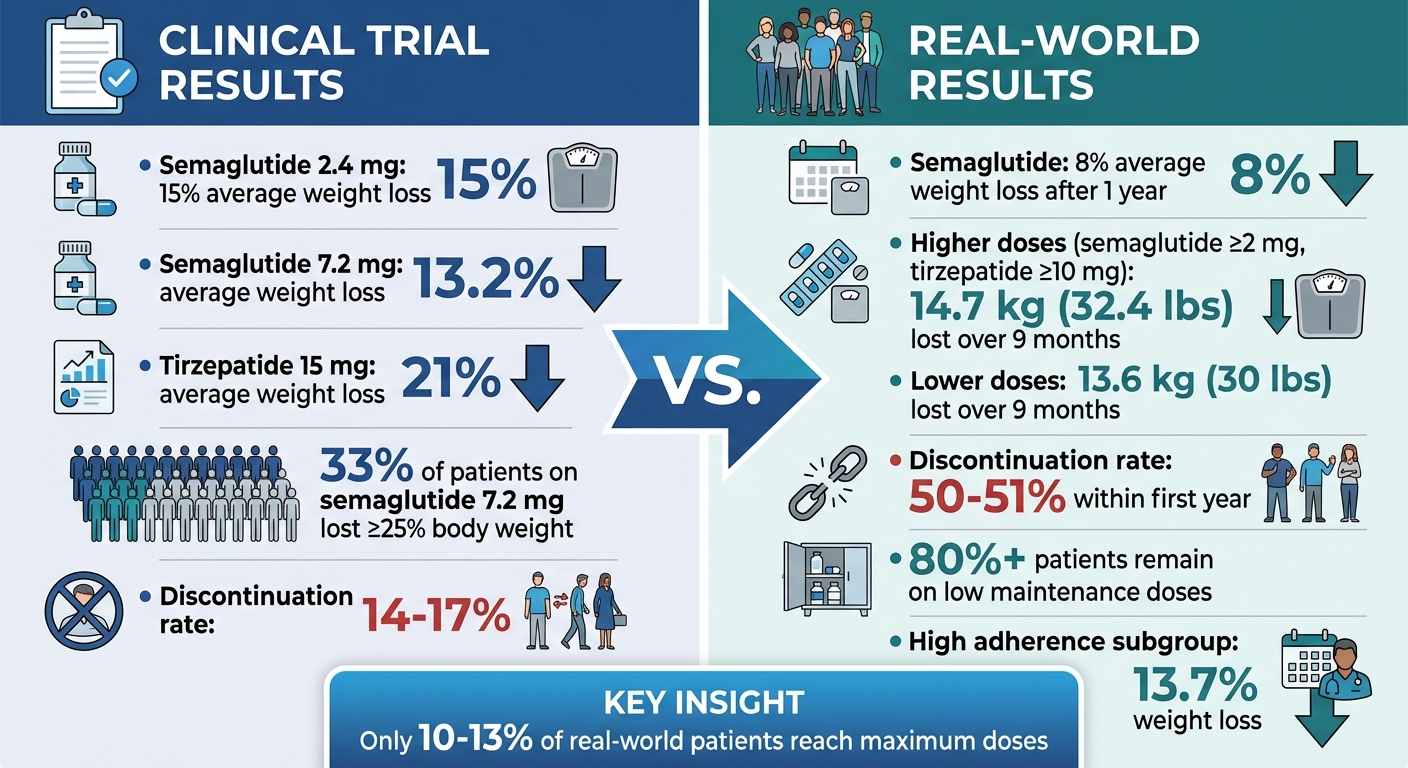
Clinical Trial vs Real-World GLP-1 Weight Loss Results Comparison
Higher Target Doses and Weight Loss
Research consistently shows that higher doses of medications like semaglutide and tirzepatide can lead to greater weight loss. For example, in the STEP UP Diabetes trial, participants taking 7.2 mg of semaglutide weekly lost an average of 13.2% of their initial weight, compared to 10.4% for those on the standard 2.4 mg weekly dose. Similarly, the STEP UP Obesity trial revealed that about 33% of patients on the 7.2 mg dose lost 25% or more of their starting weight, while only 15% of those on the lower dose achieved the same level of weight loss.
Looking at other clinical data, semaglutide at 2.4 mg resulted in an average weight reduction of 15%, while tirzepatide at 15 mg achieved a 21% reduction. Real-world studies also highlight these trends. For instance, patients using higher doses – semaglutide at 2 mg or more and tirzepatide at 10 mg or more – lost an average of 14.7 kg (roughly 32.4 lbs) over nine months. This was notably higher than the 13.6 kg (about 30 lbs) lost by those on lower doses. However, it’s important to note that real-world outcomes often fall short of clinical trial results due to adherence challenges.
Weight Loss in Patient Settings vs. Clinical Trials
Real-world data paints a different picture compared to the controlled environment of clinical trials. For example, in real-world settings, semaglutide users reported an average weight loss of about 8% after one year, compared to nearly 15% seen in clinical trials. This gap is largely due to lower adherence rates and maintenance dosages. In real-world scenarios, 50–51% of patients discontinue treatment within the first year, compared to just 14–17% in clinical trials. Additionally, over 80% of patients in real-world settings stay on lower maintenance doses – typically 1 mg or less for semaglutide and 7.5 mg or less for tirzepatide.
Despite these challenges, some patients who adhere to their treatment plans and reach higher target doses can achieve results similar to those in clinical trials. For instance, one subgroup of real-world patients who maintained high adherence and stayed on high maintenance doses reported an average weight loss of 13.7% of their body weight.
Limited Weight Loss from Staying on Low Doses
The importance of proper dose titration cannot be overstated, yet many patients remain on low doses, limiting their weight loss results. A Danish study involving 110,748 semaglutide users found that only 13% reached the maximum dose of 2.4 mg by their fifth prescription. Even fewer – just 10% – followed the recommended four-week dose escalation schedule. Instead, a significant portion of patients, between 33% and 48%, stayed on a 1.0 mg dose from their fourth prescription onward, which significantly reduced their potential for weight loss.
This highlights the critical role of titration and adherence in achieving optimal weight loss outcomes. Properly following dosage recommendations can make a significant difference in results.
sbb-itb-e2779c3
Titration Speed, Side Effects, and Treatment Continuation
Digestive Side Effects During Dose Increases
Digestive issues are a common hurdle for patients during treatment, with 40–70% experiencing gastrointestinal side effects, and some studies reporting rates as high as 85%. Among these, nausea is the most frequently reported complaint. Timing plays a crucial role – symptoms tend to peak during the first 4–5 weeks of treatment when gastric emptying slows the most. For example, in liraglutide trials, 24.7% of participants reported nausea at week 4, but this dropped to 14.7% by week 8 and just 5.5% by week 56. Similarly, tirzepatide users often experience side effects within the first 8–16 weeks, while semaglutide users typically report symptoms within the first 20 weeks.
The 24 to 72 hours following a dose increase are often the most challenging. During this time, patients frequently report nausea, fatigue, and digestive discomfort. However, most symptoms tend to improve within a week, highlighting the importance of a gradual approach to dose adjustments.
Slower Titration to Reduce Side Effects
Increasing doses too quickly can lead to more severe side effects such as nausea, vomiting, dehydration, and even discontinuation of treatment. A "start low and go slow" strategy helps to mitigate these issues and improve long-term outcomes.
For patients with moderate to severe nausea or frequent vomiting, healthcare providers often recommend slowing the titration schedule. This might involve extending the current dose for an additional 2–4 weeks or pausing any increases until symptoms subside. In many cases, holding the dose for an extra four weeks before escalating significantly improves how well the treatment is tolerated.
Effects on Long-Term Treatment Continuation
Taking a slower approach to dose increases not only reduces early side effects but also encourages patients to stick with their treatment over the long term. Research shows that most gastrointestinal side effects are mild to moderate and typically resolve as the body adjusts, especially during the early dose-escalation phase.
Experts emphasize tailoring dose adjustments to each patient’s unique needs, taking into account their health, how well the treatment is working, and the severity of side effects. For those whose symptoms interfere with daily life, staying on a lower dose for a longer period – or even maintaining a reduced dose – can improve both adherence and overall tolerability.
Personalized Titration Approaches and Practical Use
Individual Differences in Titration Response
Not everyone responds the same way to GLP-1 medications. In fact, around 9% of patients lose less than 5% of their body weight over 72 weeks, even when following standard protocols. Factors like baseline weight, age, gender, and genetic differences in GLP-1 receptors play a role in these variations.
Interestingly, women often see better results than men. For instance, the HARMONY 7 trial on liraglutide found that women achieved a 0.4% greater reduction in HbA1c levels compared to men. Beyond gender, genetic differences in receptor functionality and unique gut microbiome compositions can significantly impact how well patients handle dose increases and their overall weight loss success. A pilot study even identified specific microbial patterns that distinguished responders from non-responders in a group of 52 patients.
This variability makes it clear that a one-size-fits-all approach doesn’t work. Some patients might need a slower dose escalation, while others can handle faster adjustments. Factors such as body composition, other medications (like statins), and even dietary habits can influence how the body processes these treatments. This highlights the importance of individualized dosing plans.
TrimRX‘s Personalized Dosing Plans

TrimRX takes a customized approach to GLP-1 dosing, moving away from rigid schedules. Instead, they tailor dose adjustments based on each patient’s unique response to the treatment.
Their offerings include:
- Injectable Semaglutide: $199
- Oral Semaglutide: $179
- Injectable GLP-1 + GIP: $349
- Oral GLP-1 + GIP: $330
All plans come with unlimited check-ins, allowing patients to communicate quickly with their care team if they experience side effects or need changes to their dosing schedule.
Continued Monitoring and Supplement Options
Ongoing monitoring is key during dose titration. It helps determine whether a patient is ready for a dose increase or if they should remain at their current level for a bit longer. TrimRX supports this process with free delivery and real-time assistance, making it easier for patients to track their progress and address concerns.
For those who experience digestive discomfort during titration, TrimRX offers GLP-1 Daily Support for $119. This supplement includes ingredients like Alpha Lipoic Acid, Berberine, and Chromium to improve tolerability. They also provide Weight Loss Boost for $149, designed to enhance weight loss with a science-backed formula.
Conclusion: Main Points on GLP-1 Dose Titration
Getting the dosing right for GLP-1 medications is key to achieving weight loss goals while keeping side effects in check. Gradually increasing the dose gives the body time to adjust, which can help reduce common gastrointestinal issues.
While higher doses often lead to greater weight loss, not everyone can tolerate them. Many patients find success with lower doses, especially if side effects make it hard to increase. However, real-world data shows that reaching the maximum target dose can be tough. In fact, many patients don’t make it to the highest dose, even with expert care. Discontinuation rates in everyday settings are also higher than what’s reported in clinical trials, highlighting the importance of a more tailored approach.
Since everyone responds differently, a personalized plan is essential to strike the right balance between effectiveness and tolerability. TrimRX stands out in this regard, offering customized dosing plans, regular monitoring, and unlimited check-ins to help patients adjust their treatment based on their unique needs and progress.
FAQs
How can I reduce side effects during GLP-1 dose titration?
To reduce side effects during GLP-1 dose adjustments, begin with a low dose and slowly increase it according to your healthcare provider’s guidance. Eating smaller, more frequent meals can ease nausea, while maintaining proper hydration can enhance your overall comfort. If you experience mild gastrointestinal discomfort, some over-the-counter remedies might help, but it’s essential to check with your doctor before trying them. These steps can make the treatment process smoother and more manageable.
How do GLP-1 treatments perform in real-world settings compared to clinical trials?
In everyday use, GLP-1 receptor agonists like Semaglutide and Tirzepatide often yield weight loss results comparable to those seen in clinical trials. That said, real-world results can sometimes differ due to factors such as inconsistent dose adjustments or challenges with staying on the treatment plan.
With proper management – like gradual dose increases and individualized care – GLP-1 treatments can support meaningful, long-term weight loss while reducing the risk of side effects. Programs such as those from TrimRX offer personalized guidance to help individuals achieve the best possible results.
Why is it important to customize GLP-1 dosing?
Customizing GLP-1 dosing plays a crucial role in balancing results and safety. Since everyone reacts differently to these medications, gradually adjusting the dose helps maximize weight loss while reducing the chances of side effects like nausea or stomach issues.
Tailored dosing ensures the treatment fits your specific needs, making it an important step toward achieving lasting and manageable progress.
Related Blog Posts

Transforming Lives, One Step at a Time
Keep reading

Weight Loss Progress Tracker
Track your weight loss over time, see progress clearly, and stay motivated with simple charts, summaries, and goal-based insights.

How to Create a Personalized Adherence Plan
Build a one-page GLP-1 adherence plan: record dose, pick a weekly time, set reminders, log side effects, and review monthly.

Weight Loss Medication Dosage Calculator
Estimate weight loss medication doses by weight and drug type, with starting guidance, dose progression info, and a clear medical disclaimer.


