GLP-1 Medications and Aging: How Effectiveness Changes After 60
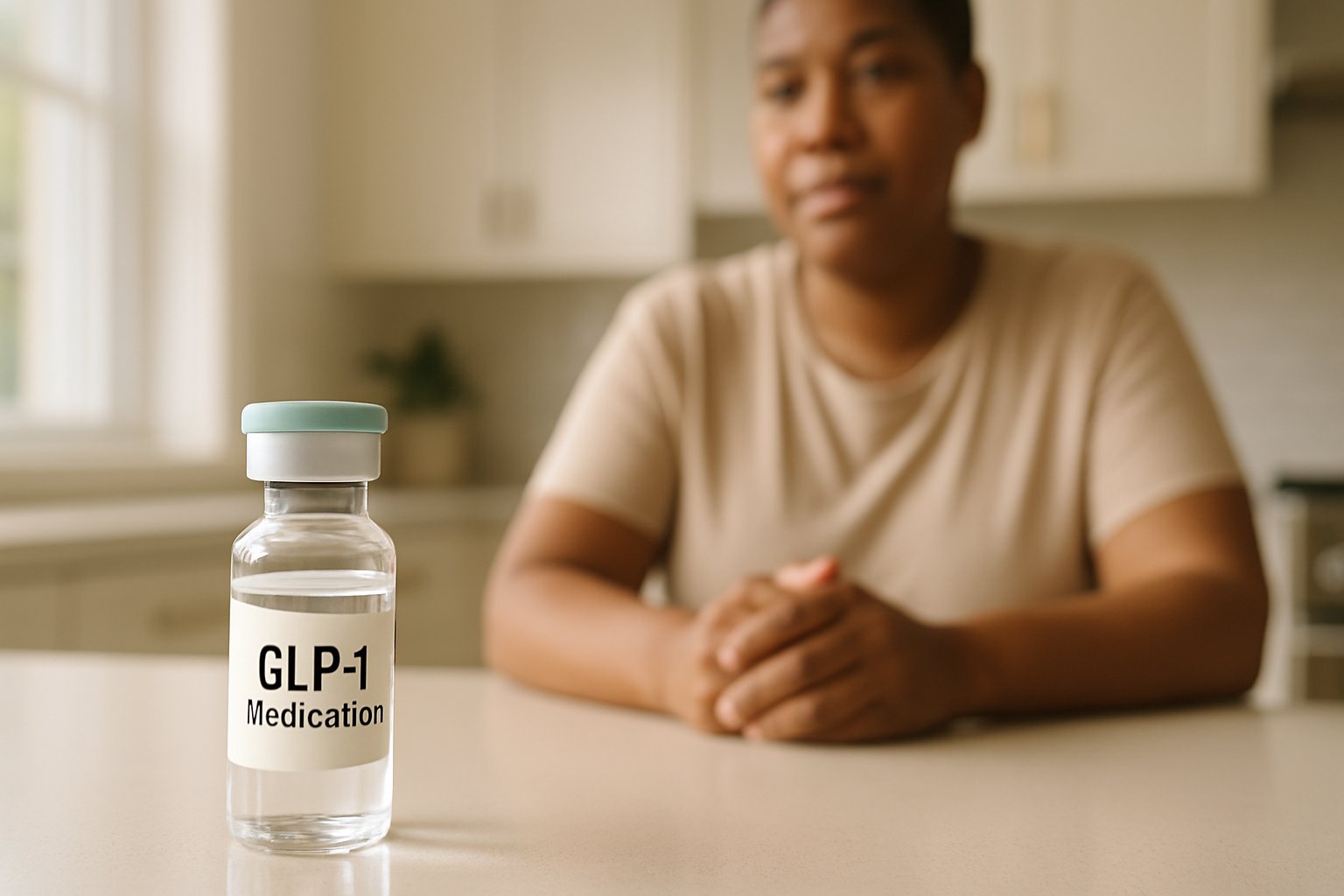
Starting a GLP-1 medication after 60 raises questions that don’t get asked as often as they should. Most of the clinical trial data, the before-and-after stories, and the general cultural conversation around semaglutide and tirzepatide skews toward middle-aged adults in their 40s and 50s. Patients over 60 are underrepresented in both the research coverage and the popular narrative, which leaves a real information gap for older adults who are clinically eligible and considering treatment. Here’s what the evidence actually shows about GLP-1 effectiveness, safety, and practical considerations specifically after 60.
What the Clinical Trials Show for Older Adults
The good news is that GLP-1 medications do work in adults over 60, and the clinical trials that established their efficacy included meaningful numbers of older participants. The SURMOUNT-1 trial for tirzepatide enrolled participants up to age 75, and the STEP trials for semaglutide included participants across a wide age range. Subgroup analyses from these trials consistently show meaningful weight loss in older participants, though with some differences from younger cohorts worth understanding.
Weight loss in adults over 60 on GLP-1 medications tends to be somewhat lower in absolute percentage terms than in younger adults at the same doses. The SURMOUNT-1 data showed that older subgroups achieved average weight loss in the range of 12 to 17 percent of body weight at the highest tirzepatide doses, compared to averages closer to 20 percent in the full trial population. This difference reflects the metabolic changes of aging rather than reduced medication efficacy per se, and 12 to 17 percent weight loss in an older adult represents a clinically meaningful outcome by any reasonable standard.
The metabolic benefits beyond weight loss, improvements in blood sugar, blood pressure, lipid profiles, and cardiovascular markers, appear to hold well in older adults and may be proportionally more impactful given that these conditions are more prevalent and more consequential in this age group.
Why Aging Changes the Treatment Response
Understanding why GLP-1 effectiveness shifts with age requires a brief look at what aging does to the biological systems these medications work through.
Resting metabolic rate declines with age, driven by progressive muscle loss (sarcopenia), reduced hormonal anabolic signaling, and changes in mitochondrial function. By age 65, most adults have a meaningfully lower resting energy expenditure than they did at 45, which means the caloric deficit created by GLP-1-induced appetite suppression translates into slower weight loss even when the appetite suppression itself is equivalent.
Gastric emptying naturally slows with age, which affects how GLP-1 medications interact with digestion. Tirzepatide and semaglutide both slow gastric emptying further as part of their mechanism of action. In older adults whose baseline gastric motility is already slower, this can amplify the GI side effects of treatment, particularly constipation, bloating, and early satiety, to a greater degree than in younger patients.
Kidney function typically declines with age, and since semaglutide and tirzepatide are cleared partly through renal pathways, reduced kidney function can affect medication clearance. For most adults over 60 with normal or mildly reduced kidney function, this doesn’t require dose adjustment, but it’s part of the baseline assessment a provider should conduct before starting treatment. The article on GLP-1 and kidney health covers this relationship in detail.
Polypharmacy, taking multiple medications simultaneously, is more common in adults over 60 than in younger patients, and potential interactions between GLP-1 medications and existing prescriptions warrant careful review before starting treatment.
The Muscle Loss Problem Is More Urgent After 60
Sarcopenia, the age-related loss of muscle mass and strength, is one of the most clinically significant concerns for older adults on GLP-1 medications, and it deserves more prominent attention than it typically receives in general GLP-1 discussions.
Muscle mass declines at roughly one to two percent per year after age 50 in the absence of deliberate resistance training, and this rate accelerates in the context of significant caloric restriction. GLP-1 medications drive meaningful caloric restriction through appetite suppression, which creates a real risk of accelerating muscle loss in older adults whose baseline muscle mass is already declining.
The consequences of significant muscle loss after 60 go well beyond aesthetics or metabolic rate. Muscle strength is a primary predictor of functional independence, fall risk, and mortality in older adults. A 65-year-old who loses 15 pounds on semaglutide but loses four or five of those pounds as muscle rather than fat has meaningfully compromised their functional capacity in ways that are harder to reverse with each passing year.
This makes resistance training not just beneficial but essentially non-negotiable for adults over 60 on GLP-1 medications. Two to three sessions per week of resistance exercise with progressive overload, at whatever intensity is safe and appropriate for individual health status and physical capacity, is the most important behavioral complement to GLP-1 treatment in this age group. The article on muscle loss on ozempic covers prevention strategies in practical detail.
Protein intake is the nutritional partner to resistance training for muscle preservation. Adults over 60 have slightly higher protein requirements for muscle protein synthesis than younger adults, in part because the anabolic response to protein is somewhat blunted with age. Aiming for 1.2 to 1.6 grams of protein per kilogram of body weight daily, distributed across meals rather than concentrated at one sitting, supports muscle preservation during GLP-1 treatment at any age but is especially important after 60.
Falls, Balance, and Rapid Weight Loss
Rapid weight loss in older adults introduces a consideration that younger patients rarely face: changes in balance and fall risk. Body weight provides a form of mechanical stability, and significant weight loss changes the biomechanics of movement in ways that take time to adapt to. Older adults who have been carrying excess weight for years may find that losing it relatively quickly on GLP-1 medications creates a transitional period where balance and proprioception need to recalibrate.
This isn’t a reason to avoid treatment. It is a reason to include balance and coordination training alongside general exercise during GLP-1 treatment, and to be aware of the fall risk during the active weight loss phase. Activities like tai chi, yoga, and targeted balance exercises, alongside the resistance training discussed above, support the physical adaptation to a changing body weight in ways that reduce fall risk rather than allowing it to quietly increase.
The article on yoga on ozempic covers the specific benefits of yoga for GLP-1 patients that are particularly relevant for older adults managing balance and flexibility alongside weight loss.
Cardiovascular Benefits Are More Directly Relevant After 60
For adults over 60, cardiovascular disease is the leading cause of mortality, and the cardiovascular benefits of GLP-1 medications become increasingly relevant with age rather than being secondary considerations.
The SELECT trial demonstrated that semaglutide reduced major adverse cardiovascular events by 20 percent in patients with established cardiovascular disease and overweight or obesity. This finding is most directly applicable to the population over 60, where cardiovascular disease prevalence is highest and where a 20 percent reduction in cardiovascular events represents the largest absolute benefit.
Tirzepatide’s cardiovascular outcome trial, SURPASS-CVOT, is ongoing as of early 2025, but the surrogate marker data from SURMOUNT trials shows meaningful reductions in blood pressure, triglycerides, and inflammatory markers that are all associated with cardiovascular risk reduction. For adults over 60 with multiple cardiovascular risk factors, GLP-1 treatment may offer benefits that extend significantly beyond weight management alone.
The articles on ozempic heart health and tirzepatide and heart health are worth reviewing in this context, particularly for adults over 60 whose primary motivation for treatment includes cardiovascular risk reduction alongside weight loss.
Cognitive Health: An Emerging Consideration
One of the more intriguing areas of emerging research in GLP-1 medications involves their potential effects on cognitive health and dementia risk, a consideration that becomes particularly relevant for adults over 60.
Early research suggests that GLP-1 receptor activation may have neuroprotective effects, and observational data has shown associations between GLP-1 medication use and reduced dementia risk in some populations. The article on ozempic for alzheimer’s prevention covers this emerging evidence in detail.
This area of research is early and not yet sufficient to recommend GLP-1 medications specifically for cognitive protection. But for adults over 60 who are already clinically eligible for treatment based on weight and metabolic criteria, the possibility of cognitive benefit alongside cardiovascular and metabolic improvements is meaningful context for the overall risk-benefit discussion.
Practical Considerations for Starting GLP-1 Treatment After 60
A few practical points are worth emphasizing for adults over 60 beginning GLP-1 treatment that differ from guidance for younger patients.
Start at the lowest dose and escalate more slowly than standard protocols. The age-related changes in gastric motility and kidney function described above mean that older adults tend to experience GI side effects more prominently and are at higher risk of dehydration from those side effects. A more conservative escalation pace, spending six to eight weeks at each dose step rather than four, reduces side effect burden and improves tolerability.
Comprehensive baseline labs are particularly important. Kidney function, bone density, complete metabolic panel, lipid panel, and cardiac evaluation where indicated give both you and your provider a full picture of your baseline health and the metrics to track as treatment progresses.
Involve your primary care provider or other specialists who manage your existing conditions. Polypharmacy and multiple comorbidities are more common after 60, and coordinating GLP-1 treatment with existing care is more important than it is for younger patients who typically have fewer concurrent health considerations.
Hydration requires more active attention. Reduced thirst sensation is common in older adults independent of GLP-1 treatment, and the dehydration risk from GI side effects compounds this existing tendency. Drinking water on a schedule rather than relying on thirst is a practical and important adjustment for older patients on these medications.
If you’re over 60 and considering GLP-1 treatment, take the TrimRx intake quiz to find out whether you’re a candidate. Compounded semaglutide and tirzepatide are available through TrimRx with home delivery and clinical support that accommodates the specific needs of older adults throughout treatment.
This information is for educational purposes and is not medical advice. Consult with a healthcare provider before starting any medication. Individual results may vary.

Transforming Lives, One Step at a Time
Keep reading

Construction Work in Summer on a GLP-1
Summer on a job site means early starts, heavy physical work, direct sun or hot interiors, and lunch from a cooler or the back…

Colonoscopy Prep on a GLP-1
If you are on a GLP-1 and have a colonoscopy, upper endoscopy, or any procedure with sedation coming up, the single most important step…

Clergy and Community Meals on a GLP-1
For pastors, priests, rabbis, imams, chaplains, and other community leaders, food is part of the work. Potlucks, fellowship dinners, holiday meals, funeral receptions, and…


