How to Maintain Weight Loss Long Term

Losing weight is one goal, but keeping it off long term can be just as challenging. Once you reach your target weight, the focus shifts from losing weight to building habits that help you maintain your progress without relying on short term diets or restrictive routines.
Long term weight maintenance often comes down to consistent eating habits, regular physical activity, realistic portions, sleep, and adjusting your routine when your weight begins to change. The goal is to find an approach that fits your lifestyle and can be maintained over time.
Why Maintaining Weight Is Harder Than Losing It
a) The body uses less energy
A smaller body needs a smaller amount of energy to run, so some drop in metabolism is simple arithmetic. Research has also documented an extra slowdown, often called adaptive thermogenesis, where resting energy use falls by more than the lost tissue would explain. In practice, a person who once ate a set number of calories and stayed stable may now gain on fewer calories. Maintenance calories are not fixed, and that is one reason weight management after loss takes attention rather than luck.
b) Appetite hormones push back
Ghrelin, the hormone that drives hunger, tends to rise after weight loss. Leptin, which signals fullness, falls. Gut hormones such as GLP-1 and peptide YY change as well. A well-known follow-up study found these shifts still present a year after a structured program ended. Hunger after weight loss is a biological response, not a character flaw, and it explains why so many people regain weight once a program stops.
c) Daily behavior drifts
The quieter force is habit drift. Portions grow. Cooking oil goes back in the pan unmeasured. Weekday walks stop when work gets busy. None of these choices matters much alone, but together, over eighteen months, they can add several hundred calories a day.
How to Maintain Weight Loss Long Term

Maintaining weight is not one decision. It is a set of habits that keep working after the excitement of a diet fades. Each step below is simple on its own. Together they cover the ground that matters most for weight loss maintenance.
1. Keep Your Eating Habits Consistent
People who keep the weight off tend to eat roughly the same way most days. That does not mean the same meals forever. It means a stable pattern: a planned breakfast, a lunch that travels well, and a dinner with room for variation. Eating habits built around routine are easier to hold than habits rebuilt from scratch every morning.
Healthy eating during maintenance looks different from the plan that produced the loss. It has more room for meals out and for treats, and it still leans on the same core foods. A balanced diet a person can follow for years beats a strict one that collapses in month three. The transition back to a normal diet is where many people slip. Structure during the weight loss journey tends to work, and the trouble starts when structure disappears and old patterns return.
Healthy food choices get easier when they are the default rather than a daily decision, and keeping healthy food visible and ready helps too. It also helps to plan for the weeks that go sideways: travel, illness, a work deadline, a family crisis. A plan that only works on calm weeks is not really a plan.
2. Continue Regular Physical Activity
Movement matters as much after the loss as during it. Physical activity guidelines call for at least 150 minutes of moderate exercise a week, and that figure is a floor rather than a ceiling. Steps, standing, housework, and stairs all count toward it.
Strength training twice a week protects lean mass, which supports a higher resting metabolism and better daily function. Anyone starting from a low base should begin by gradually increasing time and intensity rather than jumping straight into a full exercise program. Enjoyment predicts adherence.
3. Eat Enough Protein and Fiber
Protein helps protect lean mass during weight loss and after it. Fiber supports feeling full and keeps blood sugar steadier. Meals built around a protein source, vegetables, and a starch tend to satisfy more than the same calories eaten as snacks.
Fruit and vegetables add volume and fiber for very few calories. Someone who likes fruit has an easy snack that supports weight control. Foods low in calories but high in volume, such as soup or a large salad, do more work per bite. Reading serving sizes on packages helps as well, since a bag that looks like one snack is often two or three.
4. Monitor Your Weight
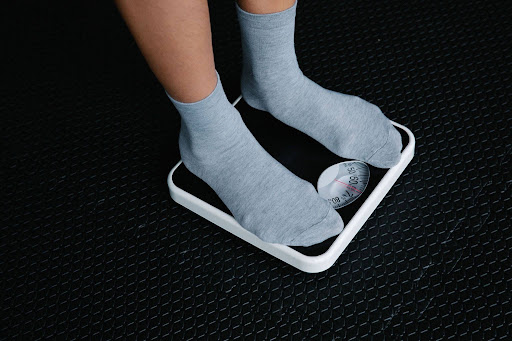
Body weight moves two to four pounds in a day because of sodium, carbohydrate intake, hydration, hormones, and digestion. Chasing one exact figure creates false alarms. A range of three to five pounds, sitting just above the goal, works better than a single ideal weight.
The scale is information, not judgment. Weekly averages smooth out the noise, and a trend across three or four weeks says far more than any single reading.
5. Maintain Healthy Portions
Portion creep is the most common cause of slow weight gain. Salad dressing, nut butters, oils, cheese, and bites taken while cooking are frequent culprits because they are dense in calories and rarely measured. Portion sizes at restaurants have grown too, and a plate that looks reasonable can carry two or three servings.
Keeping the same plate and bowl sizes helps, since a portion looks bigger on a smaller dish. Keeping unhealthy foods out of the house, or buying them in single portions, cuts down on the number of decisions a person has to make when hunger hits. The same logic applies at restaurants: check the menu ahead of time, order first, and box half the meal before starting.
6. Get Enough Sleep
Short sleep raises ghrelin, the hormone that drives hunger, and lowers leptin, which signals fullness. It also increases cravings for calorie-dense food and makes it harder to stay on track. Seven to nine hours, at consistent times, is the usual recommendation.
Sleep is one of the easier levers to pull, and it is often the first one people drop when a schedule gets tight. Protecting it pays off in appetite control the next day.
7. Manage Stress
Chronic stress drives emotional eating and raises cortisol, which is linked to storing body fat around the abdomen. Practical stress management looks unglamorous: walks, breathing exercises, therapy, boundaries around work email. Mental well-being and the number on the scale are tied more closely than most people expect.
Alcohol deserves its own line here. It adds to daily calorie intake, lowers restraint around food, and disrupts sleep. Cutting back is often the easiest change a person can make.
Weight Loss Maintenance and Support From a Dietitian
Some people manage alone. Others do better with structure, accountability, and clinical guidance. That is the space trimrx works in, combining weight-loss medication where appropriate with coaching and follow-up. A dietitian can also help with meal planning, protein targets, and the practical details of a plan to maintain a healthy weight that fits a person’s schedule.
For anyone who used a GLP-1 medication, the tapering plan matters. In one extension trial, participants regained roughly two-thirds of the weight they had lost within a year of stopping semaglutide, largely because appetite returned. The lesson is to rebuild habits while the medication is still working, reduce the dose gradually rather than abruptly, and increase monitoring during the transition. Ongoing support during that window makes a difference, and a plan built for sustainable weight maintenance holds up better than one improvised at the last minute. The habits needed to maintain weight loss are built while the medication is still doing part of the work.
Tips to Maintain Progress and Prevent Weight Regain
Regain rarely happens during ordinary weeks. It happens during holidays, vacations, illness, injury, job changes, and grief. Listing those events in advance, with a plan for each, is one of the more useful strategies to help a person hold steady. Programs that help you lose and maintain your weight under a single plan, rather than treating the two phases as separate projects, tend to produce better results.
Long-term results rarely look like a dramatic body transformation. They look like small lifestyle changes repeated for years. Anyone who wants to stay at a healthy weight does not need a perfect record, just a reliable response when the number drifts. The habits that keep weight steady are the same ones that produced the loss.
A few rules that people with long-term success tend to follow:
- Set a limit on how long a lapse may last. Two weeks of relaxed eating on vacation is a different thing from two months.
- Weigh regularly and act on trends, not single readings.
- Keep the same plate and bowl sizes, since a portion looks bigger on a smaller dish.
- Plan the week’s meals on Sunday, including the nights that usually go wrong.
- Treat activity as a fixed appointment, not an optional extra.
These are the tips to maintain momentum that come up most often in coaching sessions, and none of them requires special equipment. The food choices that support maintaining a healthy body weight are not complicated. They are just repeated.
When the Number Goes Up
A rising number is common, and shame makes it worse. The response that works is early and specific. Catching a four-pound rise and returning to basics for two weeks is a very different situation from waiting until the rise is twenty pounds. Checking the usual suspects helps: portion creep, snacking, liquid calories, activity, sleep, and stress.
If weight keeps climbing despite genuine effort, it is worth speaking with a clinician about thyroid function, medications that promote weight gain, and other medical factors. Body mass index is a rough screening tool, not a diagnosis, and it says little about where fat sits on the body or about overall health. Carrying extra weight matters, but so does how a person feels, moves, and sleeps. Shedding excess weight is worth the effort, and keeping it off is worth more.
Conclusion
Maintaining weight loss long term comes down to a small set of repeatable behaviors: watching the scale, keeping protein and fiber high, staying active, sleeping enough, planning for predictable disruptions, and acting early when the number drifts.
The biology of weight regain is real, and it explains why maintenance is harder than it sounds. It does not make it impossible. People who succeed tend to treat it as an ongoing skill rather than a finish line. A healthy lifestyle is not a short project with an end date, and the habits that support maintaining a healthy body weight keep working for as long as they are used.
Frequently Asked Questions
How long does it take to maintain your weight loss?
There is no fixed deadline. The risk of regain is highest in the first year, and it drops the longer a person holds a stable weight. Many clinicians treat the one-year and two-year marks as meaningful milestones, though the habits need to continue well past them.
What is a realistic way to maintain your weight?
A range of three to five pounds, regular weigh-ins, enough protein and fiber, and at least 150 minutes of moderate activity each week. None of it is glamorous, and all of it is repeatable.
Is it normal to regain some weight after a big loss?
Yes. Small fluctuations are expected, and a modest rise inside a set range is not a failure. The concern is a steady climb over months, which usually points to changes in portions, activity, or sleep that can be corrected.
Does metabolism stay slow forever?
Not usually. Resting energy expenditure falls after weight loss, partly because there is less body mass to maintain. The extra slowdown beyond that appears to shrink over time in many people. Strength training and enough protein help offset the drop.
Can weight loss medication be stopped after reaching a goal?
It can, but stopping abruptly often brings appetite back and weight with it. A gradual reduction, paired with established eating and exercise habits and more frequent check-ins, tends to work better. The decision is best made with a clinician.

Transforming Lives, One Step at a Time
Keep reading

Top 5 Best Online Weight Loss Prescription Services in 2026
Finding an online weight loss prescription service can make it easier to access medical guidance and explore treatment options without frequent in-person visits. Many…

How to Lose Weight at Home Without a Gym
Losing weight does not require a gym membership or expensive equipment. With the right approach, you can make progress at home by focusing on…

Does Bupropion Cause Weight Gain or Loss?
Bupropion, better known by the name Wellbutrin, has been prescribed for depression for more than three decades. It is also used to treat seasonal…


