How to Tell If Your Ozempic Pen Is Empty
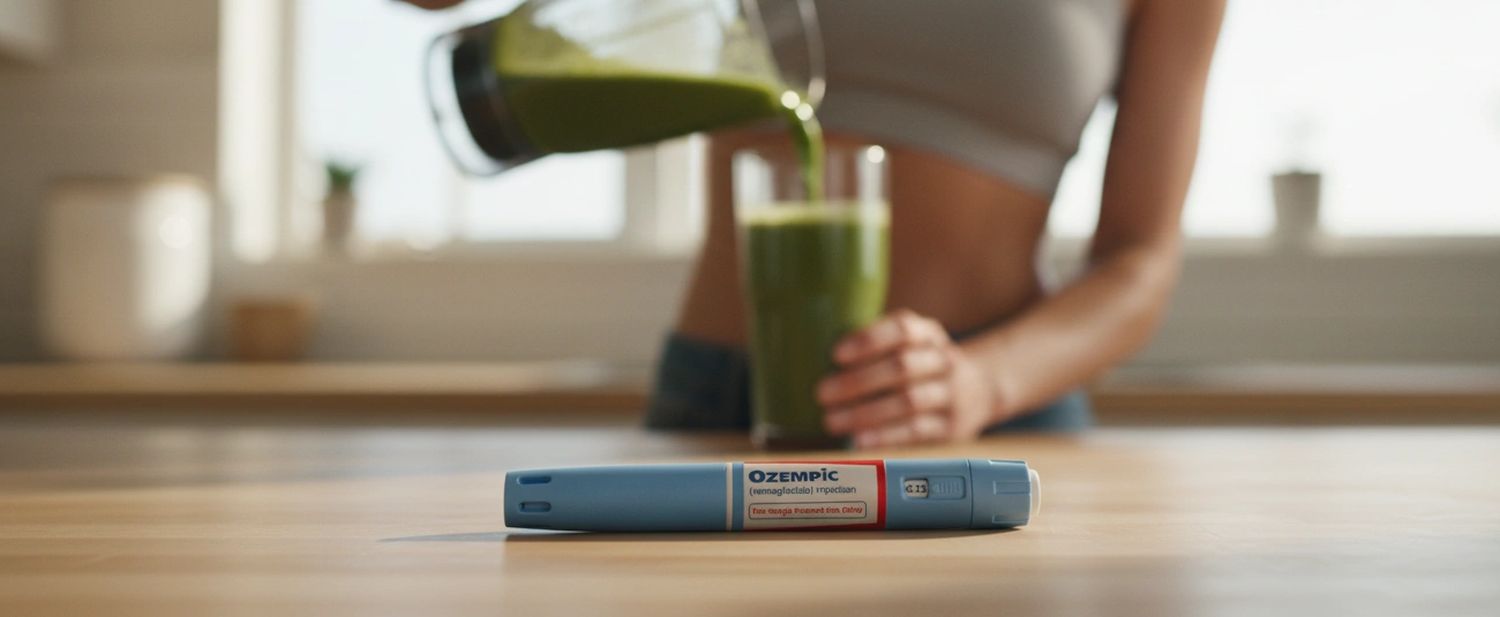
The dose counter is your answer, not the liquid you can see through the window. Dial the pen to your prescribed dose. If the counter reaches your full dose, there is enough medication for this injection. If it stops at a lower number, that number is what remains in the pen. This works because the dial is mechanically limited by the volume left, which makes it a far more reliable gauge than looking at the cartridge.
The liquid you see through the window is misleading by design. Pens are manufactured with extra volume beyond the labeled doses, so a pen that still looks like it has plenty can be functionally finished, and a pen that looks nearly empty can still hold a full dose.
Why the window fools people
Two things are happening. First, the cartridge holds overfill, a deliberate excess so that every labeled dose can be delivered in full. Second, the plunger inside the cartridge is opaque and sits behind the liquid, so as it advances the visual change is subtle and hard to judge from week to week.
Consider this scenario: a patient holds a pen up to the light three weeks in, sees what looks like half the cartridge still full, and assumes there are several doses left. In reality the pen was labeled for four doses at their strength, they have taken all four, and what remains is overfill that the mechanism will not dispense. The dial tells them this in about three seconds. The window never would.
The check, step by step
- Attach a new needle
- Dial the pen toward your prescribed dose
- Read where the counter stops
If the counter reaches your dose, proceed as normal. If it stops short, the number displayed is the amount available.
Some pen instructions for use describe an option for taking the remaining amount from one pen and completing the dose from a new pen. Whether that applies to your specific product and whether it is appropriate for you is a conversation with your pharmacy or provider, not something to work out from a forum post. Call before you inject a partial dose.
Do not count doses in your head
People try to track this by memory, and memory is unreliable under exactly the conditions where this matters. A better system takes ten seconds:
Write the date on the pen. A marker line on the label each week gives you a visible count.
Note the first-use date. Once a pen is in use, it also carries an in-use time limit that is separate from how many doses remain. A pen can have medication left and still be past the point where it should be used. Check your instructions for use for the in-use window and treat that date as a hard stop.
Order before you are down to the last dose. The most common version of running out is not a mechanical surprise, it is a refill that arrived a few days late.
Why a partial dose matters more than it seems
It is tempting to think of one short week as a rounding error. The clinical picture argues otherwise. The trial evidence behind semaglutide for weight management rests on consistent weekly dosing sustained over many months, with results building gradually rather than arriving in any single week. Consistency is the mechanism by which those outcomes are produced.
A single interrupted dose is unlikely to undo progress. A pattern of them, where the last dose of every pen gets shorted because the refill runs late, is a different matter, and it is a common and fixable reason for treatment underperforming. If your results have plateaued and you are not sure why, the dosing pattern is worth auditing before anything else. Our guide to tracking your progress on semaglutide or tirzepatide covers what to record so a pattern like this becomes visible.
What to do when the pen runs short
Do not squeeze extra out. Pressing the button on a spent pen does not produce a hidden dose. The mechanism has reached its end of travel.
Do not top up from another pen without guidance. Even where instructions describe this, getting it right requires knowing exactly how much came from the first pen, and getting it wrong in either direction is worse than a short delay.
Do not skip the call. Your provider can tell you whether to take the partial amount now, wait and take a full dose on schedule, or shift your injection day. That answer depends on your dose, how far into your titration you are, and how much is actually left.
Do dispose of the pen properly. With the needle removed and placed in a sharps container, the pen itself goes in household waste unless your local rules say otherwise.
Running short repeatedly is a supply problem, not a device problem
If you find yourself scraping the last dose out of every pen, the fix is upstream. Common causes include a refill schedule that assumes a perfect four-week month, a dose increase that changed how fast you go through a pen, and shipping delays that were not accounted for.
A dose increase is the one people miss. Moving up a strength often changes the number of doses a single pen provides, so a refill cadence that worked at one dose can leave you short at the next. Our article on when to increase your Ozempic dose explains how the step-up usually works and what to confirm with your provider when it happens.
Cost pressure also drives this. People stretch pens because refills are expensive, which is understandable and also counterproductive, since inconsistent dosing tends to slow results and extend the total time on treatment. If price is the constraint, it is worth looking at the actual options rather than rationing. We covered them in how to get semaglutide at a lower cost.
When to call your provider
Call if the pen stops short of your dose and you are unsure what to do, if you have missed a dose entirely because a pen ran out, if you are consistently running short before your refill arrives, or if the counter behaves inconsistently, meaning it stops at a different number on repeated attempts. That last one suggests a device problem rather than an empty pen.
The short version
Dial it and read the counter. That single action answers the question more reliably than any amount of squinting at the cartridge. Then build a habit that stops you from finding out at the last minute.
If refill timing is the actual problem, TrimRx coordinates prescription, pharmacy, and home delivery in one place so the pen in your fridge and the dose on your plan stay in sync.
This information is for educational purposes and is not medical advice. Consult with a healthcare provider before starting any medication. Individual results may vary.

Transforming Lives, One Step at a Time
Keep reading
Ozempic Changed How You and Your Partner Spend Time
Friday night was a place you both liked and a bottle of something. Sunday was a long breakfast. Holidays were planned around restaurants. That…

Partner Says You’re Not Eating Enough on Ozempic?
It has become a thing at dinner. They watch your plate. You feel watched. Something gets said, or pointedly not said, and the meal…

Weekly Client Dinners on Ozempic: A Plan for Recurring Work Meals
Managing one difficult dinner is a matter of ordering well. Managing four a week indefinitely is a different problem, because anything that relies on…


