How Many Times Can I Use Ozempic Pen for Weight Loss?

Introduction
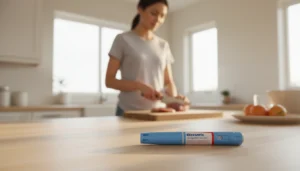
Standing in your kitchen with a medication pen in hand, you might find yourself squinting at the small window or wondering if there is enough liquid left for one more dose. It is a common moment of uncertainty for many individuals beginning their journey toward better metabolic health. Understanding exactly how many times you can use an Ozempic® pen is not just about convenience; it is a critical part of ensuring your treatment remains safe and effective. At TrimRx, we believe that clarity is the foundation of a successful weight management program. This post will cover the different types of pens available, how many doses each contains, and the safety rules you must follow for storage and disposal. By the end of this article, you will have a clear understanding of your medication schedule and how to manage your supplies with confidence.
Understanding the Ozempic® Pen Dosing Schedule
Before looking at the specific number of uses, it is helpful to understand what the medication is and how it is administered. Ozempic® is a branded GLP-1 (glucagon-like peptide-1) receptor agonist. This type of medication mimics a natural hormone in your body that helps regulate blood sugar and signals to your brain that you are full.
Because the medication is designed to be released slowly into your system, it is typically injected just once a week. To make this process as easy as possible, the medication comes in a pre-filled, multi-dose pen. This design allows you to use the same pen for several weeks rather than needing a new device for every single injection. However, because the pen is used multiple times, you must be diligent about hygiene and tracking your schedule.
If you are considering prescription treatment, you can complete a free eligibility assessment to discuss whether a personalized program may be appropriate for you.
How Many Times Can I Use Ozempic Pen by Type?
Quick Answer: Most Ozempic® pens are designed to provide four weekly doses, which covers one full month of treatment. However, the specific number of uses can vary based on the pen’s color and your prescribed dose, especially during the initial “starter” phase of your program.
The Red Label Pen (Starter Dose)
When you first begin a GLP-1 program, your licensed provider will likely start you on a low dose to help your body adjust. This is known as titration. The red label pen is often used for this initiation phase.
This pen typically contains 2 mg of medication in total. It is designed to deliver two different dose sizes: 0.25 mg and 0.5 mg. Depending on how your provider structures your first several weeks, you may use this pen in one of two ways:
- Six uses: You may take four 0.25 mg doses (the first month) followed by two 0.5 mg doses.
- Four uses: If you have already transitioned to the 0.5 mg maintenance level, this pen will provide four weekly injections.
For additional context about using the device, review this step-by-step guide to administering an Ozempic® pen.
The Blue Label Pen (1 mg Maintenance)
Once your body has adjusted to the medication, your provider may increase your dose to 1 mg per week for continued progress. The blue label pen is specifically designed for this level of treatment. Each pen contains a total of 4 mg of medication. Since you are taking 1 mg per week, this pen will consistently provide exactly four doses.
The Yellow Label Pen (2 mg Maintenance)
For some individuals, a higher dose is necessary to reach their health goals. The yellow label pen contains 8 mg of medication and is dialed to deliver 2 mg per injection. Like the blue pen, this version is designed for four weekly uses.
| Pen Label Color | Total Medication in Pen | Typical Dose Size | Total Number of Uses |
|---|---|---|---|
| Red | 2 mg | 0.25 mg or 0.5 mg | 4 to 6 uses |
| Blue | 4 mg | 1 mg | 4 uses |
| Yellow | 8 mg | 2 mg | 4 uses |
Key Takeaway: Always check the label on your specific pen and the instructions from your provider. While the pens look similar, the amount of medication they “click” out is different for each color.
If you want to discuss whether a GLP-1 program may fit your health profile, you can start the assessment process.
The 56-Day Rule: Safety and Stability
One of the most important things to remember about your pen is the “discard date.” Even if there is still liquid visible in the pen, you must dispose of it 56 days after the first time you use it. This rule applies regardless of whether you store the pen in the refrigerator or at room temperature.
For more information about refrigeration, room-temperature storage and handling, read this GLP-1 storage and safety guide.
The 56-day limit exists for two primary reasons:
- Medication Stability: After 56 days, the chemical structure of the medication can begin to break down, making it less effective at helping you manage your weight or blood sugar.
- Sterility: Every time you attach a needle and use the pen, there is a small risk of environmental contaminants entering the device. The preservatives in the liquid are only guaranteed to keep the medication safe for eight weeks once the seal has been punctured.
Bottom line: Mark your calendar the day you take your first dose from a new pen. If you reach day 57 and there is still liquid inside, it belongs in the sharps container, not in your body.
Needle Safety and the One-Time Use Rule
While the pen itself is designed for multiple uses, the needles are not. This is a non-negotiable safety rule for anyone using injectable GLP-1 medications. You must use a brand-new, sterile needle for every single injection.
Reusing a needle—even once—can lead to several problems. First, needles are microscopic and incredibly sharp. After one use, the tip becomes dull or barbed, which makes the next injection much more painful. Second, a used needle can become clogged with dried medication, preventing you from getting your full dose. Most importantly, reusing a needle significantly increases your risk of skin infections or abscesses.
Step 1: Inspect the needle. Always ensure the outer paper tab is intact before opening a new needle.
Step 2: Attach the needle. Screw the needle straight and tightly onto the pen.
Step 3: Remove the caps. There is an outer cap and a smaller inner cap; both must be removed before the injection.
Step 4: Dispose immediately. After the injection, unscrew the needle and place it in a puncture-proof sharps container.
For more guidance on injection preparation and disposal, see this practical Ozempic® administration guide.
How to Know When Your Pen is Empty
It can be confusing to see liquid remaining in the pen when you think you are finished. The Ozempic® pen is designed with a “dead space” at the bottom, meaning there will always be a tiny bit of liquid left that cannot be injected. This is normal and accounted for by the manufacturer.
You will know your pen is truly finished when the dose counter will not turn to your required dose. For example, if you are using a 1 mg pen and the dial stops before reaching the “1” mark, there is not enough medication left for a full dose.
Note: Never try to “force” the dial or estimate a partial dose. If the pen does not have enough medication for a full dose, you should dispose of it and start a fresh pen for that week’s injection.
If you have questions about whether a prescription program is appropriate for you, you can complete a free assessment before discussing next steps with a licensed provider.
Storing Your Pen Correctly
Proper storage is the only way to ensure your medication stays effective for the full four to six uses. Before your first use, your pens should always be kept in the refrigerator. Do not store them in the door of the fridge, as the temperature there fluctuates too much. Instead, keep them on a middle shelf toward the back.
Once you have used a pen for the first time, you have two options:
- Refrigerator storage: You can put it back in the fridge.
- Room temperature storage: You can keep it in a cool, dry place (between 59°F and 86°F).
Regardless of where you keep it, the pen cap must stay on whenever you are not injecting. This protects the medication from light, which can cause it to degrade. Also, ensure the pen never freezes. If a pen accidentally freezes in the back of the fridge, it must be thrown away immediately, even if it thaws out later.
You can also review these GLP-1 refrigeration and storage instructions for additional handling information.
Managing Your Program with TrimRx
At TrimRx, we understand that managing medication schedules and pen types can feel overwhelming at first. Our platform is designed to take the guesswork out of your weight loss journey. We connect you with licensed providers who review your health profile to determine the most appropriate treatment path for you.
If a provider determines you are a candidate for treatment, we ensure you have 24/7 access to support. Whether you have questions about how many clicks are left in your pen or how to manage mild side effects, our team is there to guide you. We also work with FDA-registered, inspected compounding pharmacies to provide access to compounded semaglutide and compounded tirzepatide when appropriate. While compounded medications are not FDA-approved, they are prepared by professional pharmacists to meet specific patient needs and can be an integral part of a personalized program.
Our mission is to provide a telehealth-first experience that removes the traditional barriers to care. There are no waiting rooms or awkward in-person visits—just science-backed support delivered directly to your door.
If you are ready to learn whether a personalized program may be suitable, you can begin a free eligibility assessment.
The Role of Titration in Pen Usage
Titration is the process of slowly increasing your medication dose over several months. This is why your first pen might last six weeks while later pens only last four. This slow ramp-up is essential for minimizing gastrointestinal side effects like nausea or bloating.
Many people ask if they can “stretch” their pen by taking smaller doses for a longer period. You should never change your dosing schedule without explicitly discussing it with your healthcare provider. Taking too little may stall your progress, while taking too much too soon can lead to severe discomfort. Following the schedule exactly as prescribed ensures that your metabolic health improves at a steady, sustainable pace.
Common Myths About Ozempic® Pen Usage
Myth: If the liquid is clear, the pen is still good after 60 days.
Fact: The 56-day rule is absolute. Even if the liquid looks clear, the chemical stability and sterility cannot be guaranteed after eight weeks of being open.
Myth: You can save money by reusing the same needle for the whole month.
Fact: Needles are single-use medical devices. Reusing them is dangerous and can lead to infections or inaccurate dosing.
Myth: I should “prime” the pen with a new needle before every single use.
Fact: You generally only need to check the flow (priming) before the very first injection from a brand-new pen. For subsequent doses from the same pen, you can usually skip this step unless instructed otherwise by your provider.
Tips for a Consistent Injection Routine
To get the most out of your four to six doses per pen, consistency is key. Most people find that choosing a specific “shot day” helps them stay on track.
- Set a weekly alarm: Use your phone to remind you of your injection day and time.
- Track your injection site: Rotate where you inject each week (abdomen, thigh, or upper arm) to prevent skin irritation or lumps.
- Keep a log: Note the date of your first use on each pen so you never miss the 56-day discard window.
- Order in advance: Don’t wait until your last dose is gone to check on your next shipment.
Bottom line: Success in a weight loss program comes from the cumulative effect of consistent, weekly doses. Understanding your pen’s capacity ensures you never miss a step in your progress.
Why Precision Matters for Your Results
The reason we focus so much on the number of uses and the 56-day rule is that metabolic health is a delicate balance. GLP-1 medications work by interacting with your body’s endocrine system. For the medication to properly manage appetite and blood sugar, the dose must be precise.
If you use a pen that has expired or has been stored improperly, you might find that your hunger returns sooner or your weight loss stalls. By following the guidelines for your specific pen type, you are protecting the investment you are making in your own health. Whether you are using a branded medication or a compounded alternative through our platform, the goal is the same: sustainable, long-term wellness.
Summary of Pen Usage Rules
To keep your journey safe and effective, remember these key points:
- Most pens provide 4 doses, but starter pens can provide up to 6.
- Never reuse needles; use a fresh one for every injection.
- Discard any pen 56 days after its first use, regardless of leftover liquid.
- Store unused pens in the fridge and used pens in a cool, dark place.
- If the dose counter won’t turn to your full dose, the pen is empty.
Conclusion
Navigating the specifics of medication pens is a small but vital part of a larger health transformation. While it might seem like there are many rules to follow, they are all designed to ensure that every dose you take is as safe and effective as the first. At TrimRx, we are proud to be your partner in this process, offering the clinical expertise and personalized support needed to help you reach your goals. Our approach combines the latest in metabolic science with an empathetic, person-centered philosophy.
Key Takeaway: Your Ozempic® pen is a sophisticated tool designed to simplify your treatment, but its effectiveness depends on your adherence to the 56-day rule and strict needle hygiene.
We are committed to helping you embrace a healthier lifestyle through a transparent and medically supervised approach. If you are ready to take the next step in your weight loss journey, we invite you to begin your personalized assessment.
Step 1: Complete the free assessment. This helps us understand your health history and goals.
Step 2: Connect with a provider. A licensed professional will review your information to see if you are a candidate for a GLP-1 program.
Step 3: Receive your personalized plan. If eligible, your medication and support materials will be handled with care and delivered to your door.
FAQ
Can I use my Ozempic® pen after 56 days if there is medication left?
No, you should never use the pen once 56 days have passed since the first injection. The medication may no longer be sterile or chemically stable, which could lead to infections or reduced effectiveness. Always prioritize safety and discard the pen according to local sharps disposal guidelines.
How many needles come with each Ozempic® pen?
The number of needles included in the box usually matches the intended number of doses for that specific pen type. For example, a 1 mg maintenance pen typically comes with four needles, while a starter pen may come with six to account for the titration schedule. If you lose a needle, contact your pharmacist for a compatible replacement rather than reusing an old one.
What should I do if I can’t dial the pen to my full dose?
If the dose selector stops before reaching your prescribed dose, it means the pen does not contain enough medication for a complete injection. You should not inject the partial amount; instead, dispose of that pen and start a brand-new pen to receive your full dose for the week. This ensures you maintain the correct level of medication in your system.
For more information about safe dose selection, review this guide to handling an Ozempic® pen.
Does TrimRx provide the Ozempic® pen directly?
TrimRx is a telehealth platform that connects you with licensed healthcare providers and pharmacies. If a provider determines you are a candidate for a branded medication like Ozempic®, they will write a prescription that you can fulfill at your local pharmacy. We also offer access to personalized programs that may include compounded semaglutide or compounded tirzepatide, which are shipped from FDA-registered, inspected compounding pharmacies.
If you are considering a personalized program, you can take the free assessment quiz to share your information for provider review.
TrimRX does not practice medicine or prescribe medications. Compounded medications are not FDA-approved and are not evaluated by the FDA for safety or efficacy. Results vary by individual and are not guaranteed.
Disclaimer: This content is for informational purposes only and does not constitute medical advice. It is not intended to diagnose, treat, cure, or prevent any disease or condition. Individual results may vary. Always consult a qualified healthcare professional before starting any weight loss program or medication.

Transforming Lives, One Step at a Time
Keep reading

Is It Normal for Nausea to Come Back on Ozempic?
Many people on Ozempic or another GLP-1 have a rough first few weeks, then settle in and feel much better. So it can be…
Is It Normal to Not Feel Anything After Taking Ozempic?
You have heard stories about people losing interest in food overnight or feeling queasy after their first dose. Then you take your own first…

Is It Normal to Have Dark Urine on Ozempic?
Noticing that your urine is darker than usual can be worrying. On Ozempic or another GLP-1, the most common reason is simple: you are…


