How Many Clicks for 0.25 Ozempic on 1mg Pen

Introduction
Staring at a medical pen and trying to figure out how to dial a dose that isn’t explicitly marked can feel overwhelming. Many individuals who have been prescribed Ozempic® for weight management or metabolic health find themselves with a 1.0 mg pen—often called the “blue pen”—but need to administer a starting dose of 0.25 mg. This often happens due to supply fluctuations or a healthcare provider’s specific titration plan. Navigating these adjustments requires precision to ensure the medication remains effective and safe.
At TrimRx, we believe that understanding your medication is the first step toward a successful health journey. While the manufacturer designs each pen for a specific dose, the “click-counting” method has become a common topic for those looking to manage their transition between dosages more gradually. If you’re wondering whether a prescription GLP-1 program is the right next step, you can take the free assessment quiz to see what may fit your goals. This post will cover the math behind the clicks, the safety considerations of off-label dosing, and how personalized programs can help you navigate these complexities. Understanding your options allows you to focus on what matters most: your long-term health and well-being.
Understanding the Ozempic® Pen Mechanism
Before counting clicks, it is important to understand what is inside the pen. Ozempic® is a brand-name medication containing semaglutide. Semaglutide belongs to a class of drugs known as GLP-1 receptor agonists (glucagon-like peptide-1). This hormone occurs naturally in your body and plays a vital role in regulating appetite and blood sugar. By mimicking this hormone, the medication slows down how quickly your stomach empties and sends signals to your brain that you are full.
The 1.0 mg pen is a multi-dose, pre-filled device. It is designed to deliver four separate 1.0 mg doses. However, the internal mechanism of the pen moves in very small, audible increments—or “clicks”—as you turn the dose selector. Because the medication is a liquid solution with a consistent concentration, each click represents a specific, measurable amount of the drug.
The Different Pen Types
It is easy to get confused because there are several versions of the pen. Each is color-coded to help patients and providers distinguish between them:
- The Red Pen: Typically delivers 0.25 mg and 0.5 mg doses.
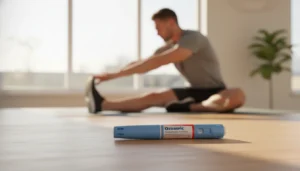
- The Blue Pen: Designed to deliver 1.0 mg doses.
- The Gold Pen: Designed to deliver 2.0 mg doses.
If you have the blue pen but your provider has instructed you to take a 0.25 mg dose, you are essentially looking for one-quarter of the pen’s intended delivery. This is where click counting comes into play.
How Many Clicks for 0.25 mg on a 1 mg Pen?
For the standard 1.0 mg Ozempic® pen (the blue label pen containing 4 mg of semaglutide total), the math is relatively straightforward. Most versions of this pen require 72 clicks to reach the full 1.0 mg dose.
To find a 0.25 mg dose, you divide the total clicks by four.
Quick Answer: For a 1.0 mg Ozempic® pen, 18 clicks typically equal a 0.25 mg dose.
Step-by-Step Calculation
- Identify the full dose: Turn the dose selector until you see the “1.0” mark in the dose counter window.
- Count the clicks: As you turn the dial back to zero (or if you count while dialing up), you will notice 72 distinct clicks.
- Divide for your dose: 72 clicks divided by 4 equals 18 clicks.
- Confirm the math: If 18 clicks is 0.25 mg, then 36 clicks is 0.5 mg, and 54 clicks is 0.75 mg.
Key Takeaway: While 18 clicks is the standard for the 1.0 mg blue pen, you should always verify the click count on your specific pen by dialing to the 1.0 mg mark and then dialing back to zero before your first use.
Ozempic® Click Chart for the 1.0 mg Pen
Using a reference chart can help reduce the risk of errors when you are preparing your injection. The following table breaks down the most common doses used during the titration (dose-escalation) process.
| Desired Dose | Number of Clicks (1.0 mg Pen) |
|---|---|
| 0.25 mg | 18 Clicks |
| 0.50 mg | 36 Clicks |
| 0.75 mg | 54 Clicks |
| 1.00 mg | 72 Clicks |
Note: These click counts apply specifically to the 1.0 mg “blue” pen. If you are using a different pen, such as the 2.0 mg “gold” pen, the click counts will be different because the concentration or the mechanical dial of the pen may vary.
Why Do People Count Clicks?
The primary reason patients count clicks is to achieve a more gradual titration. The standard manufacturer protocol for semaglutide usually involves:
- 0.25 mg weekly for 4 weeks.
- 0.5 mg weekly for 4 weeks.
- 1.0 mg weekly thereafter.
However, some individuals find that jumping from 0.5 mg to 1.0 mg is a significant change for their digestive system. By counting clicks, a patient might choose to spend a week or two at 0.75 mg to let their body adjust. This can help minimize common side effects like nausea, bloating, or changes in bowel habits.
Another reason is supply management. In recent years, certain pen sizes have been more difficult to find than others. If a pharmacy only has 1.0 mg pens in stock but a patient is still on a 0.5 mg dose, a healthcare provider may suggest counting clicks so the patient can continue their treatment without interruption.
The Importance of Medical Supervision
While the math of click counting is simple, the practice itself is considered “off-label.” This means you are using the medical device in a way other than how it was specifically cleared by regulatory bodies. You should never adjust your dose or count clicks without the explicit instruction and supervision of a licensed healthcare provider.
Our team at TrimRx emphasizes that weight loss is not just about the medication; it is about the clinical oversight that ensures you are losing weight safely. If you’re interested in a broader overview of treatment pathways, this guide to GLP-1 therapy explains how these programs fit into a larger plan. A provider can help you determine if a gradual increase is right for you or if your side effects require a different approach entirely.
Note: Using a pen for more doses than originally intended (for example, using a 1.0 mg pen for eight 0.5 mg doses) may mean you run out of the disposable needles provided in the box. Never reuse a needle, as this increases the risk of infection and skin irritation.
Managing Side Effects During Dosing Adjustments
When you change your dose—even by a few clicks—your body may react. GLP-1 medications impact the gastrointestinal tract, and as the dose increases, the slowing of digestion becomes more pronounced.
If you experience mild nausea or discomfort after a dose of 0.25 mg, consider the following:
- Stay Hydrated: Water is essential, but electrolyte-rich drinks can also help if you are feeling fatigued.
- Eat Smaller Meals: Since your stomach empties more slowly, large meals can lead to significant discomfort.
- Prioritize Protein: Maintaining muscle mass is vital during weight loss. Focus on lean proteins that are easy on the stomach.
- Track Your Symptoms: Keep a simple log of how many clicks you took and how you felt. This information is incredibly valuable for your doctor during follow-up consultations.
If side effects become severe, such as persistent vomiting or intense abdominal pain, contact your healthcare provider immediately.
Personalized Weight Loss Alternatives
Finding the exact pen you need can sometimes be a source of stress. This is one reason why many people are turning to telehealth platforms for a more personalized experience. We provide a streamlined way to access medical weight loss through customized programs. If you’d like to see whether a prescription plan fits your situation, complete the free assessment quiz to get started.
One alternative to branded pens is compounded semaglutide. Compounded medications are prepared by licensed pharmacists to meet the specific needs of an individual patient. Because these are often delivered in traditional vials rather than pre-set pens, your provider can prescribe the exact dosage that fits your body’s needs—whether that is 0.25 mg, 0.70 mg, or anything in between.
Important Distinction: Compounded semaglutide and compounded tirzepatide are not FDA-approved. However, they are prepared in FDA-registered and inspected compounding pharmacies. These facilities follow strict quality standards to ensure the medication is safe for use.
How to Prepare for Your Onboarding
If you are ready to move away from the confusion of click-counting and toward a structured, medically supervised program, the process is simple. Most modern telehealth weight loss programs follow a few clear steps to ensure your safety and success. For a closer look at the prescribing process, how semaglutide injections are accessed walks through the main steps in more detail.
- Step 1: The Health Assessment: You will complete a comprehensive health quiz that covers your medical history, current weight, and goals.
- Step 2: Lab Work: In many cases, blood work is required to check your metabolic health markers, such as A1C and kidney function.
- Step 3: Provider Consultation: A licensed clinician reviews your data to determine if a GLP-1 medication is appropriate for you.
- Step 4: Custom Treatment Plan: If approved, your provider will prescribe a dosage schedule tailored to your tolerance and goals.
- Step 5: Ongoing Support: You receive your medication at your door and have 24/7 access to specialists to answer questions about dosing or side effects.
This approach removes the guesswork. Instead of wondering “how many clicks,” you have a clear plan and a dedicated team to guide you.
Using the Pen Safely
If you and your provider have decided that counting clicks is the right path for your current supply, follow these safety steps for every injection:
- Check the Medication: The liquid should be clear and colorless. If it is cloudy or has particles, do not use it.
- Attach a New Needle: Always use a fresh, sterile needle for every injection.
- Prime the Pen: For a brand-new pen, perform a “flow check” to ensure the needle is working.
- Dial Carefully: Turn the dose selector slowly and listen for the clicks. If you go past your intended number (e.g., 19 clicks instead of 18), do not inject. Dial the pen back to zero and start over.
- Inject Correctly: Insert the needle into the skin (thigh, abdomen, or upper arm). Press and hold the button. Count to six slowly before withdrawing the needle to ensure the full amount is absorbed.
- Dispose Safely: Place used needles in a sharps container immediately.
Bottom line: Accuracy is the most important factor when counting clicks. A small error each week can lead to inconsistent levels of medication in your system, which may stall your progress or increase side effects.
The Role of Supplements in Your Journey
While GLP-1 medications are powerful tools, they work best when supported by proper nutrition. Some patients find that specific supplements can help fill the gaps during the weight loss process. For example, a daily support supplement can provide essential nutrients that might be missing if your appetite is significantly reduced.
We offer quick-access supplements like GLP-1 Daily Support and Weight Loss Boost. These do not require a prescription or a health quiz and are designed to complement the work the medication is doing in your body. They can be a helpful addition for those looking to optimize their energy levels and metabolic function while on a reduced-calorie diet.
Conclusion
The journey to better health is rarely a straight line. Whether you are counting clicks on an Ozempic® pen to manage a transition or looking for a more personalized treatment path, the most important thing is that you feel supported and informed. Counting 18 clicks on a 1.0 mg pen is a common way to achieve a 0.25 mg dose, but it should always be done with care and clinical guidance.
At TrimRx, our mission is to simplify this process. We merge clinical expertise with technology to provide a transparent, empathetic approach to sustainable weight loss. You don’t have to navigate the complexities of GLP-1 therapy alone. By choosing a program that offers personalized dosing and continuous medical supervision, you can move past the confusion of clicks and focus on the lifestyle changes that lead to lasting results. If you are ready to take the next step in your health journey, start with a free assessment quiz to see what path makes the most sense for you.
FAQ
Can I use the 0.25 mg clicks on a 2.0 mg pen?
While you can technically count clicks on any pen, the 2.0 mg “gold” pen has a different concentration and dial mechanism. You cannot assume that 18 clicks will equal 0.25 mg on a higher-dose pen. Always consult a click chart specifically for the 2.0 mg pen or ask your provider for the exact count for that specific device.
What happens if I miscount the clicks?
If you take a few too many clicks, you may experience increased side effects like nausea or stomach upset. If you take too few, the medication may be less effective for that week. The best practice is to always dial the pen back to zero if you lose count and start again to ensure total accuracy.
Is it safe to use a pen for more than four weeks?
Most manufacturers recommend discarding an Ozempic® pen 56 days after its first use, even if there is medication left inside. This is because the preservatives in the liquid may lose their effectiveness, and the risk of bacterial contamination increases over time. Always check the “use by” date on your medication.
Does TrimRx provide the branded Ozempic® pens?
TrimRx is a telehealth platform that connects you with licensed providers who can write prescriptions for various weight loss medications. While your provider may prescribe branded medications which you fill at your local pharmacy, we specialize in personalized programs that often utilize compounded semaglutide shipped directly from FDA-registered compounding pharmacies.
Disclaimer: This content is for informational purposes only and does not constitute medical advice. It is not intended to diagnose, treat, cure, or prevent any disease or condition. Individual results may vary. Always consult a qualified healthcare professional before starting any weight loss program or medication.

Transforming Lives, One Step at a Time
Keep reading
Want to Stop Ozempic but Your Provider Says Stay? How to Discuss It
Lead with your actual reason, because the conversation usually goes wrong when you argue about the evidence instead. Your provider is not wrong about…

Regained Weight After Stopping Ozempic? Don’t Restart at Your Old Dose
No. Whatever else you do, do not pick up where you left off. Tolerance to a GLP-1 is not assumed to persist through a…

Eating Less Than Ever on Ozempic but the Scale Won’t Move
Whatever else is true here, the answer is not to eat less. That needs saying first, because it is the direction this situation pushes…


