Post-GLP-1 Diet: How to Eat After You Stop Medication
Introduction
Stopping a GLP-1 without a plan is the single biggest reason people regain weight. The STEP 1 trial extension (Wilding et al. 2022, Diabetes, Obesity and Metabolism) followed patients for a year after discontinuation. They regained two-thirds of the weight they had lost. That number isn’t a curse. It’s a planning problem.
Appetite hormones rebound within weeks. Ghrelin climbs, leptin sensitivity changes, and the energy intake that felt impossible at month six suddenly feels normal again. The food environment hasn’t changed. Your biology has.
This guide covers what to eat, how much, and the structural habits that protect the loss. The goal isn’t perfection. It’s a setup where regain is harder than maintenance.
At TrimRx, we believe that understanding your options is the first step toward a more manageable health journey. You can take the free assessment quiz if you’re ready to see whether a personalized program is a fit for you.
Why Does Weight Come Back After Stopping GLP-1s?
Weight returns because the drug suppressed appetite, and stopping the drug removes that suppression. The SURMOUNT-4 trial (Aronne et al. 2024, JAMA) randomized tirzepatide responders to continue or switch to placebo. The placebo group regained 14% of body weight in 52 weeks. Continuers lost an additional 5.5%.
Quick Answer: STEP 1 extension showed 11.6 lb regain within one year of stopping semaglutide
Ghrelin, the hunger hormone, returns to pre-treatment levels within four to eight weeks. Gastric emptying speeds up. Food rewards feel stronger. Your body actively defends a higher set point unless something else takes the drug’s place.
That something is a combination of protein, fiber, resistance training, and a tracking habit. None of these are exciting. All of them work.
How Much Protein Should I Eat post-GLP-1?
Aim for 1.2 to 1.6 g of protein per kilogram of body weight per day, spread across three or four meals. For a 180 lb (82 kg) adult, that’s roughly 100 to 130 g daily.
Protein matters more in maintenance than in active weight loss because muscle is the metabolic floor. The SURMOUNT-1 trial (Jastreboff et al. 2022 NEJM) and subsequent DEXA substudies showed that 25 to 40% of weight lost on GLP-1s can be lean mass when protein intake is low. After the drug stops, less muscle means lower resting energy expenditure, which means easier regain.
Front-load breakfast. A 30 to 40 g protein breakfast blunts afternoon hunger more reliably than a small breakfast plus a big lunch. Eggs, Greek yogurt, cottage cheese, whey, or tofu scrambles all hit the target with minimal effort.
What Does a Sample Maintenance Day Look Like?
A simple template: protein anchor at every meal, two fist-sized portions of vegetables at lunch and dinner, one starchy carb portion per meal sized to your activity, and a modest fat source.
Breakfast: three eggs, half a cup of black beans, a slice of sourdough, half an avocado. Roughly 35 g protein, 12 g fiber, 550 calories.
Lunch: 6 oz grilled chicken, two cups roasted vegetables, half a cup of brown rice or quinoa, olive oil. Around 45 g protein, 10 g fiber, 600 calories.
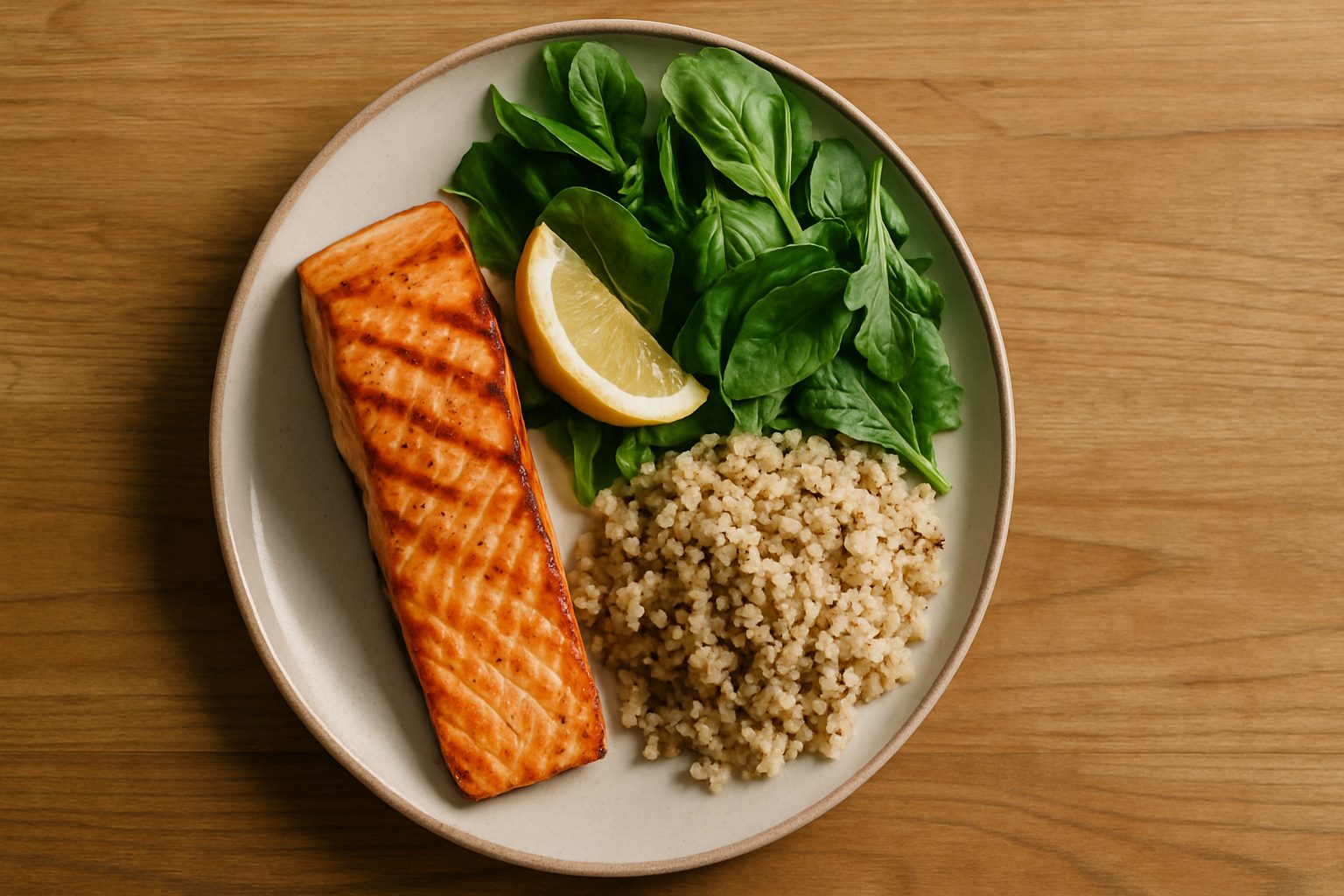
Dinner: 6 oz salmon, big salad with chickpeas and feta, one sweet potato. About 45 g protein, 14 g fiber, 650 calories.
That’s 125 g protein, 36 g fiber, 1,800 calories. Adjust portions up or down by 200 to 300 calories based on weight trend.
How Important Is Fiber After Stopping?
Fiber is the closest food-based equivalent to what GLP-1s did pharmacologically. Both slow gastric emptying and trigger satiety. The 2015 Annals of Internal Medicine study by Ma et al. showed that simply adding 30 g of fiber daily produced clinically meaningful weight loss in adults with metabolic syndrome.
Target 25 to 38 g daily. Beans, lentils, oats, chia seeds, berries, broccoli, and pears do most of the work. Psyllium husk at 5 to 10 g before the largest meal of the day is a useful add-on if whole-food fiber is hard to hit.
Ramp slowly. Going from 12 g to 35 g overnight causes bloating that often gets blamed on whole grains or beans when the real culprit is the speed of the change.
Do I Need to Count Calories Forever?
No, but you need a feedback loop. Most people who maintain a 50+ lb loss use one of three systems: weekly weigh-ins, a daily step target, or a food log they revisit weekly. The National Weight Control Registry data published by Thomas et al. 2014 in the American Journal of Preventive Medicine shows that 75% of successful maintainers weigh themselves at least weekly.
Calorie counting for the first 8 to 12 weeks after stopping is the simplest way to recalibrate portion sizes that drifted while the drug suppressed appetite. After that, most people shift to a lighter system: log only one meal, track weekly weight, or use a clothing-fit test.
The point isn’t precision. It’s catching a 3 to 5 lb drift before it becomes 15.
How Does Strength Training Fit In?
Resistance training is non-negotiable after stopping. Two to four sessions a week protect the muscle you preserved during the loss. Without that stimulus, the body sees lean tissue as expensive and trims it.
A simple plan: three full-body sessions per week, six to eight compound movements per session, three sets of six to twelve reps. Squats, deadlifts, presses, rows, lunges, and carries cover most of what matters. Add progressive overload by increasing weight or reps weekly.
A 2018 meta-analysis in Obesity Reviews by Wycherley et al. found that diet plus resistance training preserved roughly 93% of lean mass during weight loss, compared to 64% with diet alone. The same principle holds in maintenance. Muscle defends your set point.
Key Takeaway: Eat 25 to 38 g fiber daily, with at least half from whole foods
What About Carbs After GLP-1?
Carbs aren’t the enemy. Refined carbs eaten without protein or fiber are the problem. After stopping a GLP-1, blood sugar swings can drive hunger that feels bottomless within an hour of eating.
Anchor carbs to protein and fiber. A bagel alone spikes glucose, then crashes appetite control. A bagel with smoked salmon, cream cheese, capers, and cucumber doesn’t. Same carbs. Different glucose curve.
Aim for 40 to 45% of calories from carbs, mostly from whole sources: oats, beans, lentils, fruit, potatoes, rice, whole grain bread. Sugar-sweetened beverages are the single highest-yield thing to cut, since they bypass satiety signaling entirely.
Should I Taper Off the Medication or Stop Cold?
Taper if your prescriber agrees. A staged taper, dropping one dose level every four to eight weeks, gives appetite hormones time to rebound gradually instead of all at once. Some people stay on a low maintenance dose (0.25 to 0.5 mg semaglutide weekly, or 2.5 to 5 mg tirzepatide) indefinitely.
The STEP 4 trial (Rubino et al. 2021 JAMA) compared continued semaglutide to switching to placebo at week 20. Continuers kept losing. Switchers regained 7% of body weight by week 68. The drug works as long as you take it. That’s a feature, not a flaw.
If cost or side effects force a stop, the post-drug protein-fiber-training plan above is what stands between you and the STEP 1 extension regain curve. A TrimRx free assessment quiz can help map a taper plan with a licensed clinician.
What’s the Role of Sleep and Stress?
Sleep deprivation raises ghrelin and lowers leptin. A 2004 Annals of Internal Medicine study by Spiegel et al. showed that two nights of four-hour sleep increased hunger ratings by 24% and shifted food preference toward calorie-dense carbs.
Seven to nine hours is the target. The single most useful upgrade for most people is a consistent wake time, even on weekends, which stabilizes appetite hormones across the week.
Stress drives cortisol, which drives visceral fat storage and cravings for hyper-palatable food. A 10-minute morning walk, a journal, or a breathing app aren’t trendy. They’re appetite tools.
How Do I Handle the First 90 Days?
Days 1 to 30: keep the food structure exactly as it was on the drug. Same meal times, same portion sizes, same protein anchors. Weigh daily. Walk 7,000 to 10,000 steps.
Days 31 to 60: hunger climbs. Increase protein toward the upper end of the range, add a fiber supplement before dinner, and add one strength session if you’re not already at two or three weekly.
Days 61 to 90: re-evaluate. If weight is stable within 3 lb of your stop point, the plan is working. If you’ve regained more than 5 lb, set a 30-day correction window: tighten food log, drop snacking, add one cardio session, and consider talking to your prescriber about a low maintenance dose.
Bottom line: Weigh weekly and act on any 5 lb gain within 30 days
FAQ
How Fast Does Weight Come Back After Stopping Semaglutide?
Most regain happens between months three and twelve. The STEP 1 extension showed two-thirds of lost weight returned by month 12. Protein, fiber, and resistance training cut that regain roughly in half in observational follow-ups.
Can I Stay Lean Without Going Back on the Drug?
Yes, but it takes structure. The National Weight Control Registry tracks roughly 10,000 people who have kept 30+ lb off for a year or more. The common threads: weekly weigh-ins, daily breakfast, regular exercise, and consistent eating patterns on weekends.
Do I Need Supplements After Stopping?
A daily multivitamin, vitamin D if your level is under 30 ng/mL, and 2 to 3 g of omega-3s are reasonable. Creatine at 5 g daily supports strength training. Whey or pea protein helps hit daily protein targets when food alone is hard.
Is Intermittent Fasting Useful post-GLP-1?
For some people, yes. A 16:8 window can simplify eating and reduce calorie drift. For people with a history of disordered eating or evening binges, fasting often backfires. Pick the structure you can run for 12 months, not 12 weeks.
How Often Should I Weigh Myself?
Daily for the first 90 days, then weekly. A 7-day rolling average filters out water-weight noise and shows the actual trend. Act on any 5 lb sustained gain within 30 days.
What If I Regain Everything?
Restarting a GLP-1 is reasonable and common. Obesity is a chronic condition. Restarting isn’t failure. The STEP 4 and SURMOUNT-4 data both show that continued or resumed treatment produces durable loss. Talk to a prescriber about whether restarting fits your plan.
Should I Eat Differently on Training Days?
Slightly. Add 20 to 30 g of carbs and 15 to 20 g of extra protein around training. On rest days, drop the extra carbs but keep the protein high. Total weekly intake matters more than daily precision.
How Do I Handle Eating Out?
Pick the protein first. Salmon, chicken, steak, tofu, eggs. Then pick vegetables. Then decide on the starch based on appetite, not the menu’s suggestion. Skip the bread basket as a default, not a rule. Drink water before ordering. The structure you used on the drug still works after.
What About Alcohol After Stopping?
Alcohol calories don’t trigger satiety, lower inhibition around food, and disrupt sleep, which raises next-day hunger. A useful default is two drinks max on any single day, with at least four alcohol-free days each week. People who maintain large losses tend to drink less, not because they have to, but because the trade-off shifts.
Do GLP-1 Microdoses Help Maintenance?
Some clinicians prescribe a low maintenance dose, like 0.25 mg semaglutide or 2.5 mg tirzepatide weekly, after the goal weight is reached. The STEP 4 trial supports continued lower-dose treatment for weight stability. Whether this fits your case depends on insurance, side effects, and prescriber judgment. A TrimRx personalized treatment plan can map options.
Disclaimer: This content is for informational purposes only and does not constitute medical advice. It is not intended to diagnose, treat, cure, or prevent any disease or condition. Individual results may vary. Always consult a qualified healthcare professional before starting any weight loss program or medication.

Transforming Lives, One Step at a Time
Keep reading

I Can’t Remember If I Already Injected This Week
If you cannot confirm that you did not inject, do not inject. That is the safe default and it is not a close call….

How to Figure Out Your Next Injection Day After Skipping a Week
The default is simple: resume on your normal weekly day at your normal dose, and do not take anything extra to make up for…

How to Change Your Injection Day When Crossing Time Zones
Keep your usual day and inject at whatever time is convenient in local time. Clock hours do not matter for a once-weekly medication. Semaglutide…


