What Does Ozempic Shot Look Like? A Guide to the Injection
Introduction
Starting a new medical journey often comes with a mix of excitement and uncertainty, especially when that journey involves self-administered injections. If you have been prescribed a GLP-1 medication for weight management or blood sugar control, your first question is likely a practical one: what does the Ozempic shot look like? Understanding the physical appearance of the device, the medication itself, and the needles involved can significantly reduce “needle anxiety” and help you feel more confident in your treatment plan. At TrimRx, we believe that clarity is the first step toward success. This article will provide a detailed visual and structural breakdown of the branded Ozempic® pen, while also explaining how the experience might differ if you are using compounded semaglutide through a personalized telehealth program. By the end of this guide, you will know exactly what to expect when you open your medication for the first time. If you are still deciding whether a prescription GLP-1 program is the right fit, you can take the free assessment quiz to see whether you qualify.
Visual Summary: At a glance, an Ozempic shot looks like a thick, highlighter-sized pen made of high-quality plastic. The liquid inside is crystal clear and colorless. The needle used for the ozempic injection is hair-thin, tiny, and detachable, designed to be hidden under protective caps until the moment of use. After the shot, the injection site usually shows nothing more than a tiny red dot or a small, temporary bump.
The Physical Structure of the Ozempic Pen
The branded Ozempic® pen delivery system is a “flexpen,” which is a pre-filled, multi-dose injection device manufactured by Novo Nordisk. Unlike a traditional syringe where you draw medicine from a glass bottle, this pen is a self-contained unit designed for ease of use and portability. The pen is roughly the size of a large highlighter or a thick permanent marker. It is made of durable, high-quality plastic and is designed to be held comfortably in one hand.
What Comes in the Box?
When you first receive your medication, the box anatomy is just as important as the pen itself. Inside a standard Ozempic box, you will find:
- One or more pre-filled multi-dose pens.
- A separate, smaller box or compartment containing several disposable NovoFine® Plus needles.
- Each needle is individually sealed in a small plastic container with a paper tab.
- Detailed printed instructions from Novo Nordisk providing visual diagrams for the injection process.
The Pen Cap and Body
The device consists of two main parts: the pen cap and the pen body. The cap is usually a solid color that matches the branding of the dose strength. When you remove the cap, you reveal the clear medicated reservoir. The body of the pen houses the mechanical components, including the dose selector and the injection button. The body is typically white or light gray, providing a neutral background for the dosage labels and the clear window.
The Clear Medication Window
One of the most important visual features is the clear window located near the top of the pen. This window allows you to see the actual medication. Semaglutide, which is the active ingredient in Ozempic®, is a GLP-1 (glucagon-like peptide-1) receptor agonist. In its branded form, this liquid should always appear clear and colorless.
Note: If the liquid in the window appears cloudy, tinted, or contains visible floating particles, the medication may be compromised. In such cases, you should not use the pen and should consult a healthcare provider or pharmacist.
The Dose Selector and Counter
At the bottom of the pen, opposite the needle end, is a rotating dial known as the dose selector. This dial “clicks” as you turn it. Next to the dial is a small rectangular window called the dose counter. This window shows the numerical dose you have selected. When the pen is ready for a new dose, the counter should show a “0” aligned with a clear pointer.
It is important to note that you may still see liquid in the window even after you have finished all your prescribed doses. This is known as overfill, and it is a normal design feature to ensure the final dose is delivered accurately. You should not attempt to use any leftover liquid once the dose selector no longer allows you to click to a full dose.
Identifying Authentic vs. Counterfeit Ozempic
With the rising popularity of GLP-1 medications, being able to visually verify your ozempic shot is a vital safety skill. Authentic Ozempic is exclusively manufactured by Novo Nordisk. If your pen looks significantly different from the official descriptions, you may be looking at a counterfeit Ozempic product.
Visual Red Flags to Watch For:
- The Dose Counter: An authentic pen’s dose counter extends or “clicks” out as you dial it. Many counterfeits use a simple sticker or a dial that doesn’t move correctly.
- The Label Quality: Legible, high-quality printing that is straight and securely adhered to the pen body is a hallmark of the real product.
- The Box: Look for the batch number and expiration date printed clearly on both the box and the pen. They should match.
- The Needle: Authentic pens use specialized detachable needles that screw onto the tip. If a pen arrives with a needle already permanently attached, do not use it.
Color Coding by Dosage Strength
To help patients and providers distinguish between different concentrations of the medication, the branded Ozempic® pens are color-coded. This is a critical safety feature that ensures you are administering the correct amount prescribed by your healthcare provider.
- Red/Gray Label: This pen is typically used for the starting doses. It usually delivers 0.25 mg or 0.5 mg per injection. It is designed to help your body acclimate to the GLP-1 hormone.
- Teal/Blue Label: This pen is often used for the 1 mg maintenance dose.
- Gold/Yellow Label: This pen is the highest available strength, delivering 2 mg per injection.
The actual plastic of the pen cap usually matches these label colors, making it easy to identify your dose even before you read the fine print.
What the Ozempic Needle Looks Like
One of the biggest surprises for new patients is how small the needle actually is. The branded medication does not come with the needle already attached. Instead, you receive a box of disposable, ultra-fine needles (often branded as NovoFine® Plus).
The Needle Assembly
The needle comes in a small, plastic, shield-like container with a paper tab on the bottom. When you peel back the paper tab, you see the back end of the needle, which screws onto the tip of the pen.
The Needle Size
The needle itself is extremely thin—often 32 gauge—and very short (about 4mm or 6mm). For context, a 32-gauge needle is about the thickness of two human hairs. It is designed for subcutaneous injection, meaning it only needs to reach the fatty tissue just beneath the skin, not the muscle.
The Protective Caps
Each needle has two protective layers:
- An outer needle cap: A larger plastic cover that you remove and save for later to help safely unscrew the needle.
- An inner needle cap: A tiny, usually green or clear, shield that sits directly over the needle. You discard this piece just before you inject.
The Visual Steps of the Injection Process
Knowing what the device looks like is only half the battle; you also need to know what the injection process looks like in action. Most providers recommend a simple four-step process: Prepare, Check, Select, and Inject.
Step 1: Prepare the Pen
You will remove the pen cap and wipe the rubber stopper at the tip with an alcohol swab. You then peel the paper tab off a new needle and screw it onto the pen until it is tight. Finally, you remove both the outer and inner needle caps.
Step 2: Check the Flow (Priming)
Before your very first injection with a new pen, you must check the flow. This ensures the device is working correctly and removes any air bubbles. You turn the dose selector to the flow check symbol (which looks like a small dashed line or two dots). You hold the pen with the needle pointing up and press the injection button. You should see a small drop of liquid appear at the needle tip.
Step 3: Select the Dose
Turn the dose selector until the dose counter shows the exact number prescribed for you (e.g., 0.25, 0.5, or 1.0). You will hear a rhythmic clicking sound as you turn the dial.
Step 4: Inject the Medication
You insert the needle into the skin of your abdomen, thigh, or upper arm. Press and hold the injection button. You will see the dose counter count back down to “0.”
Key Takeaway: Once the counter hits zero, you must count to six slowly before withdrawing the needle. This ensures the full volume of the medication has been delivered into the subcutaneous tissue.
Safe Needle Disposal
Once the ozempic injection is complete, the needle must be removed and disposed of properly. Do not throw used needles into the regular trash or recycling bin. Instead, place them in a dedicated sharps container. If you do not have a professional sharps container, a heavy-duty plastic household container with a tight-fitting, puncture-resistant lid (like a laundry detergent bottle) can work as a temporary substitute until it can be disposed of at a designated collection site.
How Compounded Semaglutide Looks Different
While many people search for the “Ozempic shot,” many telehealth programs—including the one we offer at TrimRx—utilize compounded semaglutide or compounded tirzepatide. These medications contain the same active ingredients found in branded versions but are prepared by FDA-registered, inspected compounding pharmacies. For a broader look at treatment pathways, see our GLP-1 weight loss programs guide.
The “look” of a compounded injection is different from the branded pre-filled pen:
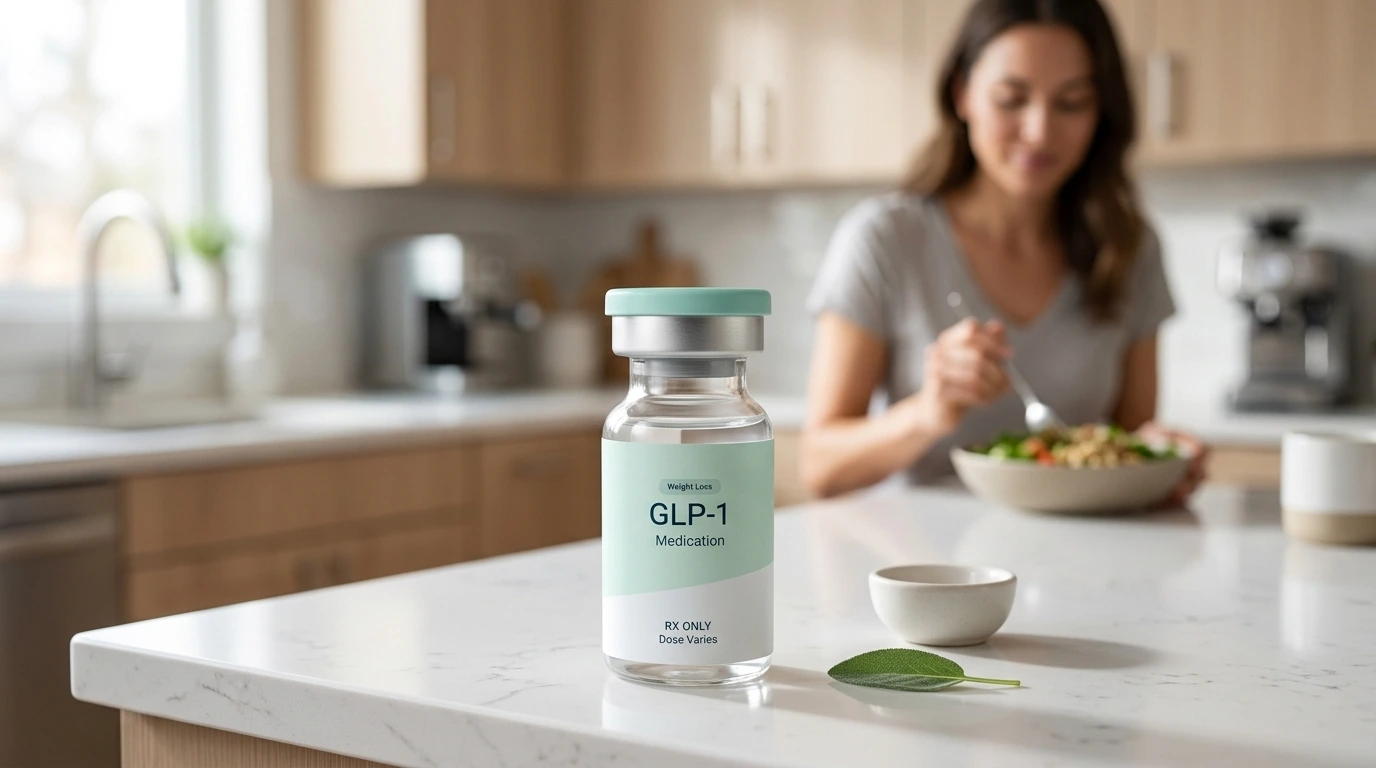
- The Vial: Instead of a plastic pen, your medication will typically arrive in a small, sterile glass vial with a rubber stopper. The liquid should still be clear and colorless.
- The Syringe: You will use traditional insulin syringes rather than a “flexpen.” These syringes are very small and have a built-in needle that is just as thin as the ones used with branded pens.
- Drawing the Dose: Instead of turning a dial, you will use the syringe to draw a specific volume of liquid (measured in “units” or milliliters) from the vial.
While the delivery method looks different, the underlying science of the GLP-1 hormone remains the same. Compounded options are often a preferred choice for those looking for a more flexible or accessible treatment path.
Storage and Maintenance Visuals
To keep your medication effective, you need to know how to store it and what a “bad” pen looks like.
Proper Storage:
- Unopened pens: These should be kept in the refrigerator. They should look crisp, clean, and the liquid must be liquid—not frozen.
- Opened pens: Once you start using a pen, it can usually stay at room temperature for up to 56 days. Keep it out of direct sunlight and away from extreme heat (like a car dashboard).
Signs of Spoilage: If you look at your pen and see any of the following, do not use it:
- Cloudiness: The liquid should be crystal clear.
- Color changes: Any yellowing or browning is a sign of degradation.
- Particles: Floating “flakes” or crystals mean the proteins in the medication have clumped together.
- Freezing: If the pen was accidentally placed too close to the cooling element in the fridge and froze, the internal structure of the medicine is likely destroyed. Even if it thaws and looks clear, it may no longer be effective.
Where the Injection Takes Place
When you are ready to use the shot, you have three primary visual “zones” on your body where the injection can occur. These areas have enough subcutaneous fat to ensure the medication is absorbed correctly without hitting muscle or bone.
- The Abdomen: At least two inches away from the belly button. This is the most common site.
- The Front of the Thighs: The middle-third of the thigh, on the top or outer side.
- The Back of the Upper Arm: This usually requires someone else to assist you or a good mirror to see what you are doing.
For more context on irritation and other reactions, read our common GLP-1 side effects guide.
Bottom line: It is visually and physically important to rotate your injection sites. Do not use the exact same “spot” every week. This prevents the skin from becoming thickened or scarred, a condition known as lipohypertrophy, which can interfere with how the medication is absorbed.
The Role of Personalized Support
Navigating the world of GLP-1 medications can feel overwhelming, especially when you are trying to understand the differences between branded pens and compounded vials. This is where a telehealth-first platform like TrimRx provides significant value. We connect you with licensed healthcare providers who can determine which medication is right for you based on your unique health profile.
Our program is designed to be a comprehensive journey. From the initial assessment to the moment your medication arrives from an FDA-registered compounding pharmacy, we prioritize transparency and support. If you are using compounded semaglutide through our platform, you will receive clear instructions on how to use the vial and syringe system, ensuring you feel just as confident as someone using a pre-filled pen.
What to Expect After the Injection
Once you have successfully administered the shot, the physical “look” of the site should be minimal. You might see a tiny red dot or a very small drop of blood or clear liquid. This is normal.
In some cases, you may notice a small, firm bump or slight redness at the injection site immediately after. This usually fades within a few hours. A small bruise is also a common occurrence and is generally not a cause for concern. However, you should contact your doctor if the site shows signs of an allergic reaction or infection, such as:
- Spreading redness or “tracks” away from the site.
- Extreme swelling or heat.
- Intense itching or hives around the area.
- Pus or discharge from the injection point.
In the days following the injection, you may begin to experience the effects of the GLP-1 medication. Visually, you may notice that you are serving yourself smaller portions or that you are less interested in “food noise”—the constant intrusive thoughts about eating. This is because semaglutide slows gastric emptying and signals the brain that you are full.
If you experience side effects like nausea or an upset stomach, we offer quick-access supplements like GLP-1 Daily Support supplement to help manage the transition.
Summary of Visual Safety Checks
Before every injection, perform this quick visual audit to ensure your safety:
- Check the Label: Does it say Ozempic® (or Semaglutide) and match your prescribed dose?
- Check the Expiration: Is the date on the pen still valid?
- Check the Liquid: Is it clear, colorless, and free of particles?
- Check the Needle: Are you using a fresh, sterile needle that was sealed in its paper tab? Never share needles with others.
- Check the Counter: Does the dose counter show “0” before you start dialing?
Conclusion
The question “what does the Ozempic shot look like” is about more than just aesthetics; it is about safety, accuracy, and peace of mind. Whether you are using a branded color-coded pen or a compounded vial through a program like ours, the goal remains the same: supporting your metabolic health through science-backed treatment. For readers who want additional metabolic support during their journey, the Weight Loss Boost supplement is another quick-access option. At TrimRx, we are committed to being your partner in this process, providing the clinical expertise and personalized care you need to succeed without the hassle of waiting rooms or hidden fees.
Key Takeaway: The injection is designed to be as painless and simple as possible. The needles are thinner than most people expect, and the devices are engineered for user-friendly administration.
If you are ready to see if a GLP-1 medication is the right fit for your weight loss goals, the next step is simple.
Your Next Step: Take our free online assessment quiz to see if you qualify for a personalized treatment program.
FAQ
Does the Ozempic needle hurt because of its size?
Most patients report feeling only a minor pinch or nothing at all because the needle is extremely thin and short. It is specifically designed for subcutaneous injection, which is much less painful than the intramuscular injections often used for vaccines. If you’re nervous about the process, our guide to taking the Ozempic shot safely and effectively can help.
Can I see how much medication is left in the pen?
Yes, the clear window on the side of the pen body allows you to see the remaining liquid. Additionally, the dose selector will not allow you to dial a dose larger than what is remaining in the pen, providing a mechanical way to know when it is time to start a new device.
Why does my pen still look partly full after I’ve used all my doses?
This is due to “overfill.” Manufacturers like Novo Nordisk include a small amount of extra liquid in each pen to ensure that the mechanical parts of the device can deliver every single one of your prescribed doses at the correct pressure. If the dose selector won’t turn to your full dose anymore, the pen is considered empty, even if you can still see a small amount of liquid in the reservoir.
What should I do if the liquid looks cloudy?
If the liquid is cloudy, contains flakes, or has changed color, you should not use it. This indicates the medication may have broken down due to heat, freezing, or expiration, and it may be unsafe or ineffective.
Is the look of the shot different if I use a compounded version?
Yes, compounded semaglutide usually comes in a glass vial rather than a pre-filled pen. You will use a standard, small insulin syringe to draw the medication manually, but the needles are typically the same ultra-fine gauge as those used with the branded pens.
Disclaimer: This content is for informational purposes only and does not constitute medical advice. It is not intended to diagnose, treat, cure, or prevent any disease or condition. Individual results may vary. Always consult a qualified healthcare professional before starting any weight loss program or medication.

Transforming Lives, One Step at a Time
Keep reading

Why Do I Feel Best Two Days After My Ozempic Injection?
Because you are noticing the shape of a weekly dose, and day two often sits in a useful window: the initial side effects have…

Does Pepto Bismol Help Nausea on Ozempic?
Ask your pharmacist before using it, because Pepto Bismol is not the neutral stomach remedy most people assume. Its active ingredient, bismuth subsalicylate, contains…

Can You Sunbathe With an Injection Site Bruise on Ozempic?
You can, and the better answer is to cover that specific spot. Ultraviolet light on skin that is actively healing can trigger post-inflammatory hyperpigmentation,…


