What Ingredients Are in Compounded Semaglutide
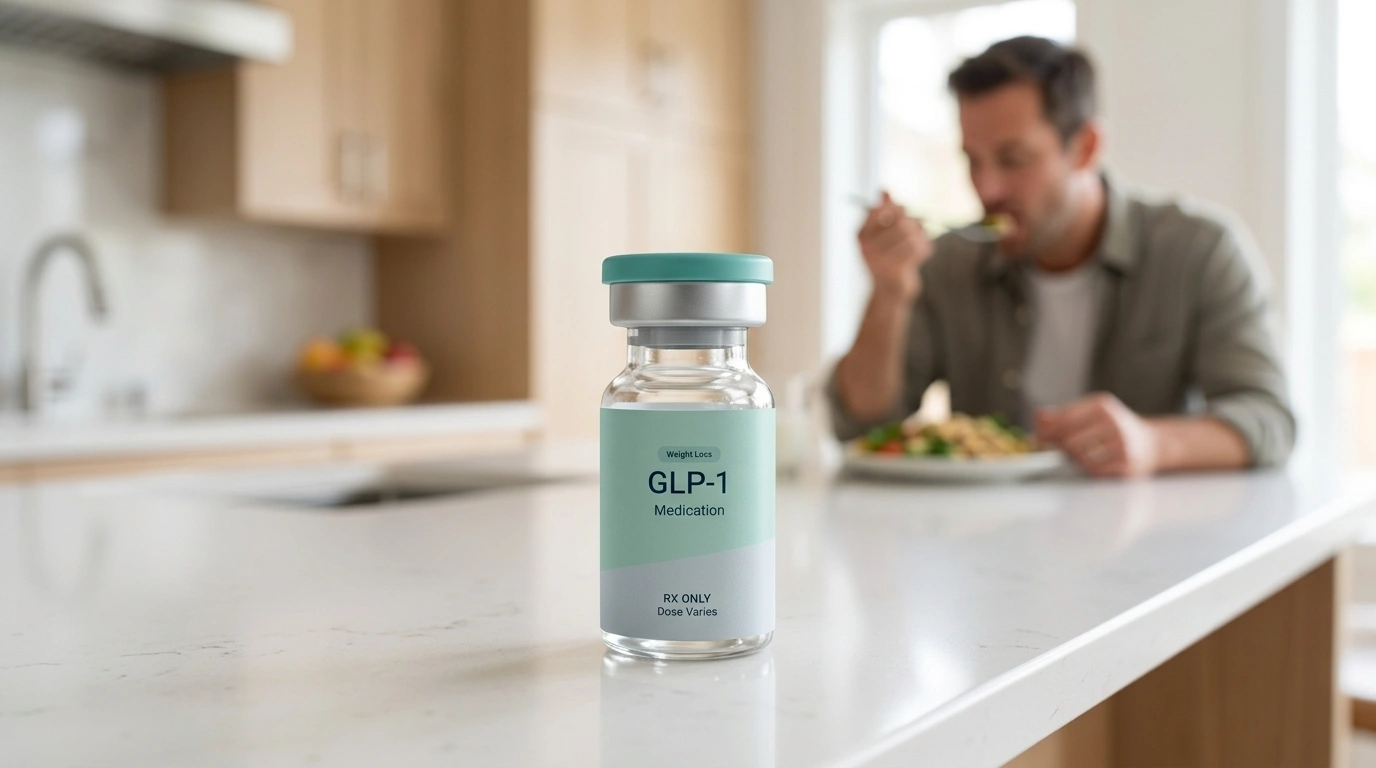
Table of Contents
- Introduction
- The Primary Active Ingredient: Semaglutide Base
- Common Additives: Why B-Vitamins Are Included
- Inactive Ingredients: Carriers and Stabilizers
- Compounded vs. Branded Formulations
- Quality Control and Pharmacy Standards
- How the Ingredients Work Together
- Storage and Stability of the Ingredients
- What to Ask Your Provider
- Starting Your Journey with TrimRx
- Conclusion
- FAQ
Introduction
Deciding to begin a medical weight loss program is a significant step toward improving your metabolic health, but it often brings up technical questions about the treatment itself. You may have heard about GLP-1 medications and wondered exactly what goes into the vial when it is prepared specifically for you. Understanding what ingredients are in compounded semaglutide is essential for feeling confident and informed as you navigate your journey. At TrimRx, we believe that transparency is the foundation of a successful transformation. This article will break down the primary active ingredients, the common additives used to support your body, and the role of inactive components that ensure the medication is safe and stable. By understanding the science behind your treatment, you can move forward with clarity and peace of mind.
If you are considering prescription treatment, you can complete a free eligibility assessment.
The Primary Active Ingredient: Semaglutide Base
The most critical component of any compounded semaglutide preparation is the active pharmaceutical ingredient (API) itself: semaglutide. This substance belongs to a class of medications called glucagon-like peptide-1 (GLP-1) receptor agonists. In plain English, a GLP-1 receptor agonist is a compound designed to mimic a hormone your body naturally produces in the gut after you eat.
This hormone plays a vital role in signaling to your brain that you are full and telling your stomach to slow down the speed at which it processes food. Semaglutide is technically a peptide, which is a short chain of amino acids. Specifically, it is a 31-amino acid sequence that has been modified from the natural human GLP-1 hormone. These modifications allow the medication to last much longer in the bloodstream—roughly seven days—compared to the natural hormone, which breaks down in just a few minutes.
Quick Answer: Compounded semaglutide primarily contains the active ingredient semaglutide (a GLP-1 receptor agonist), a sterile liquid base such as bacteriostatic water, and often a B-vitamin like B12 to help manage energy levels and nausea.
For additional background, you can read what is in a semaglutide compound.
When a pharmacy creates a personalized version of this medication, they start with high-purity semaglutide. It is important to look for formulations that use the semaglutide base. This is the exact same active molecule found in major branded medications used for weight management and blood sugar control.
Semaglutide Base vs. Semaglutide Salts
One of the most important distinctions to understand regarding ingredients is the difference between the base form and salt forms. You may sometimes hear about “semaglutide sodium” or “semaglutide acetate.” These are salt forms of the molecule.
The FDA has expressed concerns regarding the use of these salt forms in compounding. The agency notes that the safety and effectiveness of semaglutide salts have not been established in the same way as the base molecule. High-quality pharmacies prioritize the semaglutide base to ensure the preparation aligns with the active ingredient used in clinical research and approved branded products.
Common Additives: Why B-Vitamins Are Included
A unique aspect of compounded medications is that they can be “custom-made” to meet specific needs. This flexibility is often why a licensed healthcare provider might choose a compounded version over a standard branded product. When looking at what ingredients are in compounded semaglutide, you will frequently see added nutrients, most commonly Vitamin B12 or Vitamin B6.
For a deeper explanation, explore what semaglutide with B12 is and whether it helps.
Vitamin B12 (Cyanocobalamin)
Vitamin B12 is the most common additive in these formulations. There are two primary clinical reasons for its inclusion:
- Side Effect Management: Some individuals experience mild nausea or fatigue when they first start a GLP-1 medication. Vitamin B12 is well-known for its role in energy metabolism and can help manage these initial transition symptoms.
- Visual Confirmation: Vitamin B12 has a naturally bright red hue. When it is mixed into the clear semaglutide solution, it turns the liquid pink or red. This can help patients easily see the medication in the syringe, making it easier to draw an accurate dose.
Vitamin B6 (Pyridoxine)
In some preparations, Vitamin B6 is used instead of, or in addition to, B12. Similar to its counterpart, Vitamin B6 is often included to help mitigate gastrointestinal discomfort as the body adjusts to the medication. It plays a role in various metabolic processes and supports the nervous system, which can be beneficial during a period of caloric restriction and weight loss.
Key Takeaway: Additives like Vitamin B12 are not “fillers”; they are functional ingredients chosen to help reduce common side effects like nausea and fatigue during the early stages of treatment.
Inactive Ingredients: Carriers and Stabilizers
To transform the active peptide into an injectable liquid, several inactive ingredients are required. These components do not affect weight loss directly, but they are essential for ensuring the medication is sterile, stable, and comfortable to inject.
Sterile Carrier: Bacteriostatic Water
Because semaglutide is typically administered as a subcutaneous injection, it must be dissolved in a sterile liquid. The most common carrier is bacteriostatic water. This is highly purified, medical-grade water that contains a small amount of benzyl alcohol (usually 0.9%).
The benzyl alcohol acts as a preservative. This is vital for multi-dose vials, as it prevents the growth of bacteria inside the vial after the rubber seal has been punctured for the first time. Without a preservative, the medication would only be safe for a single use.
pH Buffers and Adjusters
Maintaining the correct pH balance is essential for ensuring the medication does not sting upon injection. If a solution is too acidic or too alkaline, it can cause discomfort at the injection site. Compounding pharmacists often use small amounts of buffering agents to keep the solution at a neutral pH that is compatible with human tissue. Common buffers include:
- Sodium Phosphate
- Dibasic Sodium Phosphate
These ingredients act as “stabilizers,” keeping the semaglutide molecule “folded” correctly. Because semaglutide is a peptide, it is sensitive to its environment. These buffers help the peptide maintain its structure so it can properly bind to your GLP-1 receptors once it enters your system.
For a related explanation of carriers, preservatives, and buffers, read what compounded semaglutide is made of.
Compounded vs. Branded Formulations
While the active ingredient—the semaglutide molecule—is the same, there are differences in the inactive ingredients between compounded preparations and branded medications like Wegovy® or Ozempic®.
Branded Medications:
These products are mass-produced in fixed doses and typically come in pre-filled, proprietary injection pens. They contain specific stabilizers and buffering agents chosen for long-term shelf stability in a commercial setting. These might include ingredients like propylene glycol or disodium phosphate dihydrate.
Compounded Formulations:
Compounded semaglutide offers more flexibility. Because a pharmacist mixes the medication for an individual, they can adjust the concentration or add the B-vitamins mentioned earlier. These versions are typically provided in a multi-dose glass vial, and the medication is drawn into a syringe by the patient. This allows for precise dosage adjustments that may not be possible with the fixed-click settings of a branded pen.
Ingredient Comparison Table
| Feature | Branded (e.g., Wegovy®) | Compounded Semaglutide |
|---|---|---|
| Active Ingredient | Semaglutide Base | Semaglutide Base |
| Nutrient Additives | None | Often Vitamin B12 or B6 |
| Preservatives | Varies by pen type | Benzyl Alcohol (in multi-dose) |
| Delivery Method | Pre-filled Auto-injector | Vial and Syringe |
| Customization | Fixed Doses | Adjustable Concentration |
Quality Control and Pharmacy Standards
The quality of what is inside the vial depends entirely on the standards of the pharmacy preparing it. While compounded semaglutide is not FDA-approved in the same way that branded drugs are, the pharmacies we work with must adhere to strict regulatory guidelines.
For more context about pharmacy standards, read what to know about compounding pharmacy semaglutide.
503A and 503B Pharmacies
In the United States, compounding pharmacies generally fall into two categories:
- 503A Pharmacies: These are state-licensed pharmacies that prepare medications for individual patients based on a specific prescription. They are overseen by State Boards of Pharmacy and must follow USP <797> standards for sterile compounding.
- 503B Outsourcing Facilities: These are larger facilities that can manufacture in bulk and are held to “Current Good Manufacturing Practice” (cGMP) standards. They are directly registered with and inspected by the FDA.
The Certificate of Analysis (CoA)
Every batch of raw semaglutide used in a pharmacy must be accompanied by a Certificate of Analysis (CoA). This document is a report card for the ingredient. It proves that the semaglutide has been tested for purity, potency, and the absence of contaminants like heavy metals, bacteria, or endotoxins. We ensure our partners prioritize these high-purity ingredients to maintain the integrity of your program.
How the Ingredients Work Together
Understanding what ingredients are in compounded semaglutide helps you see the “big picture” of how the medication supports your body. Once injected, the ingredients perform three main functions:
- Appetite Regulation: The semaglutide molecule travels to the hypothalamus in the brain. It binds to GLP-1 receptors that control hunger, helping to reduce “food noise” and making it easier to feel satisfied with smaller portions.
- Digestion Management: The medication signals the stomach to slow down the emptying process. This means food stays in your stomach longer, leading to a physical sensation of fullness that lasts for hours after a meal.
- Metabolic Support: While the semaglutide manages appetite, the added Vitamin B12 supports your metabolic pathways. This is especially helpful as your body adapts to a lower-calorie intake, helping you maintain the energy levels needed for daily activity and exercise.
For readers interested in additional energy and metabolic support during weight loss, the Weight Loss Boost supplement may be worth discussing with a qualified healthcare professional.
Bottom line: Safety and effectiveness in a compounded program come from the combination of high-purity active ingredients, essential stabilizers, and professional medical supervision.
Storage and Stability of the Ingredients
Because semaglutide is a peptide, the ingredients are sensitive to temperature and light. Proper storage is just as important as the ingredients themselves for maintaining the medication’s potency.
For more guidance, read semaglutide storage, travel, and handling recommendations.
- Refrigeration: The vial should be kept in the refrigerator (between 36°F and 46°F). Extreme heat can cause the peptide chains to break down, which makes the medication less effective.
- Light Protection: Peptides can also be sensitive to UV light. Most compounded semaglutide comes in amber-colored or opaque vials, but it is still best to keep the medication in its original packaging or a dark part of the fridge.
- Expiration Dates: Every compounded vial will have a “Beyond Use Date” (BUD). This date is determined by the pharmacist based on the stability of the ingredients and the type of preservative used. Always check this date before your weekly injection.
What to Ask Your Provider
Before starting any medication, it is important to discuss the ingredient list with a licensed healthcare professional. While the ingredients in compounded semaglutide are generally well-tolerated, some individuals may have sensitivities.
Key questions to consider:
- “Does this formulation use semaglutide base or a salt form?”
- “Are there any added vitamins like B12 in my specific prescription?”
- “What preservative is used, and is it safe for my medical history?”
- “How should I store this medication to keep the ingredients stable?”
A clinical consultation ensures that the medication is appropriate for your unique health profile. During our assessment process, providers review your medical history to ensure there are no contraindications, such as a history of medullary thyroid carcinoma (MTC) or pancreatitis.
If you are ready to discuss whether treatment may be appropriate for you, take the free assessment quiz.
Starting Your Journey with TrimRx
Navigating the world of GLP-1 medications can be complex, but we are here to make it simple. We provide a bridge between you and the clinical expertise needed to start a personalized weight loss journey. Our program is designed to be telehealth-first, meaning you can access medical supervision and high-quality preparations without the need for in-person visits or waiting rooms.
Our process is built on a foundation of safety and transparency:
Step 1: The Personal Health Assessment
You begin by completing a free online assessment quiz. This helps us understand your health history, current BMI, and weight loss goals. This information is vital for a licensed provider to determine if you are an appropriate candidate for a personalized program.
Step 2: Professional Consultation
A licensed healthcare professional reviews your profile. If they determine that semaglutide is a safe and effective option for you, they will write a prescription tailored to your needs. This may include specific concentrations or the addition of Vitamin B12 to support your journey.
Step 3: Quality-Controlled Preparation
The prescription is sent to one of our partner compounding pharmacies. These facilities are FDA-registered and inspected, ensuring that the ingredients in your vial meet rigorous standards for purity and sterility.
Step 4: Discrete Delivery and Support
Your medication is shipped directly to your door in climate-controlled packaging. We provide 24/7 access to a dedicated team to answer questions about your ingredients, dosage, or progress, ensuring you never feel alone in your journey.
Conclusion
Understanding what ingredients are in compounded semaglutide empowers you to take the next step in your health journey with confidence. From the hunger-regulating semaglutide base to the energy-supporting B-vitamins and the essential stabilizers that keep the solution sterile, every component serves a specific purpose. These ingredients work in harmony with your body’s natural pathways to support sustainable weight management. Our mission at TrimRx is to provide a transparent, science-backed, and empathetic approach to weight loss. We believe that by merging clinical expertise with modern technology, we can help you embrace a healthier lifestyle through a program that is as unique as you are.
Key Takeaway: True progress in weight loss is built on a foundation of high-quality ingredients, professional medical oversight, and a commitment to your long-term wellness.
Ready to see if a personalized program is right for you? Take the free assessment quiz today to explore your options and connect with a licensed provider.
FAQ
What is the most common ingredient added to compounded semaglutide?
Vitamin B12 (cyanocobalamin) is the most common additive. It is frequently included to help patients manage potential side effects like fatigue and nausea while also giving the medication a pink or red color that makes it easier to see in a syringe.
Is the semaglutide in compounded versions the same as in branded drugs?
The active pharmaceutical ingredient (API) used in high-quality compounded preparations is the semaglutide molecule, which is the same active ingredient found in branded medications like Wegovy® or Ozempic®. The main differences are the inactive ingredients, such as preservatives and buffers, and the ability to add nutrients like B12.
Why does my compounded semaglutide contain a preservative?
Most compounded semaglutide is provided in multi-dose vials, meaning you use the same vial for several weeks. A preservative like benzyl alcohol is necessary to prevent the growth of bacteria inside the vial once the seal has been punctured, ensuring the medication remains safe for use.
How do I know if the ingredients in my vial are pure?
You can ensure purity by using a platform that partners with FDA-registered and inspected compounding pharmacies. These pharmacies are required to test their ingredients for potency and purity and can provide a Certificate of Analysis (CoA) to verify the quality of the semaglutide used in their formulations. If you are evaluating your options, you can complete a free eligibility assessment.
Disclaimer: This content is for informational purposes only and does not constitute medical advice. It is not intended to diagnose, treat, cure, or prevent any disease or condition. Individual results may vary. Always consult a qualified healthcare professional before starting any weight loss program or medication.

Transforming Lives, One Step at a Time
Keep reading
Semaglutide vs Tirzepatide: Comparing Weight Loss, Blood Sugar, and Side Effects
Semaglutide and Tirzepatide are one of the most common comparisons in medical weight loss. The two medications share a clear family resemblance. Both are…

How Much Weight Can You Lose on Semaglutide?
How much weight can you lose on semaglutide? The answer varies depending on your starting weight, dosage, treatment duration, and individual response to the…

Hair Shedding Months Into Semaglutide
It shows up in the shower drain first, then on the pillow, then in the brush. By the time most people search this, they…


