What to Do If You Drop Your Ozempic Pen on the Floor
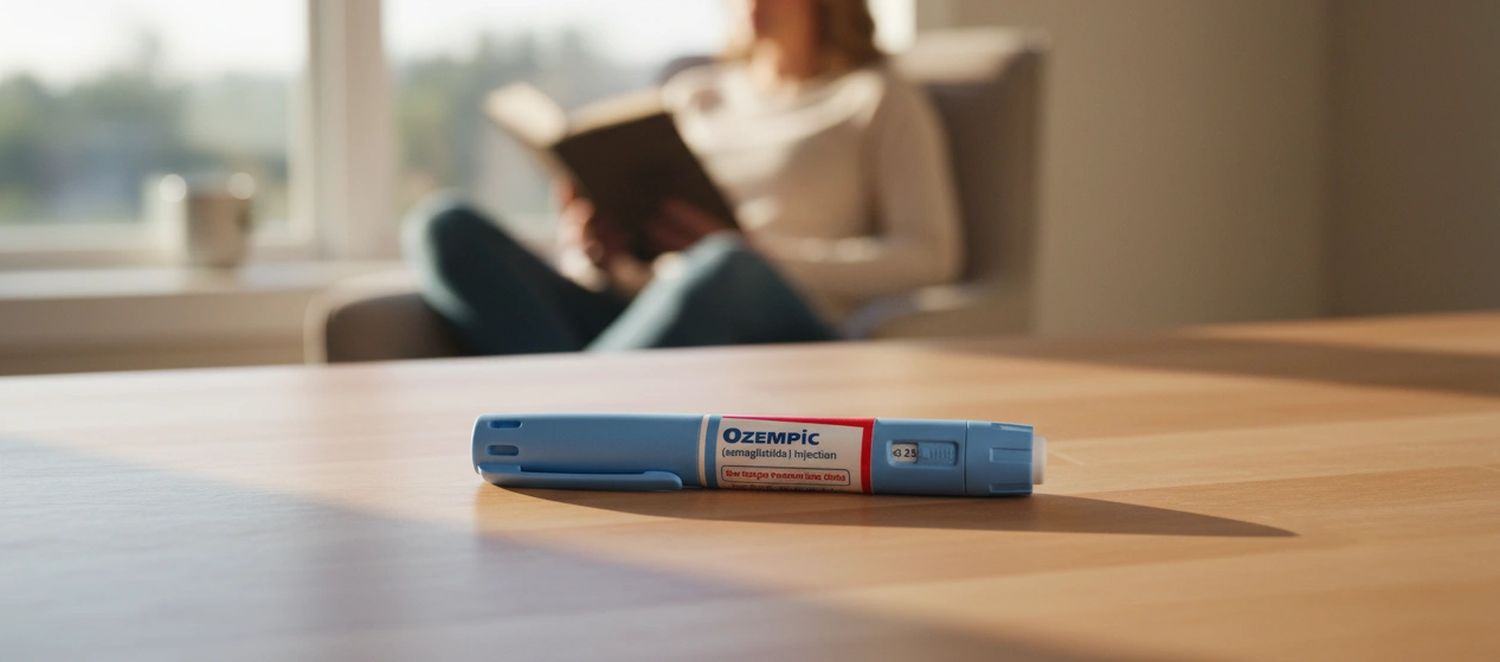
A dropped Ozempic pen is usually still usable, but you should not assume it is. Run four checks before you inject: look for cracks in the pen body and the glass cartridge, confirm the liquid is still clear and colorless, attach a brand new needle, and do a flow check to confirm the pen delivers a drop. If all four pass, use it. If any one fails, stop and call the pharmacy or manufacturer for a replacement.
The reason for the flow check is that a drop can knock the internal mechanism out of alignment in ways you cannot see from outside. A cracked cartridge is obvious. A misaligned plunger is not.
The four-step check, in order
1. Inspect the pen body
Look at the whole device, including the cap, the barrel, and the seam where the cartridge holder meets the dose mechanism. Hairline cracks in plastic are easiest to spot by tilting the pen under a lamp. Any crack means replace it, because a crack in the housing can mean the internals took the impact too.
2. Inspect the cartridge glass
This is the part people miss. The medication sits in a glass cartridge inside a clear window. Look through the window along the full length. You are looking for chips, hairline fractures, or dampness inside the housing that suggests a slow leak. A cracked cartridge is an automatic replacement, not a judgment call, because it compromises sterility.
3. Check the solution
Semaglutide should be clear and colorless with no visible particles. If the drop was hard enough to cause any change in appearance, cloudiness or floaters or discoloration, do not inject it. Set it aside.
4. New needle, then flow check
Attach a fresh needle regardless of whether the pen had one on it when it fell. If it did have a needle attached, that needle is now suspect for bending or contamination and should go straight into a sharps container. Then run the flow check per your instructions for use and confirm a drop appears at the tip. That drop is your evidence the mechanism survived.
Does it matter what it landed on?
Somewhat, and not in the way people assume.
Carpet, a bed, or a bathmat. Low risk. These absorb most of the impact energy.
Tile, hardwood, concrete, or a bathroom floor. Higher risk, particularly for the glass cartridge. Concrete and tile transmit the full force of the fall.
Height matters more than surface. A pen sliding off a counter onto tile is a different event from a pen knocked off a nightstand onto a rug. If it fell more than about waist height onto something hard, be stricter with your inspection.
Whether the cap was on. A capped pen is considerably better protected than an uncapped one, especially if a needle was attached. An uncapped pen that lands on its needle end has almost certainly damaged the needle even if everything else is fine.
Consider this scenario: a patient sets the pen on the edge of a bathroom counter while attaching a needle, bumps it with an elbow, and watches it land needle-first on tile. Here the pen itself may well be fine, but that needle is done. New needle, flow check, and then a careful look at the cartridge for stress cracks from the impact.
Does a dropped pen lose potency?
A single drop does not meaningfully degrade semaglutide. The molecule is sensitive to heat, freezing, and sustained agitation, not to one sharp impact. What a drop threatens is the delivery system and the container integrity, not the drug itself.
This is worth separating clearly, because the two failure modes call for different responses. Product degradation is about how the medication was stored over time. A drop is a mechanical event affecting a device. The reason storage gets more attention in the research literature is that temperature excursions are far more common and far more consequential than dropped devices, and studies of real-world storage have found that medication frequently spends time outside its recommended range without patients realizing it.
What if it fell out of the fridge?
Two things happened at once, and you should handle them separately. Check the device for damage using the four steps above. Then, separately, account for how long it sat out before you noticed. A short interval at room temperature is generally within the tolerances described in your instructions for use. An overnight or all-day interval is a different question and worth a call to the pharmacy.
If storage questions come up often in your household, our guide on getting the most out of your GLP-1 treatment covers the routine habits that prevent most of these situations.
What if you dropped it while traveling?
Traveling raises the stakes because a replacement is harder to obtain quickly. The check is the same, but the contingency planning matters more. Carrying a spare needle supply and knowing your pharmacy’s number before you leave turns a ruined trip into a phone call. Our guide to GLP-1 medications and travel covers what to pack and how to handle a mid-trip problem.
When to call rather than decide
Call the pharmacy or manufacturer if any of these apply:
- Any visible crack, chip, or fracture in the housing or cartridge
- The flow check produces no drop after several attempts
- The dial feels different than it did before the drop, whether stiffer, looser, or gritty
- The dose counter behaves oddly or does not move smoothly
- The solution changed appearance
- You are simply not confident, and your next dose is due
That last one is a legitimate reason. Branded pens are usually replaced by the manufacturer for device defects, and compounding pharmacies generally replace product damaged before use. The cost of asking is a phone call.
What not to do
Do not shake the pen to see if it still works. Do not disassemble it. Do not inject and then decide based on how you feel, because a partial dose is difficult to detect in the moment and re-dosing to compensate is not a safe correction. And do not reuse the needle that was attached when it fell.
The short version
Look, look again through the window, check the liquid, new needle, flow check. Four steps, under a minute. Most dropped pens pass all four. The ones that do not are the reason you check.
If you would rather have a care team confirm the call than talk yourself into it, TrimRx includes provider access with treatment, and our guide to the Ozempic starting dose covers what else to expect in your first weeks with the device.
This information is for educational purposes and is not medical advice. Consult with a healthcare provider before starting any medication. Individual results may vary.

Transforming Lives, One Step at a Time
Keep reading
Ozempic Changed How You and Your Partner Spend Time
Friday night was a place you both liked and a bottle of something. Sunday was a long breakfast. Holidays were planned around restaurants. That…
Partner Says You’re Not Eating Enough on Ozempic?
It has become a thing at dinner. They watch your plate. You feel watched. Something gets said, or pointedly not said, and the meal…

Weekly Client Dinners on Ozempic: A Plan for Recurring Work Meals
Managing one difficult dinner is a matter of ordering well. Managing four a week indefinitely is a different problem, because anything that relies on…


