What to Do With Leftover Semaglutide Vials When You Stop
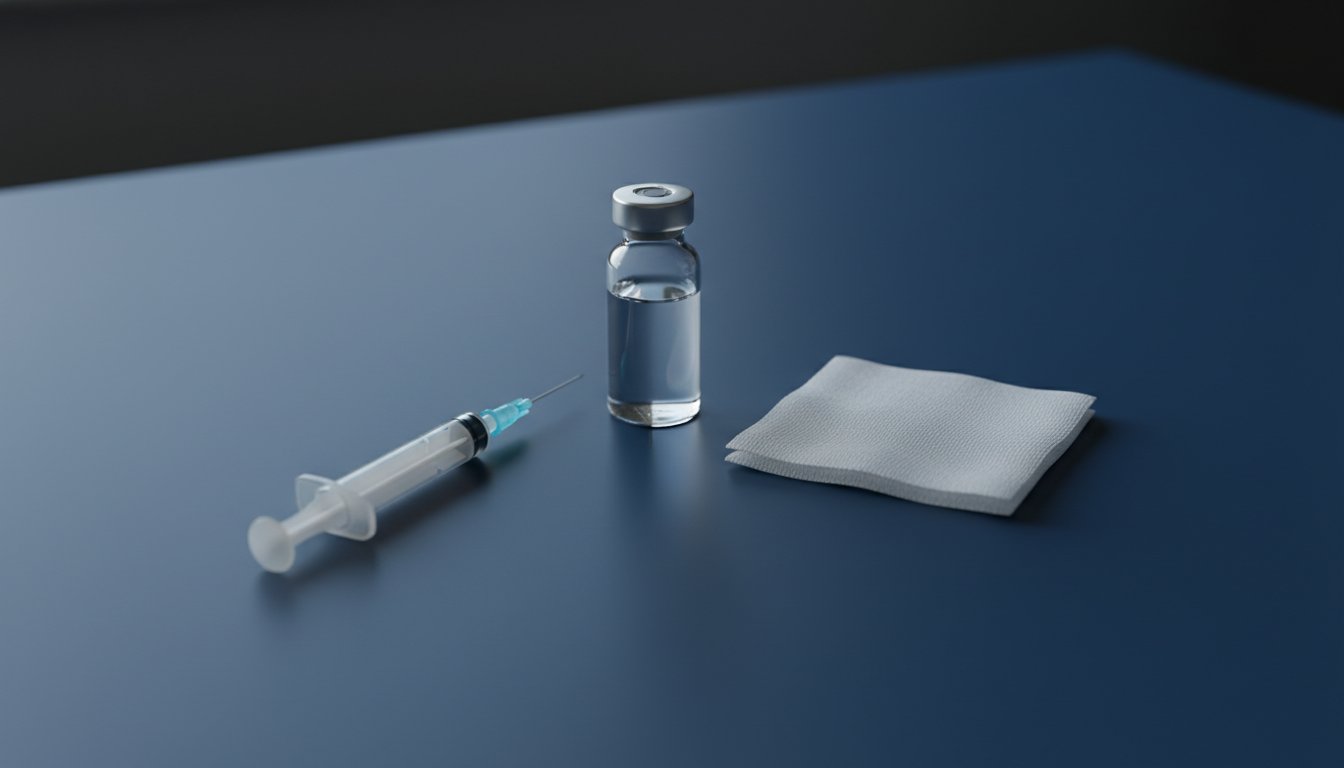
Do not flush them, do not put them loose in household trash, and do not give or sell them to anyone. The route that works for most people is a drug take-back program, and if one is not available, your pharmacy can tell you what your area allows.
Before you dispose of anything, though, ask your provider one question: is stopping definitely the plan? People frequently pause for reasons that turn out to be temporary, and disposing of medication you will want in three weeks is an expensive way to make that decision permanent.
First, is this a stop or a pause?
Worth separating, because the answer changes what you do.
A pause for illness, surgery, travel, or a supply gap usually means keeping the medication, stored properly, and confirming the beyond-use date will still be valid when you resume.
A stop because you have reached maintenance, changed medication, or decided treatment is not for you means the medication goes.
A stop you have not discussed is worth a conversation first. Our guides on what happens when you stop taking semaglutide and how to stop GLP-1 medications without regaining weight cover what to expect and what a planned transition looks like.
If you are switching products rather than stopping, ask whether there is any overlap before you discard the old supply.
How to dispose of it properly
Drug take-back programs are the best route. Many pharmacies host permanent collection kiosks, and many communities run periodic take-back events. This is the cleanest option and it handles both the medication and the question of what your local rules allow.
Ask your dispensing pharmacy. They will tell you what they accept and what your area requires. Compounding pharmacies vary in whether they take product back.
Household hazardous waste collection accepts medications in many municipalities.
Check local rules before using household trash. Guidance on disposing of medication in household waste differs by state and city, and injectable products with sharps involved add another layer. Do not assume the general advice you have read applies where you live.
Needles always go in a sharps container, separately from the medication itself, and that container follows your local sharps route.
What not to do
Do not flush it. Medications flushed down toilets enter the water system. There is a small list of drugs for which flushing is specifically recommended because of overdose risk, and these are not on it.
Do not put pens or vials loose in the bin, particularly with needles attached.
Do not give it to a friend or family member. This is the one people most often consider and it is the worst option on the list. Prescriptions are specific to a person, dosing depends on where someone is in their titration, and someone starting at a maintenance dose rather than a starting dose can have a genuinely bad time. Documented cases of dosing errors with this medication describe days of nausea, vomiting, and abdominal pain.
Do not sell it or list it online. Beyond the legal problem, you have no idea who receives it or how it will be stored.
Do not keep it “just in case” indefinitely. Compounded preparations carry short beyond-use dates, and expired product is not a safety net.
Consider this scenario: a patient reaches their goal, stops treatment, and gives two unopened vials to a colleague who has been asking about it. The colleague, having never titrated, starts at that maintenance concentration. The outcome is several genuinely miserable days and a call to a poison centre, from a gesture that was meant as generosity.
Recover what you can first
A practical point people miss. Before you discard anything, check whether it has any value to you.
Ask about a refund or credit if a shipment is unopened and recent. Some pharmacies will accommodate this, particularly if the reason for stopping is medical.
Cancel your subscription or auto-refill before the next order ships. This is the single most common way people end up with more leftover medication than they started with.
Ask whether it can be held rather than shipped, if you might resume.
Keep the record, not the medication
Two things worth retaining after you dispose of the product.
The label information. Photograph the label with the dose, concentration, and pharmacy details before you discard. If you resume later, or if a clinician asks what you were taking, that record is more reliable than memory. This matters particularly for compounded preparations, which may not appear in any pharmacy record.
Your own notes. What dose you reached, how you tolerated it, and what your results looked like. Our guide on how to track your progress on semaglutide or tirzepatide covers what is worth keeping.
What happens after you stop
Worth knowing so it does not surprise you. Appetite typically returns, and some weight regain is common. That is a well-documented pattern rather than a personal failure, and it is the reason a planned transition matters more than an abrupt one.
The habits built during treatment are what carry results forward. Our guide on building lasting habits after stopping GLP-1 medications covers what actually helps.
If you find yourself wanting to restart, that is a conversation with a provider rather than a reason to have kept old vials. Resuming after a break is not always at the dose you left off.
When to call
Contact your pharmacy for your local disposal route, for whether they accept returns, and to stop future shipments.
Contact your provider before stopping if you have not discussed it, if you are stopping because of side effects rather than because you reached a goal, or if you have diabetes and this affects your glucose management.
If anyone has taken medication that was not prescribed to them, contact Poison Control at 1-800-222-1222 in the US, or emergency services if they are unwell.
The short version
Take-back program first, pharmacy second, local hazardous waste third. Needles go in a sharps container regardless. Never flush, never share, never sell. And cancel the auto-refill before it ships, because that is how most people end up with more leftovers than they expected.
If you are stopping and want a planned transition rather than an abrupt one, see whether TrimRx is a fit for you.
This information is for educational purposes and is not medical advice. Consult with a healthcare provider before starting any medication. Individual results may vary.

Transforming Lives, One Step at a Time
Keep reading

Does Miralax Work If You’re Constipated on Semaglutide?
Often yes, and it is worth talking to your provider or pharmacist before making it a routine rather than an occasional measure. Polyethylene glycol,…

Does Zofran Work for Semaglutide Nausea?
This is a question for your provider rather than one an article can answer for you. Ondansetron, the drug sold as Zofran, is prescription-only,…

Can You Keep Semaglutide in a Mini Fridge?
Yes, provided you verify that it actually holds the right temperature, which is a bigger caveat than it sounds. Mini fridges are less thermally…


