Zepbound Protein Intake — How Much You Actually Need
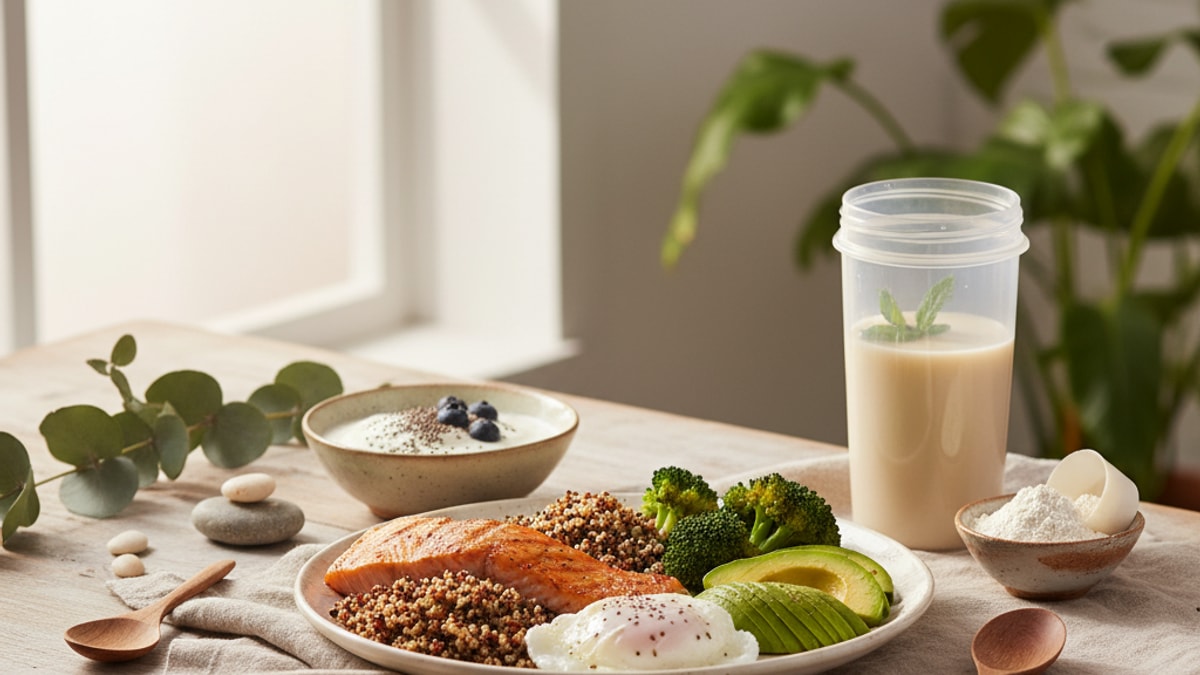
Zepbound Protein Intake — How Much You Actually Need
A 72-week Phase 3 trial (SURMOUNT-1) published in the New England Journal of Medicine found tirzepatide 15mg produced mean body weight reduction of 20.9%. But body composition analysis revealed that 25–40% of total weight lost came from lean tissue rather than fat in participants who didn't implement protein optimization strategies. The medication doesn't cause muscle loss. Appetite suppression does. When your natural hunger signals drop by 60–70%, you stop eating long before you've consumed enough protein to preserve lean mass.
Our team has worked with hundreds of patients on tirzepatide protocols. The gap between those who maintain muscle and those who don't comes down to three factors: leucine threshold per meal, protein distribution timing, and deliberate tracking when hunger cues disappear.
What is the recommended protein intake while taking Zepbound?
The evidence-based target for zepbound protein intake during active weight loss is 1.6–2.2 grams per kilogram of body weight daily, distributed across 3–4 meals with at least 2.5 grams of leucine per meal to trigger mTOR activation and muscle protein synthesis. This is 40–60% higher than the RDA because GLP-1-mediated appetite suppression removes the natural hunger cues that would otherwise drive adequate intake.
Why Zepbound Makes Protein Targets Harder to Hit
Tirzepatide acts as a dual GIP/GLP-1 receptor agonist, slowing gastric emptying and extending postprandial satiety hormone elevation (GLP-1, PYY) for 4–6 hours beyond what a standard meal produces. The result: you feel full on 600–800 calories when your body needs 1,800–2,200 for maintenance. Protein becomes the first macronutrient to drop because it's the most satiating. Eating 40 grams of protein in one sitting when you're already full from 200 calories feels physically impossible.
The leucine threshold matters more than total daily protein. Muscle protein synthesis requires 2.5–3 grams of leucine per meal to activate mTOR (mechanistic target of rapamycin), the cellular pathway that signals muscle building. Spreading 120 grams of protein across six tiny meals gives you six exposures of 1.5 grams leucine each. Below threshold every time. Concentrating that same 120 grams into three meals of 40 grams each crosses the leucine threshold three times daily, maximizing anabolic response even during caloric deficit.
A 2019 study in Obesity journal found that participants on semaglutide who maintained protein at 1.2g/kg or higher preserved 89% of lean mass during 16-week weight loss, compared to 73% preservation in participants consuming standard protein (0.8g/kg). The medication amplifies the consequences of inadequate protein. What would cause minor muscle loss during standard dieting becomes significant lean mass depletion under GLP-1 suppression.
Calculating Your Personal Zepbound Protein Intake Target
Use your current body weight in kilograms as the baseline. Multiply by 1.6 for the minimum threshold, 2.2 for the maximum target. A 90kg (198lb) individual requires 144–198 grams daily. This is total protein, not just animal sources. Plant proteins count if they're complete (containing all nine essential amino acids in adequate ratios).
Split that total into 3–4 meals. Each meal needs 35–50 grams minimum to cross the leucine threshold. For a 150-gram daily target, that's four meals of 37.5 grams or three meals of 50 grams. Front-load protein at the start of each meal. Eating the chicken breast before the rice ensures you hit the target before satiety kicks in and you stop eating.
Don't rely on hunger to tell you when to eat more. Tirzepatide suppresses ghrelin (the hunger hormone) for up to 168 hours post-injection. Patients frequently report going 18–24 hours without feeling any desire to eat. If you wait for hunger, you'll miss two or three protein windows every week. Set alarms. Track intake in an app. Treat zepbound protein intake as a prescription, not a preference.
Protein Sources That Work When Appetite Is Suppressed
| Source | Protein per 100g | Leucine per Serving | Volume Required | Why It Works on Zepbound |
|---|---|---|---|---|
| Greek yogurt (nonfat) | 10g | 1.2g per cup | 1.5 cups for 35g protein | Low volume, high density, easy to consume when not hungry |
| Chicken breast (cooked) | 31g | 2.8g per 4oz | 4oz for 35g protein | Lean, fast-digesting, minimal fat to slow gastric emptying further |
| Whey protein isolate | 25g per scoop | 2.7g per scoop | 1.5 scoops for 37g protein | Liquid form bypasses early satiety, absorbs in 60–90 minutes |
| Egg whites (liquid) | 11g per 100ml | 1.0g per 100ml | 320ml for 35g protein | Zero fat, pure protein, can be consumed as a shake |
| Cottage cheese (low-fat) | 11g | 1.1g per cup | 1.25 cups for 35g protein | Casein-based (slow-digesting), keeps you in positive nitrogen balance longer |
The bottom line: prioritize protein density over total meal volume. A 200-calorie chicken breast delivers 35 grams of protein in 4 ounces. A 200-calorie peanut butter sandwich delivers 8 grams in twice the volume. When you can only eat 600 calories before feeling physically uncomfortable, every bite needs to count toward your leucine threshold.
Zepbound Protein Intake: Full Comparison
| Patient Profile | Minimum Daily Protein | Optimal Daily Protein | Leucine Threshold per Meal | Meal Frequency | Bottom Line |
|---|---|---|---|---|---|
| 70kg (154lb) starting weight | 112g | 154g | 2.5–3g leucine | 3–4 meals | Requires 37–51g protein per meal to preserve lean mass during deficit |
| 90kg (198lb) starting weight | 144g | 198g | 2.5–3g leucine | 3–4 meals | Standard meal timing (breakfast, lunch, dinner, post-workout) hits threshold consistently |
| 110kg (242lb) starting weight | 176g | 242g | 2.5–3g leucine | 4–5 meals | Front-load two high-protein meals (50g each) early in the day when appetite suppression is weakest |
| Vegetarian/plant-based | Same as above | Same as above | 3–3.5g leucine (plant sources) | 4–5 meals | Plant proteins require 15–20% higher total intake to match leucine density of animal sources |
Key Takeaways
- Zepbound protein intake must reach 1.6–2.2g per kilogram body weight daily to prevent muscle loss during GLP-1-mediated weight reduction
- Each meal requires 35–50 grams of protein with at least 2.5 grams of leucine to activate mTOR and trigger muscle protein synthesis
- Appetite suppression from tirzepatide lasts 4–6 hours post-meal, making it physically difficult to consume adequate protein if you rely on hunger cues
- Protein timing matters more than total daily intake. Three meals crossing the leucine threshold outperform six meals that fall short every time
- Whey isolate, Greek yogurt, chicken breast, and egg whites offer the highest protein density per unit volume when appetite is suppressed
What If: Zepbound Protein Intake Scenarios
What If I Can't Stomach Solid Protein When I'm Not Hungry?
Switch to liquid protein sources. Whey isolate shakes, bone broth with collagen peptides, or egg white protein mixed with unsweetened almond milk bypass the early satiety signal that solid food triggers. Liquids empty from the stomach faster than solids, meaning you can consume 30–40 grams of protein in liquid form without the physical fullness that would stop you from eating a chicken breast. Aim for two liquid protein doses daily (morning and post-workout) and one solid meal at your hungriest window.
What If I'm Losing Weight Too Fast and Worried About Muscle Loss?
Increase resistance training frequency to 4–5 sessions weekly with progressive overload. Protein synthesis is demand-driven. If your muscles aren't receiving mechanical tension signals, dietary protein alone won't preserve them during a deficit. Combine that with protein timing: consume 40–50 grams within two hours post-training when muscle protein synthesis is elevated for 24–48 hours. If you're losing more than 1% of body weight weekly for three consecutive weeks, slow your rate of loss by adding 200–300 calories from carbohydrates, not by reducing protein.
What If I'm Vegetarian and Struggling to Hit Protein Targets?
Plant proteins have lower leucine density than animal sources. Soy is the exception at 2.2g leucine per 30g protein, comparable to whey. Prioritize tempeh (19g protein per 100g), edamame (11g per 100g cooked), and pea protein isolate (24g per scoop). You'll need 15–20% higher total daily protein to match the leucine exposure of an omnivorous diet. Supplement with 5 grams of leucine powder added to one meal daily if whole-food sources don't close the gap. Track intake obsessively. Plant-based diets on Zepbound have the highest risk of underconsuming protein without deliberate planning.
The Unfiltered Truth About Zepbound and Muscle Preservation
Here's the honest answer: most patients on tirzepatide lose muscle alongside fat, and the medication gets blamed when the real culprit is inadequate zepbound protein intake combined with zero resistance training. Tirzepatide doesn't cause muscle wasting. Caloric deficit does. The drug just makes it easier to create too large a deficit without realizing it because hunger signals disappear entirely.
You can't rely on how you feel. Patients report feeling "fine" on 800 calories daily because GLP-1 suppression eliminates the physical discomfort of undereating. By the time weakness, hair thinning, or cold intolerance appear. Signs of metabolic adaptation and lean mass loss. You've already lost months of muscle that takes years to rebuild. The scale going down feels like success until body composition testing reveals you've lost 12 pounds of muscle and 18 pounds of fat instead of 5 pounds muscle and 25 pounds fat.
Protein is the single non-negotiable variable. Miss your leucine threshold two meals daily for 12 weeks and you'll lose muscle even if you're lifting weights. The evidence is unambiguous: 1.6g/kg minimum is not a suggestion.
The medication works exactly as designed. It removes the appetite barrier that prevents weight loss. Your job is to remove the protein deficiency that prevents body recomposition. One without the other gives you a smaller version of the same body composition you started with.
If zepbound protein intake feels overwhelming to track, start with one change: front-load 40 grams of protein at breakfast before you feel full. That single meal protects lean mass more than six scattered low-protein snacks across the day. The rest of your intake can be imperfect as long as that first leucine threshold gets crossed consistently.
Need structured support while optimizing protein on Zepbound? Start your treatment now with TrimRx. Our protocols include detailed macronutrient guidance, body composition tracking, and prescription tirzepatide under physician supervision.
Frequently Asked Questions
How much protein should I eat daily while taking Zepbound?▼
The evidence-based target is 1.6–2.2 grams per kilogram of body weight daily, distributed across 3–4 meals. A 90kg (198lb) person requires 144–198 grams daily. This is 40–60% higher than the RDA because tirzepatide suppresses appetite to the point where natural hunger cues no longer drive adequate intake, and protein is essential to preserve lean mass during GLP-1-mediated weight loss.
Can I use protein shakes to meet my Zepbound protein intake target?▼
Yes — liquid protein sources like whey isolate are often easier to consume than solid food when appetite is suppressed. Whey protein isolate delivers 25 grams per scoop with 2.7 grams of leucine, crosses the mTOR activation threshold in a single serving, and empties from the stomach faster than solid meals. Two shakes daily (morning and post-workout) combined with one solid high-protein meal can meet daily targets when solid food feels impossible.
What happens if I don’t eat enough protein on Zepbound?▼
Inadequate protein during tirzepatide treatment shifts body composition toward muscle loss rather than fat loss. Research in Obesity journal found patients consuming 0.8g/kg protein preserved only 73% of lean mass during weight loss, compared to 89% preservation at 1.2g/kg or higher. You’ll lose weight on the scale but retain higher body fat percentage, weaker muscle tone, and slower metabolism — creating rebound risk when you stop the medication.
Is 1.6g/kg protein safe while taking Zepbound long-term?▼
Yes — protein intake at 1.6–2.2g/kg is safe for healthy adults and is the standard clinical recommendation during active weight loss to preserve lean mass. Concerns about kidney stress from high protein apply primarily to individuals with pre-existing chronic kidney disease. For patients without kidney dysfunction, this level of protein supports muscle preservation, satiety, and thermogenesis without adverse effects. Discuss with your prescribing physician if you have a history of renal impairment.
How does Zepbound protein intake compare to protein needs on semaglutide?▼
The protein requirement is identical — both tirzepatide (Zepbound) and semaglutide (Wegovy, Ozempic) are GLP-1 receptor agonists that suppress appetite through the same gastric-emptying mechanism. The 1.6–2.2g/kg target applies to any GLP-1 protocol because the metabolic challenge is the same: maintaining lean mass during caloric deficit when hunger cues are absent. Tirzepatide’s dual GIP agonism may produce slightly greater appetite suppression, but the protein strategy remains unchanged.
Should I increase protein intake as I lose weight on Zepbound?▼
No — recalculate your target based on current body weight every 4–6 weeks, but the ratio (1.6–2.2g/kg) stays constant. As you lose weight, your absolute protein requirement decreases proportionally. A patient starting at 100kg needs 160–220g daily; at 85kg after 12 weeks, the target drops to 136–187g. Maintaining the same absolute gram intake as weight decreases would create excessive protein consumption without additional lean mass benefit.
What is the leucine threshold and why does it matter for Zepbound users?▼
The leucine threshold is the minimum amount of leucine (an essential amino acid) required per meal to activate mTOR, the cellular pathway that signals muscle protein synthesis. Research shows 2.5–3 grams of leucine per meal is required to cross this threshold. Spreading 120 grams of daily protein across six small meals gives six exposures of 1.5g leucine each — below threshold every time. Concentrating into three meals of 40g protein each delivers three mTOR-activating doses, maximizing muscle preservation during deficit.
Can I eat all my protein in one meal while on Zepbound?▼
No — muscle protein synthesis is capped at approximately 30–40 grams of absorbable protein per meal for most individuals. Consuming 150 grams in one sitting doesn’t triple the anabolic response; the excess is oxidized for energy or converted to glucose. Distribute zepbound protein intake across 3–4 meals to maximize the number of times you cross the leucine threshold and trigger mTOR activation throughout the day.
How do I track zepbound protein intake when I’m not hungry?▼
Use a tracking app like MyFitnessPal or Cronometer and log food before eating — not after. Pre-logging removes the guesswork and ensures you’re building meals that hit the 35–50g protein target per sitting. Set alarms for meal windows (8am, 1pm, 6pm) rather than waiting for hunger cues, which may never appear on tirzepatide. Treat protein as a prescription: you wouldn’t skip medication doses because you ‘don’t feel like it’ — apply the same logic to leucine thresholds.
What if I feel too full to finish my protein serving on Zepbound?▼
Prioritize protein-dense foods first in every meal and eat them before carbohydrates or fats. Consuming the chicken breast before the rice ensures you hit your leucine threshold even if you stop eating halfway through the meal. Alternatively, switch to liquid protein sources for that meal — whey isolate shakes or bone broth with collagen peptides bypass the early satiety signal that solid food triggers and can be consumed in 5–10 minutes when appetite is absent.

Transforming Lives, One Step at a Time
Keep reading

Kids’ Birthday Party on Zepbound
If you have young children, birthday parties are a regular part of life: your own child’s, and the steady stream of classmates’ parties most…
Water Aerobics on Zepbound
For people with painful knees, hips, or backs, water aerobics and pool exercise are often the first kind of exercise that feels possible. The…

New Year’s Eve on Zepbound
New Year’s Eve is built around staying up late. There is usually a big dinner or a party spread, drinks through the evening, champagne…


