Tretinoin Dosage: How Much to Use and How Often
Introduction
Two questions get mixed up constantly: How strong is the tretinoin, and how much should I apply? A tube marked 0.025% answers the first question. It does not tell you to use more than a tube marked 0.05%, and it does not determine how many nights per week you should apply it.
That distinction matters. Tretinoin does not reward enthusiasm. A thicker layer or a more aggressive schedule will not create a shortcut to clearer skin. More often, it creates a red, peeling version of the skin you were trying to improve.
This guide covers tretinoin dosage in practical terms: strength, amount, frequency, timing, adjustments, missed applications, and warning signs. Follow the prescription and instructions provided for you. Tretinoin schedules are personal, not universal.
TrimRx publishes this article as part of its health library. TrimRx provides a physician-supervised GLP-1 weight loss program, not dermatology care or tretinoin prescriptions.
At TrimRx, we believe understanding your options is the first step toward taking control of your health. If you want to see whether a personalized treatment plan is a fit for you, you can start with a quick online visit.
What Does Tretinoin Dosage Actually Mean?
“Tretinoin dosage” can describe several things. For topical tretinoin, the important ones are concentration, amount, and frequency.
Quick Answer: Tretinoin dosage has two separate parts: the medication’s strength and how often you apply it. Confusing them is a reliable way to irritate your skin.
Concentration is the strength printed on the tube, such as 0.025%, 0.05%, or 0.1%. Amount is how much cream, gel, or lotion you apply to the treatment area. Frequency is how often you use it, based on the schedule prescribed by your clinician.
These details work together, but they are not interchangeable. A stronger concentration does not call for a larger amount. A lower concentration does not make several-times-daily use safe. Tretinoin is generally spread in a thin layer over the intended area, not piled onto individual blemishes as a spot treatment.
What Tretinoin Strengths Are Available?
Topical tretinoin comes in several strengths. Commonly prescribed concentrations include 0.025%, 0.05%, and 0.1%. It is available in formulations such as cream, gel, and lotion. The formulation can affect how the medication feels and how drying or irritating it seems.
Clinicians often consider a lower strength for someone new to tretinoin or someone with sensitive skin. A higher strength may be appropriate when a clinician prescribes it and the skin can tolerate it. Higher is not automatically better. A strength you can use consistently is more useful than one that repeatedly leaves your skin too irritated to continue.
Your prescription label controls. Do not switch strengths because a friend, influencer, or online routine uses another one. Tretinoin is not a contest to reach the highest concentration.
How Much Tretinoin Should You Apply?
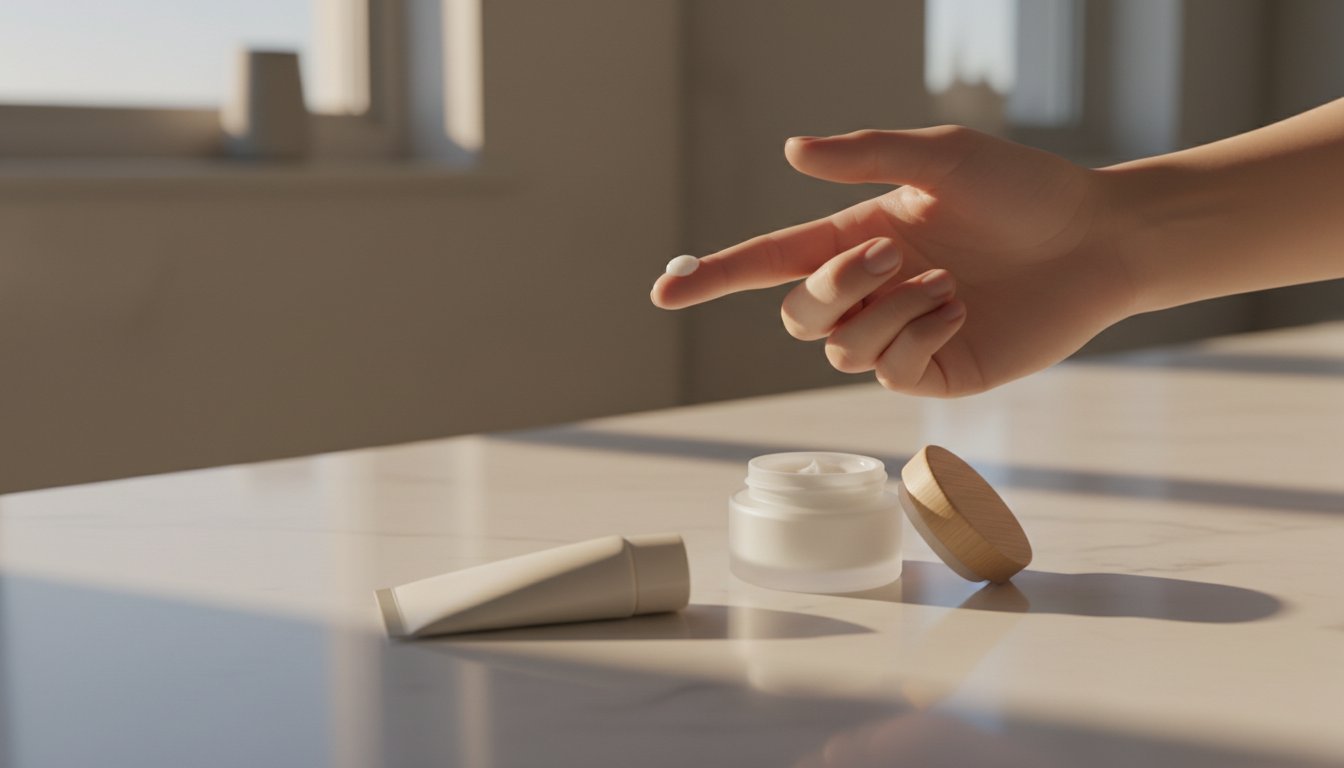
Apply a thin layer across the prescribed treatment area. For the face, a pea-sized amount is commonly enough when spread evenly. The goal is a light film, not visible cream sitting on the skin.
More will not make up for missed applications or make tretinoin work instantly. It can increase irritation without improving the result. Be especially careful around the nose, corners of the mouth, and eyelids. Those areas are more prone to dryness and stinging.
For areas other than the face, follow the directions for that specific area. The right amount depends on the size of the treatment area and the prescription. If the label is unclear, ask a clinician or pharmacist.
How Often Should You Use Tretinoin?
Your prescription and your skin’s response determine the frequency. Some people are told to use tretinoin nightly. Others begin every other night or on another less frequent schedule, then increase gradually if their skin is tolerating treatment.
Starting slowly is not using tretinoin incorrectly. It is a practical way to keep irritation manageable while your routine settles. If your skin becomes persistently painful, intensely red, cracked, or very swollen, using tretinoin more often is the wrong response. Pause and contact the prescribing clinician.
Do not apply tretinoin more often than directed. Topical retinoids work through consistent use over time, not through catch-up doses. If you skip a night, return to your usual schedule. Do not double the next application.
Should Tretinoin Be Applied in the Morning or at Night?
Tretinoin is commonly applied in the evening. Start with clean, dry skin and follow the prescription label. Applying it immediately after washing can irritate some people, so letting the skin dry fully may be part of a more comfortable routine.
Use a small amount and spread it evenly over the treatment area. Keep it away from the eyes, lips, and creases beside the nose unless a clinician specifically tells you otherwise. Wash your hands after applying it.
Morning care still matters. Use sun protection during the day because tretinoin can make skin more sensitive to sunlight, and sun exposure can work against the skin goals for which tretinoin is prescribed. A gentle moisturizer can make the routine easier to tolerate.
Is a Higher Tretinoin Dosage More Effective?
Not automatically. A higher concentration may suit some people, but effectiveness is only one part of the equation. Irritation can make consistent use impossible, and inconsistent use weakens the entire routine.
The most sensible strength is the one a qualified prescriber selects for your skin and treatment goal. If a lower concentration lets you use tretinoin regularly without significant irritation, it may be a better fit than a stronger concentration that repeatedly forces you to stop.
Online skincare advice often gets this backward. “Stronger” sounds like “better,” but tretinoin does not work through brute force. A measured routine beats aggressive application.
What Should You Expect When Starting a Tretinoin Dosage?
Dryness, peeling, redness, and stinging can occur early in treatment. These effects are more likely when the concentration or frequency exceeds what your skin can comfortably handle. They are not a signal to apply more medication and push harder.
Keep the rest of your routine simple while you see how your skin responds. A gentle cleanser and moisturizer are easier to manage than several potentially irritating products. Do not apply tretinoin to sunburned, windburned, scraped, or otherwise damaged skin.
Skin changes take time. Adjusting the dosage every few days makes it hard to tell what is actually happening. Follow the prescribed plan and speak with the prescriber before making a major change. Severe or worsening irritation is not a test of commitment.
Key Takeaway: A thin layer is enough. More tretinoin will not work faster. Extra product usually means more redness, peeling, burning, and dryness.
What Should You Do If Tretinoin Causes Irritation?
Start by checking the amount and frequency. Too much product, too many applications, or applying tretinoin to damp skin can worsen irritation. Other products may also be contributing, particularly those that dry or abrade the skin.
If your skin is uncomfortable, contact the prescribing clinician for specific instructions. Depending on the reaction, they may recommend a temporary change in frequency, a different formulation, or another adjustment. Do not apply extra tretinoin to speed recovery or fix the problem.
Severe swelling, blistering, intense pain, or a serious rash requires prompt medical attention. A strong reaction should be assessed, not managed through trial and error.
Can You Use Tretinoin with Other Skincare Products?
Sometimes. Tretinoin can be used with ordinary skincare products, including moisturizer, when the routine is planned appropriately. The problem is stacking several irritating products and then having no idea which one caused the reaction.
Keep the basics steady: gentle cleansing, a thin layer of tretinoin as prescribed, moisturizer when needed, and daytime sun protection. Ask your clinician or pharmacist before adding other prescription treatments, exfoliating products, or acne actives.
Over-the-counter does not mean harmless. Ingredients that exfoliate or dry the skin may not pair well with tretinoin. Introduce changes one at a time so you can see how your skin reacts.
When Should You Change Your Tretinoin Dosage?
Change the dose or schedule only with direction from the prescribing clinician, unless the product instructions specifically say otherwise. A change may be appropriate when your skin is tolerating treatment well, irritation persists, or the current formulation is not a good fit.
Your clinician may ask about redness, peeling, burning, dryness, sensitivity, and how consistently you apply the medication. They may also ask about your other products and whether you are applying tretinoin to the correct area.
Do not increase the strength simply because your skin has not changed quickly. Do not stop permanently because of mild, expected dryness without asking whether a simpler schedule would help. The useful adjustment is the one that keeps treatment safe and sustainable.
What Happens If You Miss a Tretinoin Application?
Skip the missed application and return to your regular schedule. Do not use twice as much next time or apply tretinoin more often to compensate.
One missed application does not justify an aggressive restart. Tretinoin routines depend on repeated use over time, so calm consistency is the better response. If you miss several applications because of irritation, illness, travel, or another problem, ask your prescriber whether to resume the same frequency or ease back in.
Store the medication according to its instructions, and do not share it. A prescription chosen for your skin and treatment goal may not be appropriate for someone else.
Is Tretinoin Safe for Everyone?
No medication is right for everyone. Your prescriber should know about your medical history, allergies, other medications, skin conditions, and whether you are pregnant, planning pregnancy, or breastfeeding. Ask before starting or continuing tretinoin if any of those circumstances apply.
Do not use tretinoin on irritated or injured skin unless a clinician tells you to. Keep it away from the eyes, lips, and other sensitive areas. If it gets into your eyes, rinse as directed and seek medical advice if irritation continues.
The safest dosage is not simply the smallest number on the tube. It is the strength, amount, and schedule that match your prescription and avoid significant harm. When in doubt, a pharmacist can often clarify how to apply the medication.
The Path Forward
Tretinoin dosage is not one number. It combines concentration, amount, and frequency. Getting those three pieces aligned matters more than chasing the strongest tube. Use a thin layer, follow the prescription, protect your skin during the day, and ask the prescriber before changing the routine.
TrimRx is a GLP-1 weight loss telehealth program and does not prescribe or treat skin conditions with tretinoin. If weight loss is your separate goal, you can take the TrimRx assessment quiz to see whether medically supervised GLP-1 treatment may be a fit.
Bottom line: Tretinoin is a topical skin medication, not a weight-loss treatment. TrimRx’s program focuses only on medically supervised GLP-1 weight loss.
FAQ
What Is the Usual Tretinoin Dosage for the Face?
Topical tretinoin is generally applied as a thin layer over the prescribed facial area. A pea-sized amount is commonly enough for the face. The concentration and frequency should come from your prescription, not from another person’s routine.
Is 0.025% Tretinoin a Low Dosage?
0.025% is one of the lower commonly prescribed topical tretinoin strengths. Whether it is appropriate depends on your skin, treatment goal, formulation, and previous experience with retinoids. Lower strength is not automatically ineffective, and higher strength is not automatically better.
Can I Use Tretinoin Every Night?
Some prescriptions call for nightly use. Others begin with less frequent applications. Follow the schedule provided by your clinician. If nightly use causes persistent irritation, contact the prescriber instead of applying more moisturizer and forcing your way through it.
How Much Tretinoin Should I Put on My Face?
Use a thin, even layer. A pea-sized amount is commonly sufficient for the face. More medication will not make tretinoin work faster and can increase dryness, redness, peeling, and burning.
What Should I Do If I Use Too Much Tretinoin?
Do not apply another dose to compensate or increase the schedule. Follow the product instructions, simplify your routine, and contact your clinician or pharmacist if your skin becomes significantly irritated. Seek prompt care for severe swelling, blistering, intense pain, or a serious rash.
Can I Use Tretinoin Twice a Day?
Do not use topical tretinoin twice a day unless your prescriber specifically directs you to. More frequent application can increase irritation and is not a dependable way to speed results.
Should I Apply Tretinoin Before or After Moisturizer?
Follow your prescriber’s instructions. Many people use moisturizer as part of a tretinoin routine, either after applying the medication or in another sequence chosen for comfort. If you are unsure, ask a pharmacist to review your exact product and routine.
Does Tretinoin Dosage Change by Skin Type?
It can. Sensitive or previously irritated skin may require a less frequent schedule or a different strength, while other skin types may tolerate another plan. Skin type alone does not determine the right dosage. Make changes with the prescribing clinician.
Disclaimer: This content is for informational purposes only and does not constitute medical advice. It is not intended to diagnose, treat, cure, or prevent any disease or condition. Individual results may vary. Always consult a qualified healthcare professional before starting any treatment or medication.

Transforming Lives, One Step at a Time
Keep reading

Does Rapid Weight Loss on Tirzepatide Affect Bone Density?
Bone density does fall during weight loss, and that is established regardless of how the weight comes off. What is less settled is whether…

Does Wellbutrin Cause Hair Loss? What to Expect
Does Wellbutrin cause hair loss? It’s a question that may come up when you notice increased shedding or changes in your hair after starting…

Is Wellbutrin an SSRI? What You Need to Know
If you’re wondering, “Is Wellbutrin an SSRI?” you’re not alone. Wellbutrin (bupropion) is an antidepressant, but it works differently from common SSRIs by primarily…


