TRT and Blood Pressure: What Men Need to Know Before Starting
Introduction
High blood pressure does not automatically rule out TRT. But testosterone therapy is neither harmless to blood pressure nor guaranteed to drive it dangerously high. The real answer is less tidy: TRT can affect blood pressure, and the risk depends on your health, the product, the dose, and the quality of follow-up.
That makes blood pressure a starting-point question, not a footnote after the prescription is written. Before beginning testosterone replacement therapy, your clinician should know your usual readings, whether you take antihypertensive medication, whether you have heart or kidney disease, and whether testing has actually confirmed low testosterone.
TrimRx is a medically supervised GLP-1 weight loss telehealth program, not a testosterone clinic or a blood pressure treatment. We cover this topic because weight, metabolic health, testosterone, and blood pressure often show up in the same patient history. Our only program is GLP-1 weight loss, from $179 per month. Our role here is to help you ask better questions before deciding about TRT.
At TrimRx, we believe understanding your options is the first step toward taking control of your health. If you want to see whether a personalized treatment plan is a fit for you, you can start with a quick online visit.
Can TRT Raise Blood Pressure?
It can. Testosterone products carry warnings about increased blood pressure. That alone deserves attention. A normal reading before treatment does not promise that your readings will stay the same.
Quick Answer: TRT is not a blood pressure treatment, and starting it does not make an existing blood pressure problem disappear.
Blood pressure has plenty of other drivers: sodium intake, kidney function, sleep, stress, body weight, alcohol, other medications, and cardiovascular disease. Testosterone becomes another variable. If your pressure is already elevated, adding a medication that may raise it calls for a proper review, not a casual approval.
The practical takeaway is blunt. TRT is prescription hormone therapy with monitoring requirements. It is not a harmless supplement, and it is not a blood pressure intervention.
Why Does Blood Pressure Matter Before Starting TRT?
An elevated reading may point to another health problem that needs attention. It may also change the balance between the potential benefits and risks of testosterone therapy. Your clinician needs to determine whether the reading was isolated, part of a persistent pattern, or one feature of a larger cardiovascular problem.
This is where a medical intake separates itself from an online sales funnel. A serious evaluation covers your medical history, current medications, cardiovascular events, sleep problems, kidney issues, and family history. It also confirms whether testosterone deficiency is present.
Fatigue, reduced sexual desire, low mood, and poor concentration can occur with low testosterone, but none of those symptoms identifies the cause on its own. High blood pressure, poor sleep, excess weight, and common medical conditions can produce overlapping symptoms.
The American Urological Association and the Endocrine Society both frame testosterone treatment around confirmed deficiency and compatible symptoms, not simply a man’s wish to feel more energetic. Blood pressure belongs in that same careful review.
What Should a Clinician Check Before Prescribing?
Start with a reliable medical history and a blood pressure review. That may involve recent clinic readings, home measurements, or both. One abnormal result is not a complete diagnosis. It is also not something to wave away.
The clinician should confirm low testosterone with properly timed blood tests. Testosterone levels vary during the day, so morning testing is standard. A diagnosis generally requires more than one low result, particularly when the result is borderline. The provider should also investigate why testosterone is low instead of replacing the hormone and moving on.
The broader review may include:
- Your current blood pressure medication and how consistently you take it
- Any history of heart disease, stroke, kidney disease, or blood clots
- Sleep quality and possible sleep apnea
- Weight changes and metabolic health
- Prescription drugs, recreational drugs, and supplements
- Fertility plans
- Hematocrit or other blood-count concerns
- Prostate evaluation when clinically appropriate
The exact lab panel depends on your history. The principle does not: TRT should begin with diagnosis and risk review, not a checkout button.
Is High Blood Pressure a Reason to Avoid TRT?
Not automatically. The answer depends on how high the pressure is, whether it is controlled, what other conditions you have, and whether testosterone deficiency is genuine. Men with hypertension may still be evaluated for TRT, but blood pressure should be part of the plan from day one.
Uncontrolled or severely elevated blood pressure needs medical attention before anyone casually adds a therapy that may increase it. A clinician may address the blood pressure first, collect more information, or decide that TRT carries too much overall risk. That is not a failure of telehealth. It is responsible prescribing.
Be wary of any clinic that promises testosterone will improve every cardiovascular marker. TRT does not replace antihypertensive treatment, exercise, sleep care, or weight management. It may be appropriate for confirmed hypogonadism, but it does not explain away the reasons your blood pressure is high.
Should You Monitor Blood Pressure at Home?
Home monitoring gives your clinician a better record because blood pressure changes throughout the day and responds to stress, pain, caffeine, activity, and the measurement setting. It can help distinguish a persistent pattern from one elevated office reading.
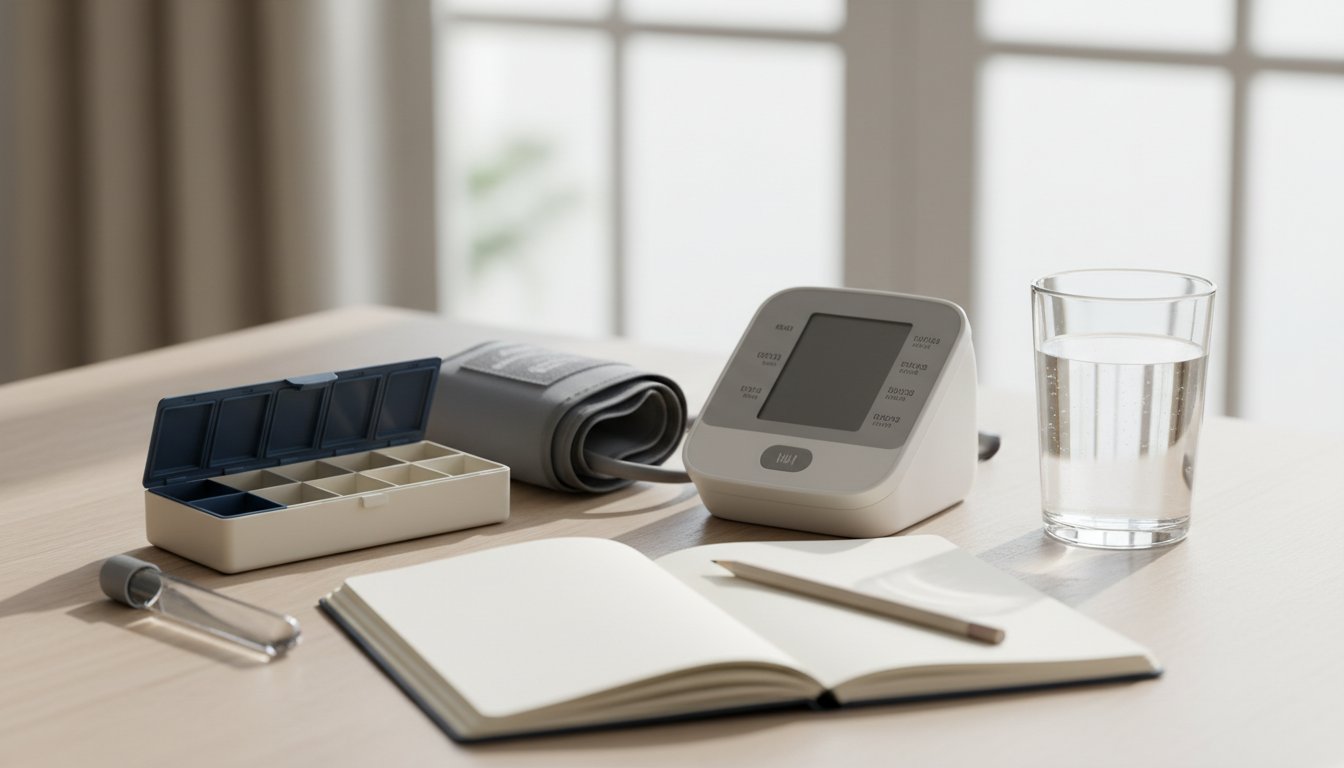
Use a validated upper-arm cuff and follow the device instructions. Sit quietly before measuring, support your arm, and record the date, time, reading, and relevant context. Do not turn every reading into a fresh source of anxiety. The goal is a pattern your clinician can interpret.
Monitoring matters even more after starting or changing TRT. If readings remain higher than usual, contact the prescribing clinician instead of waiting for a routine appointment. Severe symptoms such as chest pain, severe shortness of breath, one-sided weakness, confusion, or a severe headache require urgent medical care.
Does the Form of Testosterone Change the Blood Pressure Question?
The formulation matters, but it does not cancel the need for monitoring. Injectable testosterone, topical products, and other prescription forms differ in absorption, frequency of use, and how easily a clinician can adjust the regimen. Your blood pressure response should be considered alongside testosterone levels, symptoms, side effects, and other laboratory results.
Do not assume that changing forms will fix the problem. A clinician may recommend a different formulation to improve tolerability or control, but the change still needs supervision. Increasing the dose because you are impatient is unsafe. Using someone else’s medication is not a workaround.
A useful discussion covers the mechanics: how to use the medication, when follow-up will occur, which symptoms should prompt a call, and what happens if blood pressure rises. A specific plan leaves less room to mistake a warning sign for a normal adjustment.
Can TRT Affect Cardiovascular Risk?
This is not a question that a headline can settle. Testosterone therapy can affect systems tied to cardiovascular health, including blood pressure and red blood cell production. That does not mean every man on TRT will have a cardiovascular event. It does mean treatment should be reserved for men with a real indication and followed appropriately.
The 2023 TRAVERSE trial in the New England Journal of Medicine found no increase in major cardiovascular events compared with placebo among the studied men with hypogonadism and elevated cardiovascular risk. That is reassuring for the population studied. It is not a blanket invitation to prescribe testosterone to men with normal levels, and it does not remove the need to follow product warnings or account for individual risk factors.
The strongest conclusion is also the least sensational: properly selected men can receive TRT without assuming that it automatically causes a cardiovascular catastrophe. Clinicians still need to manage blood pressure and other risks actively.
Key Takeaway: A responsible clinician looks at the whole picture, including your current readings, cardiovascular history, medications, sleep, weight, and the reason testosterone is low.
What Other TRT Safety Issues Overlap with Blood Pressure?
Blood pressure is one checkpoint, not the whole safety review. Testosterone can increase red blood cell production, making a complete blood count important before treatment and during follow-up. If hematocrit rises too much, the clinician may adjust the dose, change the formulation, or pause therapy.
TRT can also affect acne, fluid retention, breast tenderness, sleep symptoms, and fertility. Standard testosterone suppresses the body’s own testosterone signaling and can reduce sperm production. If you want children, raise that issue before treatment begins.
Sleep deserves serious attention. Poor sleep can worsen blood pressure and produce symptoms that resemble low testosterone. Untreated sleep apnea is also an important concern for men considering TRT. If your partner reports loud snoring, pauses in breathing, or gasping at night, mention it during the evaluation.
These factors often travel together. A man with elevated blood pressure, poor sleep, extra weight, and a borderline testosterone result may need a broader health plan rather than an immediate hormone prescription.
What Should You Do If Blood Pressure Rises After Starting TRT?
Do not panic over one reading, and do not change the dose without medical direction. Repeat the measurement under calm, consistent conditions and record the result. If the elevation persists or clearly differs from your usual pattern, contact the prescribing clinician.
The clinician may review the dose, timing, formulation, other prescriptions, fluid retention, sleep, and recent changes in weight or lifestyle. Follow-up laboratory testing may be appropriate. The clinician may also pause TRT while addressing another problem. The right response depends on the full picture.
Do not stop an established blood pressure medication because you think TRT will solve the problem. Do not double a dose to make up for a missed injection. Do not add a supplement marketed for hormone balance without telling your clinician. Those shortcuts obscure the cause and complicate treatment.
Emergency symptoms need emergency care. Severe chest pain, trouble breathing, sudden neurological symptoms, fainting, or a severe unusual headache are not problems to manage through a portal message.
How Can You Judge an Online TRT Program?
Look first at the prescription process. A responsible program should require appropriate blood tests, review your medical history, and involve a licensed clinician who can explain why treatment is or is not appropriate. It should ask about blood pressure and current medications instead of treating those questions as barriers to a sale.
Then examine the follow-up plan. Testosterone therapy is not a one-time transaction. Your clinician should explain what will be monitored, when testing will occur, and how dose adjustments are handled. Blood pressure, symptoms, testosterone levels, and blood counts all matter. Depending on your age and history, prostate-related evaluation may also be part of care.
Finally, listen to the promises. Claims that TRT guarantees weight loss, cures high blood pressure, reverses aging, or fixes every energy problem are reasons to walk away. TRT has a legitimate role for men with confirmed hypogonadism. It does not need inflated promises.
Could Weight Be Part of the Blood Pressure and Testosterone Picture?
Yes. Excess weight can sit alongside elevated blood pressure, poor sleep, insulin resistance, and lower testosterone. That does not prove weight is the sole cause of one man’s symptoms. It does make weight management a reasonable part of the medical discussion.
A weight-first approach may be worth discussing when testosterone is only mildly low, symptoms are nonspecific, and blood pressure or sleep is poorly controlled. This is not a reason to dismiss symptoms or tell every man to lose weight instead of seeking care. It is a reason to avoid treating one lab value while ignoring the broader pattern.
TrimRx’s only program is GLP-1 weight loss telehealth. We do not prescribe TRT and do not claim to treat hypertension. If weight is part of your health picture, medically supervised weight loss may be one conversation to have with a qualified clinician alongside appropriate blood pressure care, not instead of it.
The Path Forward
TRT and blood pressure can coexist, but they should not be treated as separate issues. Before starting testosterone, confirm that low testosterone is real. Review your blood pressure and cardiovascular history. Look for other contributors, including poor sleep and excess weight. Agree on a follow-up plan.
After starting, track meaningful changes and report persistent elevations. Do not adjust treatment yourself.
At TrimRx, our lane is clear: we provide GLP-1 weight loss telehealth, from $179 per month. TRT is not part of our program. The takeaway is simple: if blood pressure is part of your history, make it a required question before the first testosterone prescription, not a problem to address after the medication arrives. TrimRx publishes this guide to make that conversation more informed.
Bottom line: A legitimate telehealth evaluation requires more than a symptom questionnaire. It should include a licensed prescriber, appropriate lab work, and follow-up monitoring.
FAQ
Can I Take TRT If I Have High Blood Pressure?
Possibly, but high blood pressure should be reviewed before treatment. The decision depends on how elevated and controlled it is, your cardiovascular history, your medications, and whether low testosterone has been properly confirmed. TRT is not a treatment for hypertension.
Does TRT Always Increase Blood Pressure?
No. A rise is possible, but it does not occur in every man or in the same way. Testosterone products carry warnings about increased blood pressure, which is why monitoring matters even when your starting reading is normal.
Should I Stop TRT If My Blood Pressure Rises?
Do not stop or change prescribed treatment without speaking with your clinician, unless emergency services direct you otherwise. Record repeat readings, contact the prescriber, and seek urgent care for severe symptoms such as chest pain, major breathing trouble, sudden weakness, confusion, or fainting.
What Should Be Checked Before Starting TRT?
A clinician should review your medical history, medications, blood pressure, cardiovascular risks, fertility plans, and symptoms. Low testosterone should be confirmed with appropriately timed blood tests, generally more than one measurement. The provider should also consider why the level is low.
Can TRT Replace Blood Pressure Medication?
No. TRT is prescribed for confirmed testosterone deficiency, not hypertension. Never stop an antihypertensive medication because you started testosterone or hope TRT will improve your blood pressure.
Does Testosterone Formulation Affect Blood Pressure?
The formulation can affect absorption, dosing, and treatment adjustments, but no form removes the need for monitoring. Injectable and topical products should both be used only as prescribed and followed by a licensed clinician.
Is Weight Loss Relevant to TRT and Blood Pressure?
It can be. Extra weight may be part of a broader pattern involving blood pressure, sleep, and testosterone. Addressing weight may support overall health, but it does not replace proper testing, blood pressure treatment, or evaluation for genuine hypogonadism.
Disclaimer: This content is for informational purposes only and does not constitute medical advice. It is not intended to diagnose, treat, cure, or prevent any disease or condition. Individual results may vary. Always consult a qualified healthcare professional before starting any treatment or medication.

Transforming Lives, One Step at a Time
Keep reading

Does Rapid Weight Loss on Tirzepatide Affect Bone Density?
Bone density does fall during weight loss, and that is established regardless of how the weight comes off. What is less settled is whether…

Does Wellbutrin Cause Hair Loss? What to Expect
Does Wellbutrin cause hair loss? It’s a question that may come up when you notice increased shedding or changes in your hair after starting…

Is Wellbutrin an SSRI? What You Need to Know
If you’re wondering, “Is Wellbutrin an SSRI?” you’re not alone. Wellbutrin (bupropion) is an antidepressant, but it works differently from common SSRIs by primarily…


