7 Tips for Sticking to GLP-1 Injection Schedules
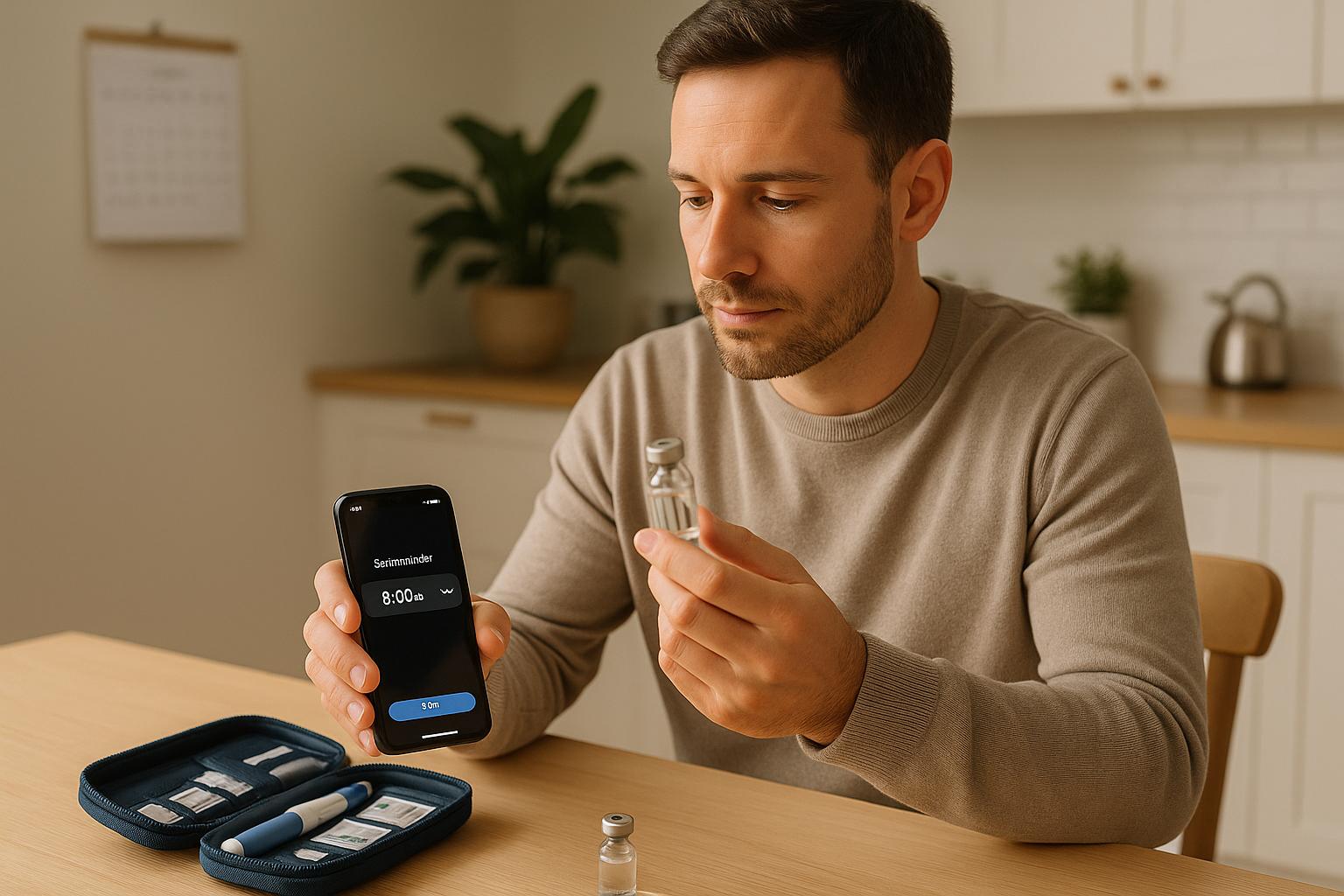
GLP-1 receptor agonists like Semaglutide and Tirzepatide are effective for managing weight and reducing appetite when taken consistently. Missing doses can reduce their impact, disrupt appetite control, and lead to weight gain. To stay on track, follow these seven tips:
- Choose a consistent day and time: Weekly injections work best when taken on the same day and time.
- Link injections to daily habits: Pair them with routines like brushing your teeth or a meal.
- Set reminders: Use alarms or apps to track doses and injection sites.
- Plan around side effects: Schedule injections during downtime to manage nausea or fatigue.
- Handle missed doses properly: Follow specific instructions for each medication type.
- Stay stocked: Keep track of supplies and refills to avoid interruptions.
- Use proper technique: Rotate injection sites and follow guidelines to ensure comfort and effectiveness.
These steps help maintain steady medication levels, ensuring better appetite control and weight loss results.
Where To Inject for MAXIMUM GLP-1 Weight Loss
1. Pick the same day and time each week
Staying consistent is essential when using GLP-1 medications like semaglutide and tirzepatide. These medications have a one-week half-life, meaning they’re most effective when taken every seven days. By sticking to the same day and time each week, you help maintain steady levels of the medication in your body, ensuring it continues to regulate appetite, enhance feelings of fullness, and support weight management.
Dr. Emily Bigby, MD, from Ivím Health, emphasizes that missing or delaying doses can cause therapeutic levels to drop, reducing appetite control and other effects that help with weight maintenance.
Irregular dosing can lead to rebound eating, which is a sudden surge of hunger and cravings as the medication wears off. It can also increase side effects like nausea. Studies show that patients who miss fewer than one dose per year experience an additional weight loss of 4.4–6.6 pounds compared to those with inconsistent schedules.
Pick a day that works best for your routine. Whether it’s Monday morning before work or Saturday evening at home, choose a time that fits your lifestyle and stick with it. Many people prefer Thursday or Friday evenings, as the reduced appetite can help manage weekend social events or less structured routines. Set a phone alarm or calendar reminder to keep on track, and consider linking your injection to an existing habit, like grocery shopping or attending a fitness class, to make it easier to remember.
2. Link Your Injection to Daily Habits
Tie your injection to a regular part of your day to make it second nature. By connecting it with an existing routine, you create a mental shortcut, making it easier to stay consistent without overthinking.
Injecting before bed can help you sleep through early side effects like nausea. If this works for you, try linking it to your nighttime routine – right after brushing your teeth or taking your other evening meds.
Consider giving your injection after a light, protein-packed meal to ease stomach issues. On injection days, aim for small meals with a focus on protein throughout the day to help your body adjust to the medication.
Make hydration and light exercise part of your injection-day plan. Drink more water starting the day before and continue for 48 hours after your injection. Some people find that a 20-minute walk after dinner on injection days not only reinforces the habit but also promotes overall well-being. These small steps can help you incorporate your injection into your life with less hassle.
3. Set up reminders and tracking systems
Schedule weekly reminders for your injection day. Use your phone’s alarm or calendar to set an alert for the same day each week. Adding a reminder 30 minutes beforehand can give you enough time to gather your supplies and prepare. Digital tools can make this even easier by automatically tracking your injection details.
Try apps made specifically for GLP-1 tracking. Apps like Shotsy or GLP 1 Tracker let you log crucial details like the date, time, dosage, and injection site. Many of these apps offer free versions, with premium options available for added features. Tracking your injection site rotation is especially helpful to avoid skin irritation from using the same spot too often.
Track more than just your injections. Logging your weight, side effects, water intake, and energy levels alongside your injection schedule can provide a clearer picture of how the medication is affecting you. Some apps even sync with platforms like Apple Health, automatically pulling in data to create valuable insights for discussions with your healthcare provider.
Prefer a hands-on approach? Use a journal. A simple notebook can be just as effective for keeping track of your injections, symptoms, and any observations. Whether you choose a digital tool or a paper journal, the key is sticking with the method that works best for you. Consistency is what truly makes the difference.
4. Schedule Around Side Effects and Your Daily Routine
Once you’ve established a consistent injection schedule, it’s worth tweaking the timing to manage side effects and fit seamlessly into your daily life.
Plan your first injection and dose increases for downtime. If you work a typical Monday-to-Friday schedule, consider scheduling your injection on a Thursday or Friday evening. This gives you the weekend – 48 to 72 hours – to rest and manage any side effects without impacting your work. By doing this, you can monitor how your body reacts in a more relaxed setting.
Take advantage of the dosing flexibility. Many GLP-1 medications offer a ±24-hour window around your regular injection time. For instance, if your usual time is Friday at 6:00 PM, you can adjust it to anytime between Thursday at 6:00 PM and Saturday at 6:00 PM. This flexibility is especially useful for accommodating work meetings, social gatherings, or travel plans, while also helping you better manage side effects.
Align your injection with your rest period. Timing your injection around your preferred downtime can reduce the impact of early side effects. For example, if morning nausea is an issue, an early morning injection might allow symptoms to ease by bedtime. Experiment with different times to find what works best for your body and schedule.
Be mindful of meal timing. Eating a well-balanced meal before your injection can make the experience smoother. Avoid heavy or greasy foods beforehand, and stay upright for at least 30 minutes after eating to help with digestion and reduce nausea.
Stay hydrated before and after injections. Start increasing your water intake the day before your injection and continue for 48 hours after. Staying hydrated can help ease common side effects like headaches and fatigue. Also, try to avoid intense physical activity for 24 to 48 hours after a dose increase to give your body some time to adjust.
sbb-itb-e2779c3
5. Know What to Do If You Miss a Dose
Life happens, and even with the best intentions, you might miss a dose of your medication. The key is knowing how to handle it so you can stay on track with your treatment plan. Here’s what to do based on the type of medication you’re taking:
For Semaglutide (Ozempic, Wegovy): If you remember within five days (120 hours) of your missed injection, take it as soon as possible. If more than five days have passed, skip that dose and stick to your usual schedule. After taking a late dose, adjust your weekly schedule so future doses are spaced one week apart from the new injection day.
For Tirzepatide (Mounjaro, Zepbound): Take the missed dose within four days (96 hours) of your scheduled injection. If it’s been longer than that, skip the dose and continue with your regular schedule the following week.
For Dulaglutide (Trulicity) and Exenatide (Bydureon BCise): If you have at least three days before your next scheduled injection, take the missed dose as soon as you remember. If fewer than three days remain, skip it and wait for your next scheduled dose.
One important rule: never double up on doses. Taking two injections within 48 to 72 hours can lead to serious side effects, including persistent vomiting, which could indicate pancreatitis. If you’ve missed multiple doses or aren’t sure what to do, reach out to your healthcare provider right away for guidance.
6. Stay organized with supplies and refills
Keeping up with your injection schedule isn’t just about remembering the dates – it also means staying on top of your medication supplies. Running out of medication can quickly derail your routine, and with the current nationwide shortages of GLP-1 medications, it’s more important than ever to plan ahead. As of June 15, 2025, GLP-1 medications can no longer be filled at Walgreens, Costco pharmacies, or through Express Scripts Home Delivery. This change makes it essential to be proactive about where you fill your prescriptions.
Before requesting a refill, check your pharmacy’s inventory directly, as availability can vary. If your pharmacy is out of stock, use your insurance app or website to find other in-network options. Your doctor can send a new prescription to a different pharmacy, or you can ask the new pharmacy to transfer any remaining refills from your current one.
At home, designate a specific spot to store your medication supplies. Unopened GLP-1 pens should be kept in the refrigerator at a temperature between 36°F and 46°F (2°C to 8°C) until they’re ready to use. To stay organized, create a simple checklist that tracks your injection days, the number of pens you have left, and your next refill date. Set a recurring reminder on your phone about two weeks before you need a refill, giving yourself enough time to handle any potential supply issues. This system can help ensure you never miss a dose and keeps your treatment on track.
Regular check-ins with your healthcare provider are also key. These appointments help adjust dosages as needed and ensure your prescription stays up to date. If cost is a concern, talk to your provider about savings options like manufacturer discount cards, assistance programs, or specialty-compounded alternatives. Companies like TrimRX offer personalized GLP-1 programs with free delivery and ongoing support, making supply management easier and reducing the risk of treatment interruptions.
Many pharmacies now offer text message alerts for medication reminders and pickup notifications. Enabling these alerts can take the guesswork out of your refill schedule. Keep an updated list of all your medications and review it with your healthcare team. GLP-1 treatments may require adjustments to other prescriptions, so staying organized helps prevent any conflicts or missed doses.
7. Use Proper Injection Technique for Comfort
Getting the injection technique right not only helps with medication absorption but also makes the process more comfortable. While most people describe the feeling as a quick pinch, using the correct method ensures the medication reaches the subcutaneous fat layer where it can gradually and effectively enter your bloodstream. This step is crucial for maintaining progress in your weight loss journey.
Start by washing your hands thoroughly. Let the refrigerated medication sit out for 10–15 minutes to reach room temperature, which can help reduce discomfort during the injection. Clean the chosen injection site with an alcohol swab in a circular motion, and let it air dry completely. Avoid blowing on the area or injecting while it’s still wet, as this can cause unnecessary irritation.
Hold the pen at a 90° angle (or 45° if you’re injecting into leaner areas), pinch at least an inch of skin, insert the needle quickly, and inject slowly. Once you’ve pressed the button, keep the needle in place for 5–10 seconds to ensure the full dose is delivered and to prevent leakage. After removing the needle, apply gentle pressure with a clean cotton swab or tissue. Avoid rubbing the area, as this can lead to bruising.
Rotate your injection sites weekly to avoid tissue damage, scarring, or fat tissue changes like lipohypertrophy, which can interfere with medication absorption. Recommended areas include the abdomen (staying at least 2 inches away from your belly button), the front and middle sections of your thigh, or the upper arm. Keeping a simple log of your injection sites can help you stick to a rotation pattern and maintain consistency.
Always use a fresh needle for every injection and dispose of it properly in a sharps container. Reusing needles can increase pain, risk of infection, and tissue damage. If you notice minor redness, a small bump, or mild itching that goes away in a day, that’s normal – a cool compress can help ease these symptoms. However, if the area becomes hot, swells larger than a quarter, remains painful after 48 hours, or starts to drain, contact your healthcare provider immediately.
Comparison Table
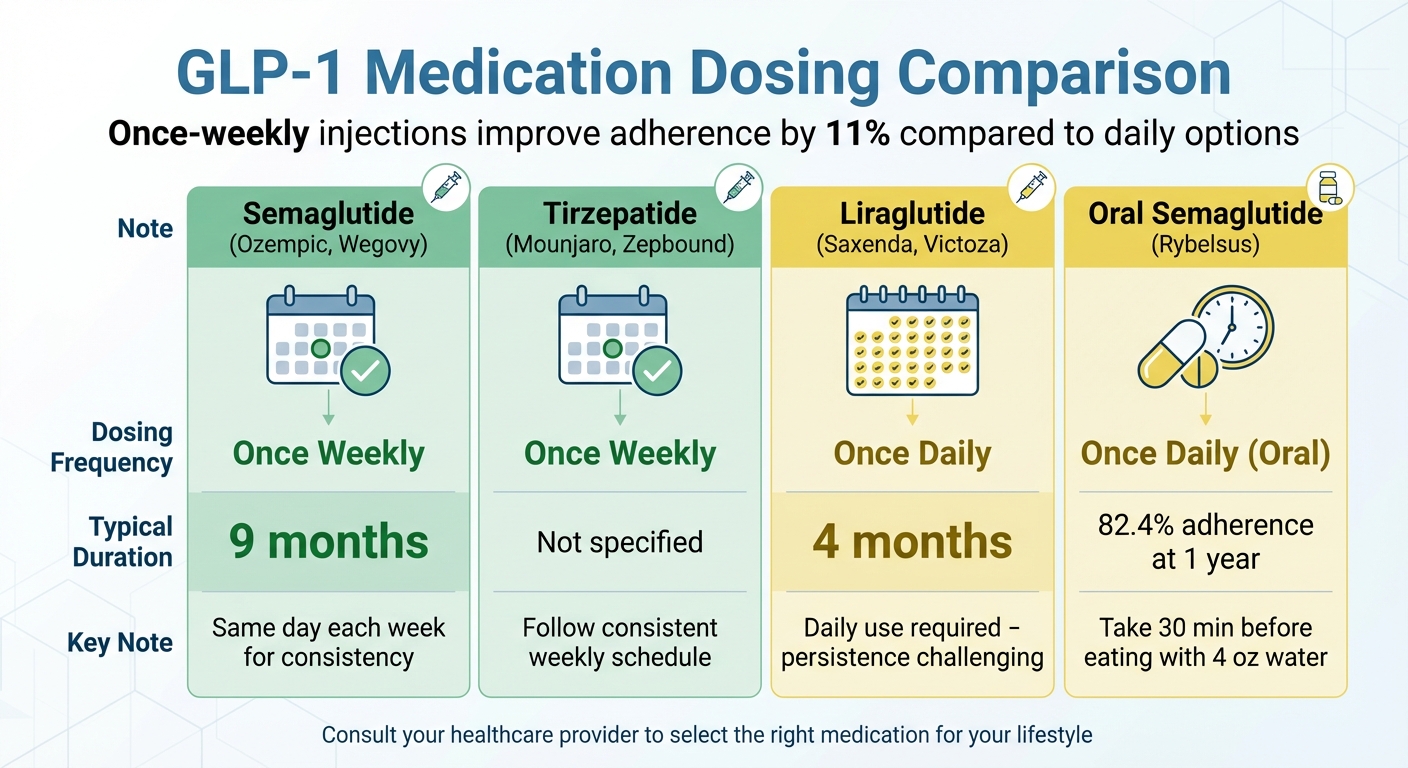
GLP-1 Medication Dosing Schedule Comparison Chart
Compare GLP-1 medications to find the best fit for your injection routine. Research shows that once-weekly injections improve adherence by 11% compared to daily options.
Here’s a breakdown of some commonly prescribed GLP-1 medications and their dosing details:
| Medication | Dosing Frequency | Typical Duration of Use | Key Scheduling Notes |
|---|---|---|---|
| Semaglutide (Ozempic, Wegovy) | Once weekly | 9 months | Stick to the same day each week for consistency. |
| Tirzepatide (Mounjaro, Zepbound) | Once weekly | Not specified | Follow your healthcare provider’s instructions for a consistent weekly schedule. |
| Liraglutide (Saxenda, Victoza) | Once daily | 4 months | Requires daily use; persistence can be challenging for some individuals. |
| Oral Semaglutide (Rybelsus) | Once daily (oral) | 82.4% adherence at 1 year | Take 30 minutes before eating or drinking, with 4 oz of water; timing is critical. |
This comparison highlights the advantages of simpler dosing schedules. For instance, weekly semaglutide is typically maintained for a median of 9 months, while daily liraglutide averages just 4 months. Choosing a schedule that fits your lifestyle can make all the difference in staying consistent.
Your TrimRX healthcare provider can guide you in selecting the right medication and schedule. Incorporating strategies like reminders or syncing injections with daily habits can further enhance adherence, ensuring you stay on track with your treatment plan.
Conclusion
Sticking to a consistent schedule for GLP-1 injections helps maintain steady medication levels, ensuring ongoing appetite control and effective weight loss. For example, patients using semaglutide experienced an average weight loss of 14.9% over 68 weeks. Missing doses can disrupt progress, so keeping up with your routine is key to achieving results.
The seven tips shared – like picking a regular day and time, tying injections to daily habits, setting reminders, planning around side effects, managing missed doses, staying stocked with supplies, and perfecting your technique – address common hurdles and make it easier to stay on track.
If you’re looking for extra support, TrimRX offers personalized consultations, expert advice on injection techniques and dose adjustments, and unlimited check-ins to help you maintain your schedule. Pairing this kind of expert guidance with healthy lifestyle choices can set you up for success.
FAQs
What should I do if I forget to take my GLP-1 injection?
If you miss your GLP-1 injection, take it as soon as you remember – but only if it’s at least 3 days before your next scheduled dose. If fewer than 3 days remain until your next dose, skip the missed injection and stick to your regular schedule. Never take two doses to make up for the one you missed.
What are the best ways to manage side effects from GLP-1 injections?
To ease potential side effects, begin with a lower dose and slowly increase it, allowing your body time to adapt. Opt for small, bland meals to help with nausea, drink plenty of water to stay hydrated, and pay attention to how your body reacts. If you notice severe or long-lasting symptoms, reach out to your healthcare provider for advice.
These measures can help make the process more manageable and ensure you stick to your injection schedule as planned.
Why is it important to follow a regular schedule for GLP-1 injections?
Keeping a consistent schedule for your GLP-1 injections is key to making the treatment as effective as possible. Regularity ensures the medication maintains steady levels in your body, which supports better appetite control and helps maximize weight loss results.
Sticking to a routine also minimizes the chances of side effects and lowers the risk of missing doses, which could slow your progress. By building this habit, you set yourself up for smoother treatment and long-term success.
Related Blog Posts

Transforming Lives, One Step at a Time
Keep reading
Weight Loss Progress Tracker
Track your weight loss over time, see progress clearly, and stay motivated with simple charts, summaries, and goal-based insights.
How to Create a Personalized Adherence Plan
Build a one-page GLP-1 adherence plan: record dose, pick a weekly time, set reminders, log side effects, and review monthly.

Weight Loss Medication Dosage Calculator
Estimate weight loss medication doses by weight and drug type, with starting guidance, dose progression info, and a clear medical disclaimer.


