How to Stay Motivated During GLP-1 Treatment

Staying motivated during GLP-1 treatment, like with Semaglutide or Tirzepatide, can be challenging but manageable with the right strategies. These medications help curb appetite and support weight loss, but side effects, plateaus, and mental hurdles can slow progress. Here’s how to stay on track:
- Set Clear Goals: Write down specific reasons for weight loss (e.g., improved health, better energy) and track progress with tools like weigh-ins, tape measurements, and fitness trackers. Celebrate non-scale victories like better sleep or reduced joint pain.
- Manage Side Effects: Handle nausea with bland foods, stay hydrated for constipation, and rotate injection sites to avoid irritation. Consult your doctor if symptoms persist.
- Break Through Plateaus: Stick to your treatment, increase protein intake, and aim for 150 minutes of moderate exercise weekly. Plateaus are normal and temporary.
- Build Routines: Start with low-impact activities like walking or yoga, then add strength training twice a week. Keep a consistent schedule for meals and exercise.
- Use Support Systems: Share your goals with a friend or coach for accountability. Reward milestones with non-food treats like new workout gear or a massage.
Progress isn’t always linear, but focusing on small wins and maintaining healthy habits can help you reach your goals. GLP-1 medications are tools, but your commitment drives success.
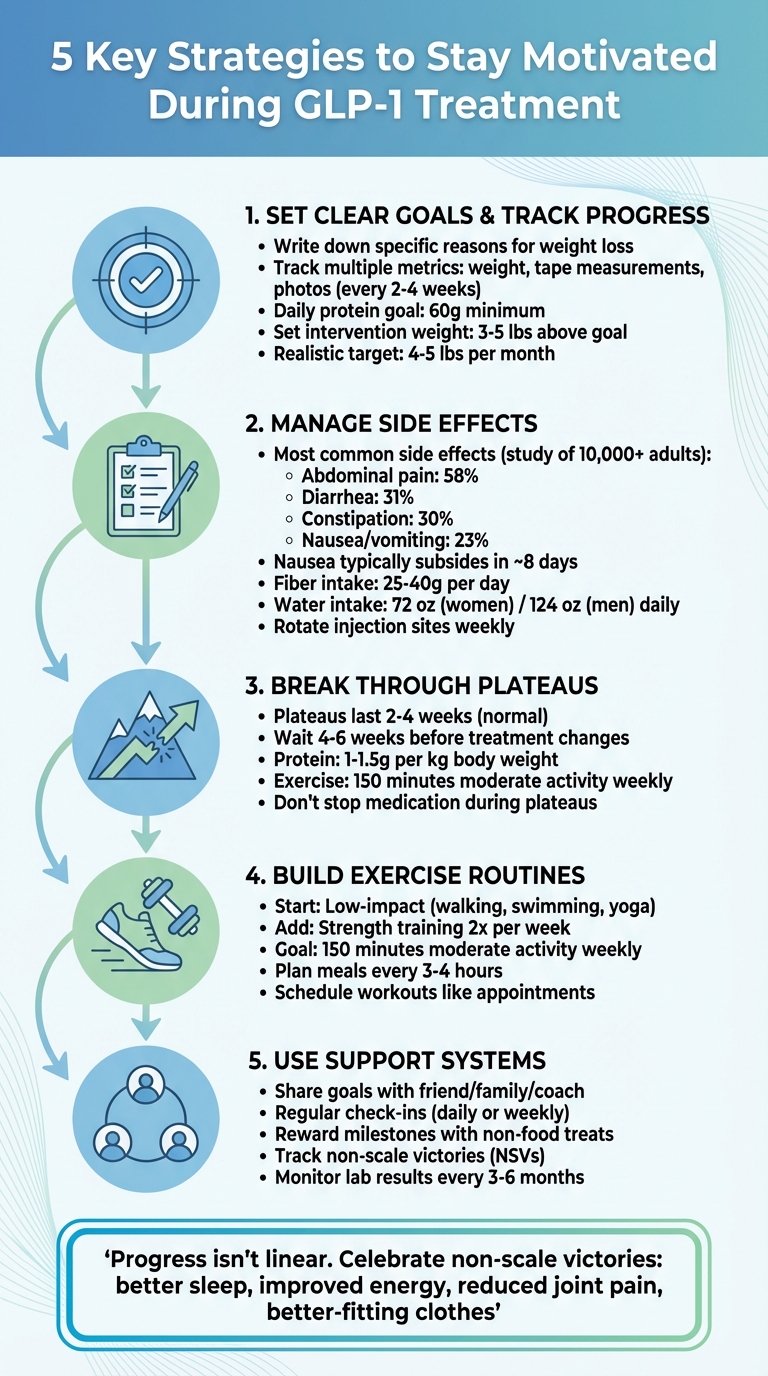
5 Key Strategies to Stay Motivated During GLP-1 Weight Loss Treatment
12 GLP-1 Tips That Helped Me Drop 100 lbs
Set Clear Goals and Track Your Progress
When navigating your GLP-1 treatment, having a clear game plan can make all the difference. Start by setting specific, measurable goals and keeping tabs on your progress. Breaking big objectives into smaller, achievable steps can help you stay focused and motivated.
Identify Your Personal Reasons for Weight Loss
Pinpointing why you want to lose weight is crucial. Are you aiming to reverse prediabetes? Hoping to keep up with your kids without feeling out of breath? Maybe you’re looking to ease joint pain or finally get a good night’s sleep. These deeply personal motivators – ones tied to your own satisfaction rather than external pressures – tend to stick with you longer than vague aspirations like “looking better.”
As Allison Grupski, PhD, Director of Behavior Change at WW, puts it:
"When we do things that matter to us or that we genuinely want to do, we’re more likely to keep them up."
Write down your specific reasons. Whether it’s climbing stairs without gasping for air, reducing your reliance on blood pressure meds, or just having more energy to tackle the day, these motivations serve as your compass. When your enthusiasm wanes, revisiting these reasons can reignite your drive. Use them as a foundation to measure and celebrate your progress.
Use Tools to Monitor Your Progress
Daily weigh-ins can help reinforce your goals, but don’t stop there. Incorporate other tools like monthly tape measurements, fitness trackers, and progress photos (snap these every 2–4 weeks) to capture changes that the scale might not show. For example, tracking your waist circumference with a tape measure once a month can reveal fat loss even if your weight is holding steady.
Also, log your daily protein intake (aim for at least 60g) and hydration levels using an app or journal. Fitness trackers can give you insights into your steps and active minutes, while progress photos can highlight shifts in body composition that numbers alone might miss.
Consider setting an “intervention weight” – a number 3–5 lbs. above your goal weight. If you hit this threshold, it’s a signal to re-engage with your plan or consult your healthcare provider. By tracking these varied metrics, you’ll keep a balanced perspective on your progress and stay motivated by all the victories along the way.
Recognize Progress Beyond the Scale
The number on the scale doesn’t tell the whole story. You might be shedding fat, gaining muscle, or improving key health markers even if your weight doesn’t budge. These non-scale victories (NSVs) – like better-fitting clothes, improved sleep, or reduced joint pain – can be even more rewarding.
Keep an eye on your lab results, too. Lower blood sugar, improved cholesterol, or reduced HbA1c levels (checked every 3–6 months) are all signs of progress. Many people also notice early wins, like fewer food-related thoughts or cravings.
Patrick Welch, PharmD, BCACP, an Advanced Clinical Pharmacist at Intermountain Health, emphasizes:
"These medications don’t just help people lose weight. They also improve overall health."
While a realistic weight loss goal is about 4–5 lbs. per month, you might notice boosts in your energy, mobility, and quality of life even sooner. Celebrate those victories – big and small. They all count.
Handle Side Effects and Weight Loss Plateaus
GLP-1 medications can aid in weight loss, but they may also cause temporary side effects. Most gastrointestinal symptoms, like nausea, typically subside within about eight days.
Manage Common Side Effects
A study involving over 10,000 adults found that the most common side effects included abdominal pain (58%), diarrhea (31%), constipation (30%), and nausea or vomiting (23%)[1].
To manage nausea, stick to small, bland meals – think plain wheat toast, crackers, oatmeal, or rice. Avoid greasy, spicy, or heavily processed foods. Sipping water or ginger tea can also help ease discomfort.
For constipation, gradually increase your fiber intake to 25–40 grams per day, stay physically active, and drink plenty of water – about 72 ounces per day for women and 124 ounces per day for men. If diarrhea occurs, switch to low-fiber foods temporarily and focus on staying hydrated. For dizziness, rise slowly and ensure you’re drinking enough fluids with adequate salt.
It’s also important to care for injection sites by rotating between your abdomen, thigh, and upper arm each week. If any side effects persist for more than a few weeks or become severe, reach out to your healthcare provider for further advice.
Once you’ve addressed side effects, you can turn your attention to breaking through weight loss plateaus.
Push Through Weight Loss Plateaus
After managing side effects, focus on overcoming the natural plateaus that often occur during weight loss. These plateaus, which can last 2–4 weeks, are a normal part of the process as your body adjusts to a new metabolic rate. Healthcare providers usually recommend waiting 4–6 weeks before making any changes to your treatment plan.
During a plateau, don’t stop taking your medication. Instead, concentrate on factors you can control, like diet and exercise. Ensure you’re consuming enough protein – 1 to 1.5 grams per kilogram of your body weight – and aim for 150 minutes of moderate exercise each week. Even if the scale isn’t moving, you might still be losing fat and gaining muscle, which can show up in how your clothes fit.
Pay attention to your appetite as well. If you notice a return of intense cravings or constant "food noise" after a period of suppression, it might be time to consult your healthcare provider about adjusting your dose.
sbb-itb-e2779c3
Build Exercise Habits and Daily Routines
Incorporating exercise into your routine can improve GLP-1 outcomes while keeping your motivation steady. It also helps maintain lean body mass during GLP-1 treatment. Pairing a personalized workout routine with your dietary habits and progress tracking can make a big difference.
Begin with Low-Impact Exercise
Ease into exercise with activities like walking, swimming, or yoga – these are gentle on the body but effective. Aim for about 150 minutes of moderate activity each week, breaking it into smaller, manageable sessions if needed.
Timing matters, too. Plan your workouts around when you feel your best. For example, if morning nausea is a challenge, shift your exercise to the afternoon. Lisa Keer, MS, NASM-CPT, NBC-HWC at Mass General, highlights the importance of this approach:
"Lifestyle change – including establishing a well-rounded personal fitness program – is at the heart of maximizing use of these medications."
Add Strength Training to Your Routine
Once you’re comfortable with low-impact activities, it’s time to add strength training. This not only protects muscle mass but also supports your metabolism and bone health. Aim for strength training twice a week using tools like free weights, resistance bands, or even just your body weight with moves like push-ups and squats. The best part? You don’t need a gym – simple home workouts can be just as effective.
Establish a Consistent Daily Schedule
Treat exercise like a non-negotiable appointment. Similarly, plan meals every 3 to 4 hours to manage hunger and avoid overeating. Track your energy levels throughout the day to find the best times for activity, and have backup indoor exercises ready for unexpected disruptions. A regular schedule not only keeps you moving but also helps you monitor your progress more effectively. Building consistency is key – it’s less about intensity and more about creating habits that stick long after your treatment ends.
Use Support Systems and Reward Your Progress
Enhancing your exercise routine with external support can make a world of difference. Studies suggest that virtual behavior change programs can significantly aid weight loss, turning what might feel like a solo journey into a shared and supported effort.
Create an Accountability System
Setting up an accountability system can help keep you on track. Share your goals with someone who can support and encourage you – this could be a friend, family member, or coach. Regular check-ins, whether daily or weekly, can help you stay focused on your progress, meal planning, and exercise routines. Surrounding yourself with people who embrace healthy habits can have a ripple effect, inspiring you to adopt and maintain those habits naturally.
Reward Milestones Without Using Food
Celebrate your achievements with non-food rewards to keep yourself motivated. For smaller milestones, think about simple treats like an at-home spa day or starting an herb garden. For more significant progress, consider splurging on a new workout outfit or indulging in a professional massage. When you hit major goals, why not go big? Plan a trip to a place you’ve always wanted to visit or treat yourself to season tickets for an event you love. These rewards not only celebrate your hard work but also reinforce positive habits.
Leverage TrimRX‘s Support Services

TrimRX offers a comprehensive approach to weight management through personalized medical supervision. Licensed healthcare providers design treatment plans tailored to your unique health profile, ensuring your journey is as effective and safe as possible. The service includes unlimited professional consultations, regular check-ins to address challenges like plateaus, and adjustments to treatment plans as needed. TrimRX also provides personalized dose schedules to optimize results while minimizing side effects.
Beyond medication, TrimRX focuses on sustainable lifestyle changes. The platform integrates nutrition coaching, realistic physical activity goals, and emotional health support to help you manage stress and maintain long-term success. With all-inclusive care – covering doctor consultations, lab work, medication, and shipping – TrimRX ensures there are no hidden fees, just comprehensive support for lasting results.
Conclusion
Staying motivated during GLP-1 treatment hinges on setting clear, personal goals that adapt as you progress, tackling challenges like side effects or plateaus before they throw you off track, and building routines that fit your lifestyle. Surround yourself with support systems to stay accountable and focused. Your environment, habits, and support all play a key role in maintaining motivation.
Weight loss is rarely a straight path. Plateaus, setbacks, and fluctuations on the scale are normal parts of the process. During these moments, shift your focus to wins like better energy, improved sleep, or how your clothes fit. These victories are just as important as the number on the scale and can often reignite your drive to keep moving forward. This perspective helps you see that every step, no matter how small, pushes you closer to your goals.
"There will be peaks and valleys, plateaus, gains, holidays, bad times … do not stop. Never accept a small failure as a total defeat." – Weight loss maintainer, WeightWatchers
Stay proactive by using intervention weights as a signal to reassess and make adjustments when needed. This approach ensures you remain in control of your journey.
FAQs
What should I do if I have severe side effects while on GLP-1 medication?
If you encounter serious side effects while on GLP-1 treatment, stop using the medication right away and reach out to your healthcare provider. They’ll assess your symptoms and guide you on the next steps to take.
Your health comes first, so if you’re uncertain about how severe your symptoms are, it’s always better to seek medical advice promptly.
How can I stay motivated if I hit a weight loss plateau during GLP-1 treatment?
Hitting a weight loss plateau is completely normal, but staying motivated is what helps you push through. Take a moment to reconnect with why you started this journey in the first place. Was it to feel healthier, have more energy, or achieve a particular goal? Write down those reasons and revisit them often – they can be a powerful reminder of what you’re working toward.
Instead of focusing solely on the scale, aim for small, manageable goals. For example, try adding an extra 1,000 steps to your daily routine or increasing your protein intake by just 5 grams per meal. Progress isn’t always reflected in numbers – pay attention to how your clothes fit, your energy levels, or even how much stronger you feel. These are all signs of success that go beyond the scale.
If the plateau sticks around, it might be time to shake things up. Incorporate resistance training into your workouts, experiment with new healthy recipes, or adjust your meal timing to give your metabolism a little nudge. And don’t forget to celebrate your progress along the way. Treat yourself to non-food rewards, like a new workout outfit or a relaxing spa day – it’s important to acknowledge how far you’ve come.
If you’re still feeling stuck, consider reaching out to your healthcare provider. They can help you fine-tune your plan and provide guidance to keep you moving in the right direction.
What are some fun and motivating ways to celebrate weight loss milestones without food?
Celebrating weight loss milestones with non-food rewards is a fantastic way to acknowledge your hard work and stay motivated. Treat yourself to a new haircut, a fresh hair color, or even a spa day complete with a massage or facial. These moments of self-care not only feel indulgent but also serve as a reminder of how far you’ve come.
Another idea? Upgrade your workout gear. Whether it’s a pair of supportive sneakers, a moisture-wicking outfit, or a high-quality yoga mat, these practical rewards can make your fitness routine more enjoyable while giving you a little confidence boost.
If experiences are more your style, plan a weekend getaway, grab tickets to a concert, or try out a new fitness class. You could also explore a hobby you’ve always been curious about, like pottery or dance. For something more lasting, consider rewarding yourself with a piece of jewelry, a tech gadget, or a subscription to a streaming or audiobook service. These thoughtful treats can keep you inspired as you continue your journey.
Related Blog Posts

Transforming Lives, One Step at a Time
Keep reading

Mons Pubis Fat Loss on GLP-1s: The “Pubic Area” Change Nobody Mentions
One change that surprises people on GLP-1 medications rarely comes up in conversation: the mons pubis, the soft fat pad over the pubic bone,…

How to Adjust Weight Loss Goals on GLP-1 Medications
Adjust weight goals on GLP-1 meds by tracking body composition and labs, optimizing protein, activity, sleep, and working with your provider on dosing.

Falsified Mounjaro pens prompt urgent safety advisory
MHRA warns of counterfeit Mounjaro pens (batch D873576); stop use and check batch numbers for infection risk.


