Tracking Progress With GLP-1: What To Measure

GLP-1 medications like Semaglutide (Wegovy, Ozempic) and Tirzepatide (Mounjaro, Zepbound) are proven tools for weight loss and managing conditions like Type 2 Diabetes and high blood pressure. However, tracking your progress is key to achieving the best results. Research shows that people who actively monitor their journey lose more weight – up to 11.53% in five months versus 8% for those who don’t.
What to Track:
- Body weight: Weigh yourself weekly, aiming for 1–2 pounds lost per week.
- Measurements: Track waist size monthly to monitor fat loss.
- Metabolic health markers: Check blood sugar, blood pressure, and cholesterol every 3–6 months.
- Appetite and side effects: Note changes in hunger, cravings, and any side effects like nausea or bloating.
- Non-scale victories: Look for improvements in energy, mobility, and how your clothes fit.
Why It Matters:
Tracking ensures your treatment is working, helps identify plateaus or side effects early, and keeps you motivated. Set realistic goals, such as a 5–10% weight loss in the first few months, and work closely with your healthcare provider to adjust your plan as needed.
Use tools like notebooks, apps, or smart scales to stay consistent. The right tracking habits can make all the difference in your health journey.
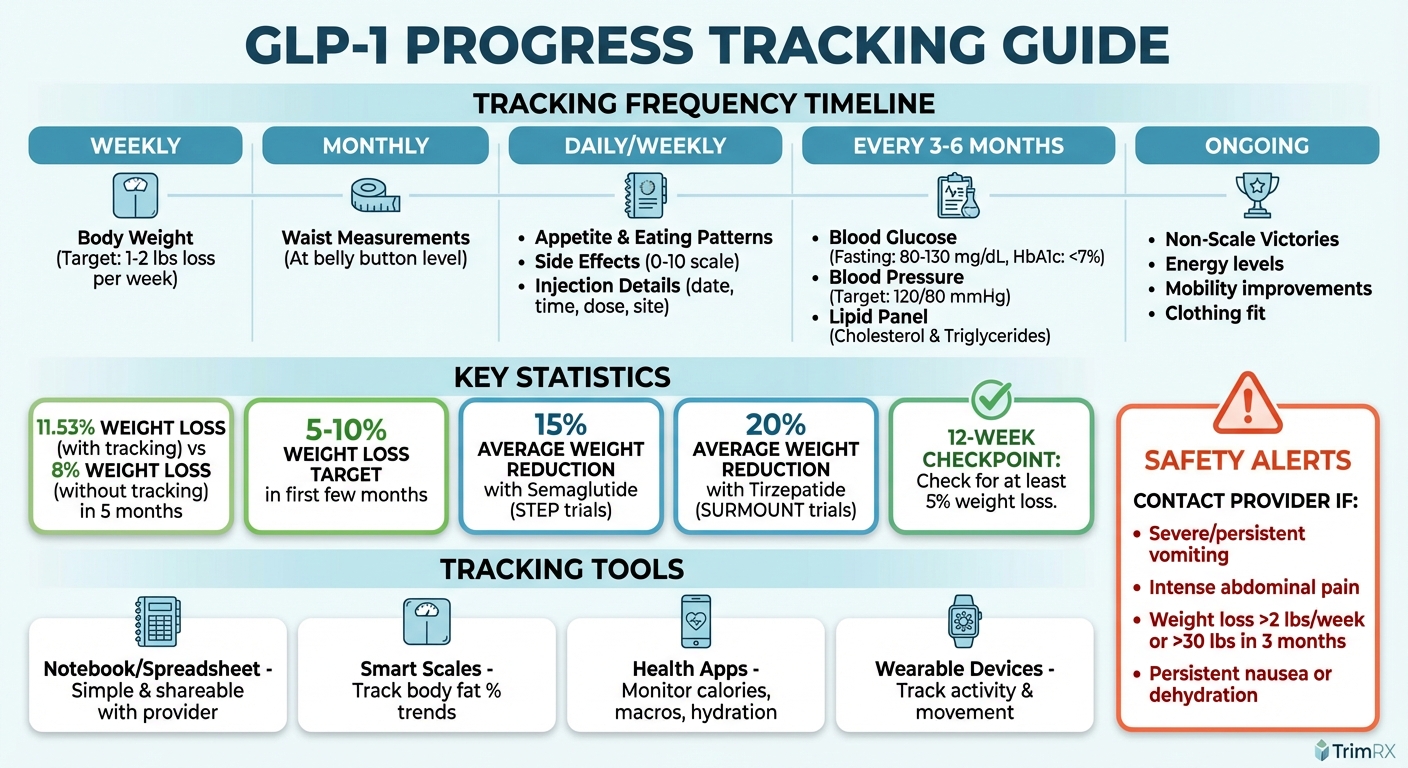
Complete GLP-1 Progress Tracking Guide: What to Measure and When
Obesity Doctor: 5 Signs Your GLP-1 Is Working Correctly
What to Track on GLP-1 Therapy
Tracking the right metrics is crucial for making the most of GLP-1 therapy. While weight is an important factor, it’s just one piece of a larger picture. A well-rounded approach includes monitoring body composition, metabolic health, daily symptoms, and overall quality of life. These insights help you and your healthcare provider fine-tune your treatment for the best results. Here’s what to keep an eye on:
Body Weight and Rate of Loss
Stick to weekly weigh-ins – not daily ones. Weigh yourself at the same time each week, preferably in the morning, after using the bathroom and before eating. This approach minimizes the impact of natural daily weight fluctuations caused by water retention, meals, or other factors.
A steady weight loss of 1–2 pounds per week is ideal for long-term success with Semaglutide. Over three months, this typically translates to a loss of 10–25 pounds, or about 5–10% of your body weight. Clinical trials back this up: the STEP trials showed an average weight reduction of around 15% with Semaglutide, while the SURMOUNT trials reported up to 20% with Tirzepatide. Losing more than 2 pounds per week or over 30 pounds in three months can lead to risks like muscle loss or nutrient deficiencies. As Claudia Guepet, FNP-C at Rejuvime Medical, explains:
Some patients may lose over 30 pounds in 3 months, but we worry about the caloric deficit, muscle loss, nutrient deficiencies, and health risks that come with rapid weight loss.
Body Measurements and Composition
Your waistline can reveal changes that a scale might miss. Measure your waist monthly at the belly button level using a soft tape measure. A shrinking waistline is a strong indicator of reduced visceral fat, the harmful fat surrounding your organs. This directly benefits your metabolic health and lowers cardiovascular risks.
Beyond weight, body composition is key. Rapid weight loss can sometimes mean losing muscle along with fat, which can harm your metabolism and physical strength. Use tools like smart scales to track body fat percentage trends over time, even if they aren’t perfectly accurate. The overall trend is what matters most.
Metabolic Health Markers
Every 3–6 months, work with your healthcare provider to monitor critical metabolic markers:
- Blood glucose levels: If you have diabetes, aim for fasting glucose between 80–130 mg/dL and post-meal readings below 180 mg/dL. HbA1c, which reflects your average blood sugar over three months, should generally stay below 7%.
- Blood pressure: Weight loss often improves blood pressure. A healthy target is around 120/80 mmHg, but your provider may adjust this based on your needs.
- Lipid panels: Cholesterol and triglyceride levels typically improve as you lose weight and reduce visceral fat.
These markers provide concrete evidence of progress, even if your weight doesn’t change significantly. Pair these with daily observations for a fuller understanding of your health journey.
Appetite, Eating Patterns, and Side Effects
GLP-1 medications work by curbing hunger and cravings, which drives weight loss. Pay attention to how your eating habits evolve. Are you feeling full with smaller portions? Are cravings for sweets or high-fat foods decreasing? Are you eating less frequently? These are all signs that the medication is working as intended.
Also, monitor for side effects like nausea, constipation, diarrhea, or bloating. While most are mild and temporary, some require medical attention. Contact your healthcare provider immediately if you experience severe or persistent vomiting, intense abdominal pain radiating to your back (a potential sign of pancreatitis), or symptoms of gallbladder issues.
Non-Scale Victories and Daily Function
Progress isn’t just about numbers – it’s also about how you feel and function in daily life. Non-scale victories (NSVs) can be even more meaningful than what the scale shows. Notice changes like looser-fitting clothes, increased energy, better mobility, and improved mood. Can you climb stairs without getting winded? Has your joint pain eased? Are you thinking more clearly? These are all signs of real progress.
GLP-1 medications create the conditions for change, but lasting success depends on adopting healthier habits. Tracking these NSVs helps you stay motivated during plateaus when the scale isn’t moving. After all, the ultimate goal isn’t just weight loss – it’s feeling better, moving easier, and living a fuller, healthier life. Weight loss is simply the tool to help you get there.
How to Track Your Progress
Setting Up a Tracking Schedule
Before starting your GLP-1 treatment, it’s essential to gather some baseline data. Note your starting weight, take a few body measurements, and, if applicable, record key health markers like blood glucose or blood pressure. This will give you a solid starting point to compare future progress.
Once you begin treatment, establish a routine for tracking. Weigh yourself once a week – ideally on the same day, at the same time, and under the same conditions, like in the morning before eating or drinking anything. Take body measurements, such as your waist circumference, once a month to monitor changes in body composition. Keep a log of your symptoms daily or weekly, rating them on a 0–10 scale, and include the timing of your GLP-1 injections. Also, record each injection’s details, such as the date, time, dosage, and injection site. This helps you rotate sites and avoid irritation.
Pay attention to your daily eating habits and hydration levels to identify patterns influencing hunger and fullness. If you’re managing diabetes, follow your healthcare provider’s recommendations for monitoring blood glucose levels and check your HbA1c every 3–6 months. Blood pressure should also be tracked regularly, especially since weight loss may require adjustments to your medications.
With these habits in place, the next step is choosing tools that make tracking easier.
Tools for Tracking
The tool you use isn’t as important as staying consistent. A simple notebook or spreadsheet can do the job and makes it easy to share your progress with your healthcare provider. Many people find that writing things down by hand keeps them more engaged with their goals.
If you prefer something digital, there are plenty of options. Smart scales can provide insights into body fat percentage trends over time – just remember to focus on the overall trend rather than daily fluctuations. Health apps can track your calorie intake, macronutrients, exercise, and hydration. Some digital tools even combine features like shot scheduling, progress tracking, and symptom monitoring in one place. Wearable devices can also help by keeping tabs on your daily activity and movement patterns. The key is to pick a system you’ll use consistently, as the best tracking tool is the one that fits into your routine.
How TrimRX Supports Your Progress

Once you’ve established a tracking routine, having expert guidance can make all the difference in your journey.
TrimRX offers personalized weight loss programs that include customized consultations, tailored dosing, free delivery, and regular check-ins to keep you on track. The data you collect – such as weight changes, measurements, symptoms, and health markers – helps your clinician fine-tune your treatment plan for the best results. This ensures your GLP-1 therapy is both safe and effective for your individual needs.
Regular check-ins with your provider allow for dose adjustments, addressing side effects, and overcoming any plateaus. With this collaborative approach, you’re not tracking your progress alone – you have professional medical support every step of the way, helping you achieve and maintain long-term weight loss success.
sbb-itb-e2779c3
Setting Realistic Goals Based on Your Data
Short-Term and Long-Term Targets
Using your tracking data, aim for achievable GLP-1 goals. A practical starting point is targeting a 5–10% reduction in your initial body weight. Even this modest loss can lead to better blood sugar control and lower your risk of heart disease. For instance, if you weigh 220 lbs, losing 11–22 lbs over several months aligns with this goal.
Clinical trials show that GLP-1 medications typically result in weight reductions of 5% to 18% over 56 to 72 weeks. However, real-life outcomes may be on the lower end. For example, studies on semaglutide 2.4 mg daily reveal an average 8% weight loss in individuals with diabetes over 60 weeks, while those without diabetes see closer to 11%. Weight loss tends to be faster in the first six months, gradually slowing and plateauing around 18 months.
Check your progress at the 12-week mark to ensure at least a 5% weight loss, as recommended by the FDA and Endocrine Society guidelines. This checkpoint helps determine whether your current treatment plan is effective or needs adjustment. Keep in mind that individual results can vary.
Once these targets are set, it’s important to prepare for the natural occurrence of weight loss plateaus.
Understanding and Managing Plateaus
Hitting a plateau is a normal part of the GLP-1 process, often lasting several weeks. It doesn’t mean the medication has stopped working but signals a time to reassess your strategy with your healthcare provider.
When facing a plateau, dive into your data for potential patterns. Look at factors like meal timing, portion sizes, protein intake, physical activity, and medication adherence. Are you taking your injections consistently? Have there been changes in your eating habits or activity levels? Keep in mind that tracking less than 80% of the time is associated with lower medication adherence.
Avoid making changes to your regimen on your own. Instead, schedule a review with your healthcare provider and bring along your tracked data. They can evaluate whether a dose adjustment is needed, address any side effects affecting your progress, or recommend tweaks to your routine. Often, plateaus are simply your body adapting before the next phase of weight loss begins.
Balancing Safety and Progress
While working toward your goals, keep an eye on safety. If you notice rapid weight loss or symptoms like persistent nausea or trouble staying hydrated, reach out to your clinician promptly.
Before each follow-up, organize your tracked data to share with your provider. Include weekly weights, monthly measurements, any side effects and their severity, and notes on eating habits and activity levels. This clear summary allows your clinician to evaluate if your plan is effective and safe, making it easier to adjust your dosage or address issues before they escalate.
Conclusion
Tracking progress with GLP-1 treatments involves monitoring weight, body measurements, metabolic markers, and those small, everyday wins that often go unnoticed. Each of these metrics paints a more complete picture of your health journey – whether it’s shedding visceral fat, improving energy levels, or enhancing overall wellness.
Regular tracking isn’t just about numbers; it’s about connecting the dots. By keeping tabs on medication timing, dietary habits, and physical activity, you can uncover patterns that help fine-tune your approach. It also makes it easier to catch potential side effects early, before they escalate into bigger concerns.
Think of your data as a personal roadmap. Whether you prefer using an app, a spreadsheet, or even a trusty notebook, documenting your progress allows you to celebrate wins, address challenges, and adjust your plan when needed. This consistent record-keeping empowers you to take charge of your health and work toward your goals with confidence.
TrimRX supports you every step of the way with personalized consultations, tailored dosing, and ongoing monitoring. With unlimited access to medical professionals who understand your unique needs, you’ll have the guidance to stay on track and make the most of your treatment.
FAQs
What should I track to measure progress on GLP-1 therapy?
To keep track of your progress with GLP-1 therapy, pay attention to several important metrics. Start with your weight and body measurements, like your waist or hips. Also, note non-scale victories – these could include having more energy, clothes fitting better, or other improvements in your daily life. It’s equally important to keep an eye on blood sugar levels and other metabolic markers, as advised by your healthcare provider.
Check these metrics regularly, usually every 3 to 6 months. Be alert for any side effects, such as nausea or changes in digestion, and discuss them with your doctor. This method helps make sure your treatment is working well and supports your overall health goals.
What can I do if my weight loss stalls while using GLP-1 therapy?
Hitting a weight loss plateau can feel discouraging, but it’s a common part of the journey. To move past it, take a closer look at your eating habits. Focus on adding more protein and fiber-rich foods to your meals, and try to cut back on processed snacks and sugary treats. Making small but meaningful changes like these can have a big impact.
Switching up your workout routine can also help. Consider incorporating strength training or mixing up your aerobic exercises to challenge your body in new ways. Beyond diet and exercise, don’t underestimate the importance of staying hydrated, managing stress levels, and getting enough quality sleep – all of which play a role in maintaining progress.
If you’re still not seeing results, it might be time to check in with your healthcare provider. They can offer tailored advice or tweak your plan to help you get back on track.
What health metrics should I monitor while using GLP-1 therapy?
When undergoing GLP-1 therapy, keeping tabs on several health metrics is crucial for tracking progress and maintaining overall well-being. Here are some key markers to monitor:
- Blood glucose levels and Hemoglobin A1C: These help evaluate how well your blood sugar is being managed.
- Insulin levels and HOMA-IR: Useful for assessing insulin sensitivity.
- Lipid panel: Measures cholesterol and triglycerides to keep an eye on heart health.
- Liver enzymes (ALT, AST, GGT): Indicators of liver function.
- Kidney function markers like creatinine, eGFR, and BUN: Essential for ensuring your kidneys are functioning properly.
By regularly tracking these metrics, you and your healthcare provider can determine how effective the therapy is and tweak your plan if needed. TrimRX offers personalized consultations, custom prescriptions, and ongoing support to help you achieve lasting results with GLP-1 therapy.
Related Blog Posts

Transforming Lives, One Step at a Time
Keep reading
Weight Loss Progress Tracker
Track your weight loss over time, see progress clearly, and stay motivated with simple charts, summaries, and goal-based insights.

How to Create a Personalized Adherence Plan
Build a one-page GLP-1 adherence plan: record dose, pick a weekly time, set reminders, log side effects, and review monthly.

Weight Loss Medication Dosage Calculator
Estimate weight loss medication doses by weight and drug type, with starting guidance, dose progression info, and a clear medical disclaimer.


