Can I Inject Ozempic at Night? Timing Your GLP-1 Dose
Introduction
Many people starting their weight loss journey feel a mix of excitement and a little bit of nerves when it comes time for their first injection. If you are just getting started, how to start a weight loss journey that actually lasts can help frame the bigger picture. You might be staring at the pen, wondering if the time of day will impact how you feel or how well the medication works. One of the most frequent questions we hear is whether it is okay to inject Ozempic® at night. At TrimRx, we believe that understanding the logistics of your treatment is the first step toward a successful, sustainable health transformation. This article will cover why nighttime injections are a popular choice, how timing affects side effects like nausea, and what you need to know about staying consistent with your weekly dose. While the specific hour you choose may seem like a small detail, finding the right window can significantly improve your comfort and long-term success.
Is It Safe to Inject Ozempic at Night?
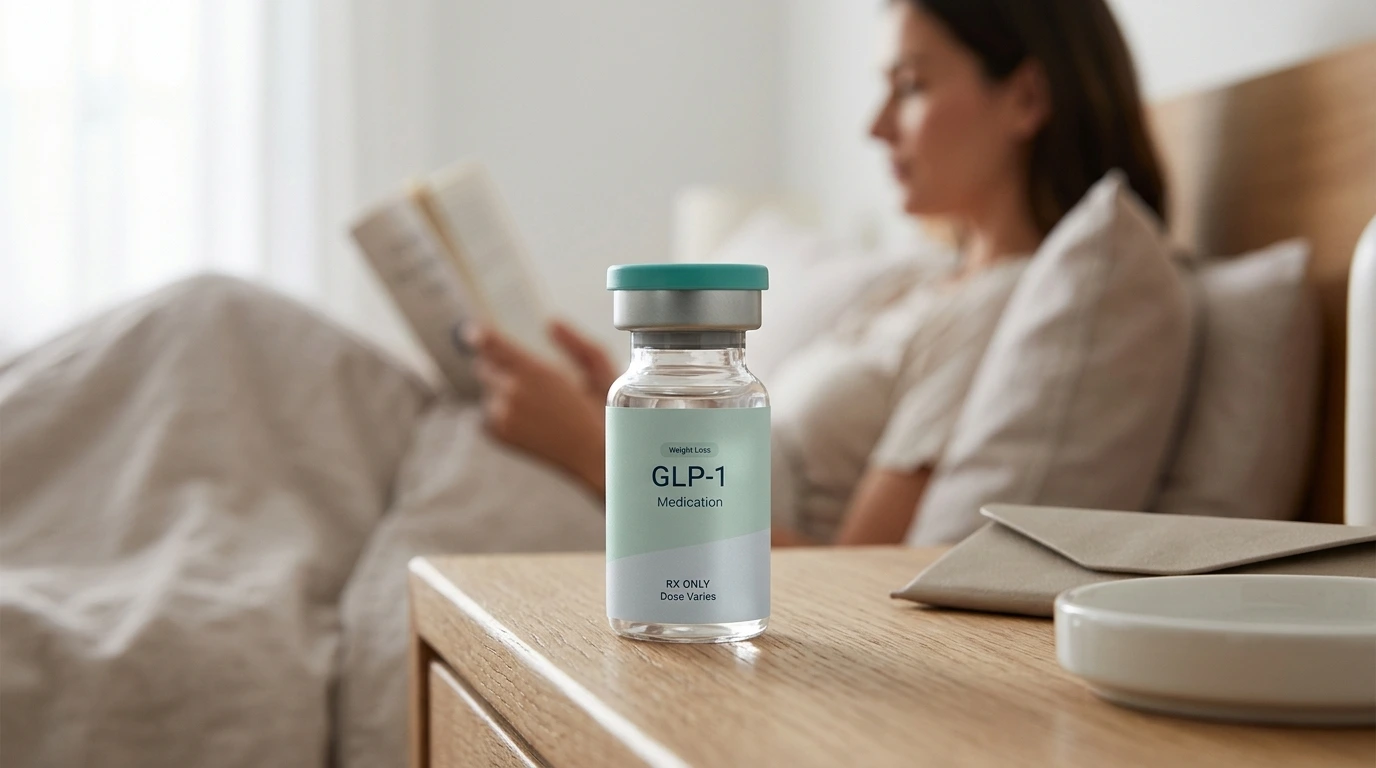
The short answer is yes. You can safely inject Ozempic® at night, in the morning, or at any other time that fits your schedule. The medication is a GLP-1 receptor agonist, which stands for glucagon-like peptide-1. This is a synthetic version of a hormone your body naturally produces to regulate blood sugar and appetite. Because of how this medication is processed by your body, the specific hour of your injection does not change its effectiveness.
Quick Answer: Yes, you can inject Ozempic® at night. The medication has a long half-life, meaning it stays in your system for a full week, so the specific time of day you choose does not impact how well it works for weight management or blood sugar control.
The active ingredient, semaglutide, has a “half-life” of approximately seven days. In plain English, this means it takes a full week for half of the medication to leave your system. Because it lingers in your bloodstream for so long, your body maintains a relatively “steady state” of the medicine regardless of whether you inject it at 8:00 AM or 8:00 PM. The most important factor isn’t the clock; it’s the calendar. You simply need to ensure you are taking your dose on the same day every week.
Why Many People Prefer Nighttime Injections
While you can take your dose whenever you like, many individuals find that evening injections offer specific advantages. The primary reason for this preference is the management of early side effects. When you first start a GLP-1 medication, or when you increase your dosage, your body has to adjust to the new levels of semaglutide. This adjustment period can sometimes cause “GI” (gastrointestinal) symptoms.
Sleeping Through Nausea
Nausea is one of the most commonly reported side effects of semaglutide. For some, this feeling peaks a few hours after the injection. If you want a deeper breakdown of symptom timing, how long after semaglutide injection side effects start explains what many people experience early on. By choosing to inject at night, many people find they can sleep through the most intense window of potential queasiness. If you inject right before bed, you may wake up feeling refreshed rather than dealing with an upset stomach during your morning commute or a busy workday.
Avoiding Daytime Fatigue
Some patients report feeling a wave of tiredness or fatigue shortly after their weekly dose. While this isn’t a universal experience, it can be disruptive if you have a high-energy job or family responsibilities. If that sounds familiar, does GLP-1 make you tired is a useful place to learn more about why it can happen. Taking the injection in the evening allows you to rest and recover overnight. By the time you wake up, that initial wave of fatigue has often passed, allowing you to go about your day with your usual energy levels.
Building a Consistent Routine
For many, the evening is a time of winding down and following a predictable routine. It may be easier to remember your weekly dose if you pair it with an existing nighttime habit, such as brushing your teeth or preparing your clothes for the next day. Morning routines can often be rushed or unpredictable, which increases the chance of forgetting your medication or feeling rushed during the injection process itself.
Morning vs. Evening: Pros and Cons
Choosing between a morning or evening injection is a personal decision that should be based on your lifestyle and how your body reacts to the medication. There is no “wrong” choice, provided you are consistent.
The Case for Morning Injections
Some people prefer to “get it over with” early in the day. If you are someone who rarely experiences side effects, a morning injection might be perfectly fine.
- Pro: It’s finished early, so you don’t have to think about it the rest of the day.
- Pro: If you travel frequently, you might find it easier to manage the injection before you leave the house.
- Con: If nausea hits mid-afternoon, it could disrupt your work or social plans.
The Case for Evening Injections
As discussed, the primary benefit here is comfort.
- Pro: High likelihood of sleeping through initial side effects.
- Pro: Easier to manage if you need to lie down or rest after the dose.
- Con: If you are prone to vivid dreams or heartburn, some people find that the medication’s impact on digestion (slowing it down) can be more noticeable when lying down shortly after a meal.
Key Takeaway: The best time to inject is the time that allows you to be 100% consistent every week. If you struggle with nausea, try shifting your dose to the evening to see if you can sleep through the discomfort.
Understanding the “Steady State”
To understand why the time of day doesn’t matter for efficacy, we have to look at how GLP-1 medications work in the bloodstream. When you first start your program, your provider will likely start you on a low “loading dose.” This isn’t meant to cause immediate, massive weight loss; it is meant to introduce the medication to your system slowly.
Over several weeks, the concentration of semaglutide in your blood reaches what doctors call a “steady state.” This means the amount of medicine entering your system from your weekly shot roughly equals the amount your body is processing and clearing out. Once you reach this point, the levels of medication in your body stay relatively flat throughout the week. There aren’t “peaks” and “valleys” caused by the time of day you inject. This is why you will continue to feel the appetite-suppression benefits on Tuesday even if you injected on Sunday night.
Managing Side Effects Regardless of Timing
Whether you choose morning or night, there are several strategies you can use to minimize discomfort and maximize the benefits of your program. At TrimRx, we emphasize that your medication is just one part of a larger lifestyle shift.
Watch Your Last Meal
If you choose to inject at night, be mindful of what you eat for dinner. Because semaglutide slows down gastric emptying (how fast food leaves your stomach), a very heavy, greasy, or spicy meal right before bed can lead to heartburn or indigestion. Try having a lighter, protein-focused meal a few hours before your nighttime injection.
Hydration is Essential
Dehydration can worsen feelings of nausea and fatigue. Make it a goal to drink plenty of water throughout the day of your injection. If you find yourself struggling with a dry mouth or mild headaches, you might consider an electrolyte supplement. We often suggest our GLP-1 Daily Support supplement to help bridge the gap in essential nutrients that can sometimes be missed when your appetite decreases.
Small, Frequent Portions
If you experience nausea the morning after a nighttime injection, don’t skip breakfast entirely. Instead, try something small and bland, like a piece of dry toast or a few crackers. Keeping a little bit of food in your stomach can actually help settle the “empty stomach” nausea that some GLP-1 users experience.
How to Switch Your Injection Time Safely
If you have been injecting in the morning and want to try switching to the night, or if you need to move your injection day entirely, you can usually do so with a few simple adjustments.
- The Time Shift: If you want to move from morning to night on the same day, you can simply wait until that evening to take your dose. Since it is only a 12-hour difference, it will not impact the steady state of the medication in your body. For a broader look at timing, when is the best time to inject semaglutide covers the same flexibility from a provider perspective.
- The Day Shift: If you need to change your injection day (for example, moving from Sunday to Friday), the general rule is to ensure there are at least 48 to 72 hours between doses. Most manufacturers suggest that as long as it has been at least 3 days since your last dose, you can move your “injection day.”
- Consult Your Provider: Before making any significant changes to your schedule, especially if you are also managing a condition like Type 2 diabetes, always check in with your healthcare professional. They can provide specific guidance based on your medical history.
What to Expect When Starting Your Program
If you are just beginning your journey with us, you might be curious about the process. We use a telehealth-first model, which means you don’t have to worry about waiting rooms or in-person appointments.
The Assessment Process
Step 1: Complete the free assessment quiz. This helps our partner providers understand your health history, your current BMI, and your weight loss goals. Step 2: A licensed healthcare provider reviews your information to determine if a GLP-1 medication, such as Compounded Semaglutide or Compounded Tirzepatide, is appropriate for you. If you want a closer look at the process, how to order GLP-1 medications for effective weight loss walks through the telehealth journey in more detail. Step 3: If approved, your prescription is sent to one of our partner FDA-registered, inspected compounding pharmacies. Step 4: Your medication is shipped directly to your door, with all the necessary supplies (like needles and alcohol wipes) included.
Note: Compounded Semaglutide and Compounded Tirzepatide are prepared by specialized pharmacies to meet individual needs. While these specific compounded versions are not FDA-approved, they are produced in facilities that are highly regulated and inspected.
Does Food Impact the Injection?
Unlike some oral medications that must be taken on an empty stomach or with a full meal, Ozempic® and other semaglutide injections are not affected by food intake. The medication is injected into the subcutaneous fat (usually in the stomach, thigh, or back of the arm), so it bypasses the immediate digestive process.
You do not need to time your injection around breakfast, lunch, or dinner. This flexibility is what allows the “inject at night” strategy to work so well. You can have your dinner, wait an hour or two for it to begin digesting, and then administer your dose before sleep without worrying that the food will interfere with the drug’s absorption.
Common Myths About Injection Timing
There is a lot of information—and misinformation—circulating online about GLP-1 medications. Let’s clear up a few common myths regarding when and how to take your dose.
Myth: If I inject at night, the medicine will “wear off” sooner at the end of the week. Fact: The timing of the dose (morning vs. night) has zero impact on how long the medicine lasts in your system. Its duration is determined by the chemistry of the molecule (the seven-day half-life), not the time of day it enters your body.
Myth: You must inject in the stomach for it to work faster. Fact: While the stomach is a common injection site, the thigh and the back of the arm are also effective. The “speed” of the medication is consistent across these subcutaneous sites. Some people actually find that rotating to the thigh helps reduce nausea, regardless of whether they inject in the morning or at night.
The Importance of Consistency
While we have established that the specific hour doesn’t matter, the frequency does. GLP-1 medications are designed to be taken once a week. Skipping doses or waiting too long between injections can cause the levels of medication in your blood to drop, which might lead to a return of hunger or a stall in your weight loss progress.
If you do happen to miss a dose, most protocols suggest taking it as soon as you remember, as long as the next scheduled dose is more than two days away. If your next dose is only a day or two away, it’s usually best to skip the missed dose and get back on your regular schedule. Never “double up” on doses to make up for a missed one, as this significantly increases the risk of severe side effects.
Why Personalized Programs Matter
At TrimRx, we know that every body is different. What works for one person’s schedule might not work for another’s. This is why we focus on personalized treatment plans. When you work with the licensed providers through our platform, you aren’t just getting a prescription; you are getting a program designed to fit your life.
Whether you choose a branded medication like Mounjaro® or Zepbound® (which you would fill at your local pharmacy) or a compounded option shipped from an inspected facility, the goal remains the same: sustainable, healthy weight loss. Our team is available to help you navigate these small but important questions, like whether to shift your dose to the evening or how to manage a particular side effect.
Practical Steps for a Successful Nighttime Injection
If you’ve decided to try injecting at night, follow these steps to ensure a smooth experience:
Step 1: Prepare your space. Make sure you have good lighting and a clean surface. Wash your hands thoroughly. Step 2: Check your medication. Ensure the liquid is clear and colorless. If you are using a pen, make sure it is dialed to the correct dose prescribed by your provider. Step 3: Choose your site. Rotate your injection site each week to prevent the skin from becoming tough or irritated. Common spots are the abdomen (at least two inches from the belly button) or the front of the thighs. Step 4: Clean and inject. Use an alcohol swab to clean the skin. Pinch the skin slightly (if instructed), insert the needle, and deliver the dose. Step 5: Dispose safely. Place your used needle in a sharps container immediately. Step 6: Rest. Head to bed and let your body do the work while you sleep.
Long-Term Success with GLP-1s
Injecting at night is a great “tactic,” but the “strategy” for long-term success involves a holistic approach. As the medication helps regulate your appetite and cravings, it creates a window of opportunity to build better habits. This is the perfect time to focus on:
- Protein Intake: Aiming for high protein helps preserve lean muscle mass while you lose fat.
- Strength Training: Even basic bodyweight exercises can help boost your metabolic health.
- Mindful Eating: Learning to listen to your body’s “fullness” signals, which are amplified by the medication.
Our mission is to be your partner in this process. We provide the tools, the medical oversight, and the high-quality supplements—like our Weight Loss Boost supplement—to ensure that as the pounds come off, you feel stronger and more energetic. If you are focused on the bigger picture, taking the free assessment quiz is the simplest next step toward a personalized plan.
Bottom line: Injecting Ozempic® at night is a safe and effective way to manage your treatment. It may help you sleep through initial side effects like nausea and fits easily into a calming bedtime routine. As long as you remain consistent with your weekly day, the hour you choose is entirely up to you.
FAQ
Can I change my injection time from morning to night?
Yes, you can move your injection from the morning to the evening on your scheduled day. Since the medication stays in your system for a long time, a 12-hour shift will not disrupt your treatment or its effectiveness. If you want to compare timing approaches, best time to take semaglutide for weight loss offers another provider-focused perspective.
Will injecting at night make me sleepy?
While some people report fatigue as a side effect of GLP-1 medications, the injection itself is not a sedative. Many people choose to inject at night specifically so they can rest if they happen to experience that “heavy” feeling or tiredness that sometimes follows a dose.
Should I eat before injecting at night?
You can inject with or without food. However, because semaglutide slows down your digestion, eating a very large or greasy meal right before a nighttime injection might lead to discomfort or heartburn when you lie down to sleep.
What if I forget my nighttime dose and sleep through it?
If you wake up and realize you missed your nighttime dose, you can take it in the morning. As long as you are still close to your scheduled day, it will not negatively impact your progress; just try to get back to your preferred schedule the following week. If you are still deciding whether treatment is right for you, see if you qualify with a free assessment quiz.
Disclaimer: This content is for informational purposes only and does not constitute medical advice. It is not intended to diagnose, treat, cure, or prevent any disease or condition. Individual results may vary. Always consult a qualified healthcare professional before starting any weight loss program or medication.

Transforming Lives, One Step at a Time
Keep reading

What “Ozempic Vulva” Really Is and Why Weight Loss Changes It
If you’ve noticed that your vulva looks different after losing weight on a GLP-1 medication, you’re not imagining it, and you’re not alone. “Ozempic…

Ozempic Alternatives: Your Options Compared
If Ozempic isn’t the right fit, whether because of cost, side effects, availability, or results, you have real alternatives. The closest ones are other…
Ozempic vs Wegovy: Same Drug, Different Purpose
Here’s the fact that surprises most people: Ozempic and Wegovy are the same medication (semaglutide), just sold under different brand names, at different doses,…


