Can You Take Half Dose of Zepbound for Weight Loss?
Introduction
Starting a journey with a GLP-1 and GIP receptor agonist can feel like a significant turning point in your health. If you have been prescribed Zepbound®, you are likely focused on reaching your goals and managing the transition to a new metabolic state. However, it is common to encounter hurdles along the way, such as gastrointestinal side effects or concerns about medication availability during supply shortages. These challenges often lead patients to ask: “Can you take a half dose of Zepbound?”
At TrimRx, we believe that understanding the science behind your medication is the best way to ensure your safety and success. While the idea of “stretching” a dose or reducing it to manage nausea might seem practical, the physical design and clinical intent of this medication make DIY adjustments risky. This article will explain why branded auto-injectors are not designed for partial doses, the medical risks of tampering with your medication, and how a personalized program can offer the flexibility you need. If you are considering treatment or need guidance about eligibility, you can complete a free eligibility assessment. Our goal is to help you navigate these questions with clinical clarity so you can maintain your progress without compromising your health.
The Design of the Zepbound Delivery System
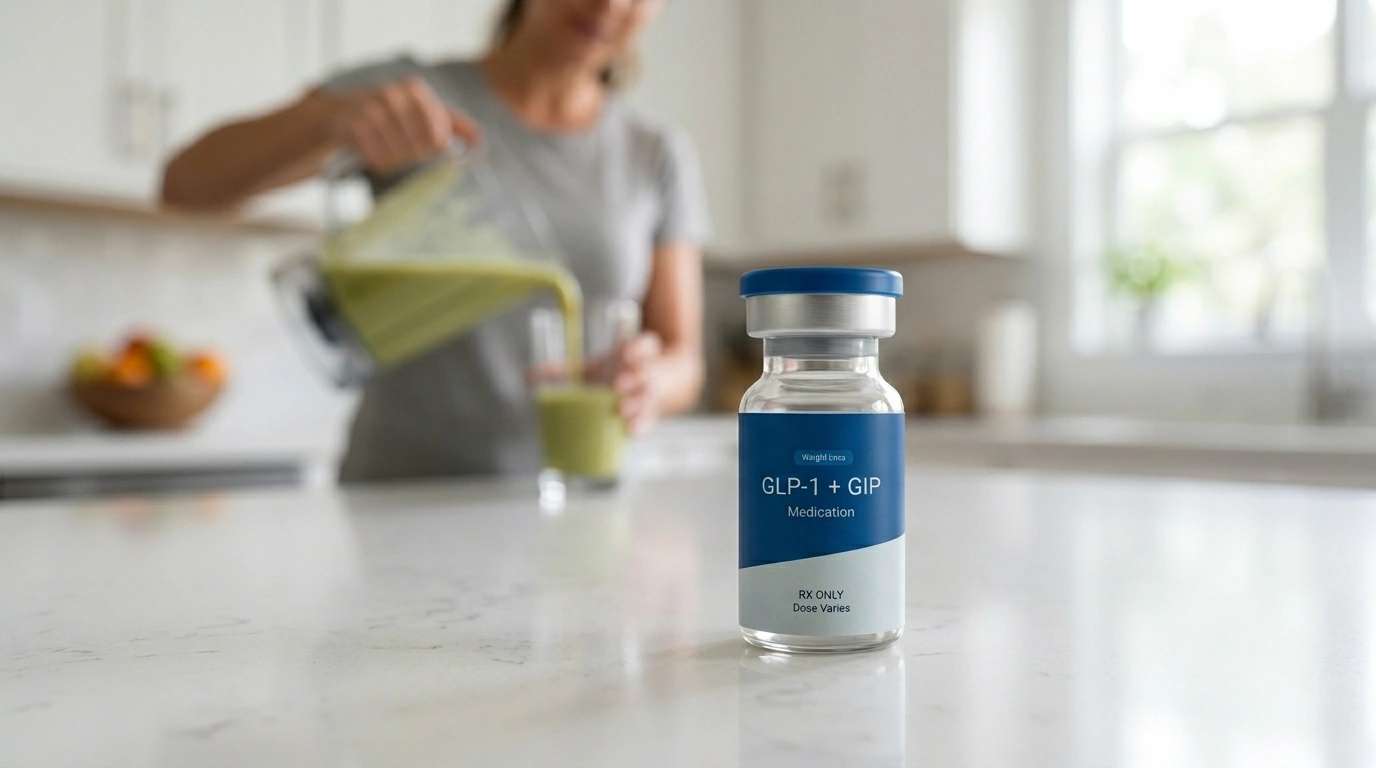
To understand why taking a half dose is problematic, we first have to look at the hardware. Zepbound is the brand name for tirzepatide, a dual-agonist medication that targets two specific hormone receptors: glucagon-like peptide-1 (GLP-1) and glucose-dependent insulinotropic polypeptide (GIP). These hormones help regulate how your body processes sugar and signals fullness to your brain.
Unlike some older insulin pens or other injectable medications that allow you to “dial in” a specific number of units, the branded version of tirzepatide is distributed in a single-dose, pre-filled auto-injector. This device is engineered for a very specific user experience: “one click, one dose.” For additional background, review this guide to how tirzepatide works through GLP-1 and GIP.
The “One-and-Done” Mechanism
The auto-injector is a sophisticated, spring-loaded delivery system. Inside the plastic housing is a glass syringe containing exactly 0.5 mL of liquid, which holds your prescribed dose—whether that is 2.5 mg, 5 mg, or up to 15 mg.
When you press the activation button, a spring is released that drives the needle into the skin and pushes the plunger down to the bottom of the syringe. This happens in seconds. There is no manual dial to stop the plunger halfway, and there is no way to “pause” the injection once the spring has been engaged. Because the device is a closed, mechanical system, it is physically impossible to accurately deliver only half of the liquid using the pen as it was intended.
Why Precision Matters
Tirzepatide is a highly potent medication. The difference between 2.5 mg and 5 mg may seem small in terms of weight, but for your endocrine system, it is a significant shift. The auto-injector is calibrated to ensure that the full volume of the medication reaches the subcutaneous tissue (the fat layer under your skin) at a consistent pressure. Any attempt to interrupt this flow or manually guess how much has been injected can lead to inconsistent absorption and unpredictable results.
For more context on available strengths and dose adjustments, read this overview of tirzepatide dose options and titration.
The Risks of “Pen Splitting”
Because the auto-injector does not allow for partial dosing, some individuals turn to a practice known as “pen splitting.” This involves intentionally discharging the medication into a separate sterile vial and then using a traditional syringe to draw up a smaller portion. While this may seem like a clever workaround, it introduces several clinical risks that can lead to serious health complications.
Loss of Sterility and Infection Risk
The medication inside a branded pen is manufactured in a sterile environment and sealed. The moment that liquid is discharged into the air or another container, the seal of sterility is broken. Even if you use what appears to be a clean vial, the environment of a home kitchen or bathroom is not a sterile laboratory.
Bacteria, fungi, or microscopic debris can contaminate the liquid during the transfer process. When you later inject that contaminated liquid, you are bypassing your body’s primary defense—the skin. This can lead to:
- Injection site infections or abscesses.
- Cellulitis (a deep skin infection).
- Systemic infections that may require hospitalization and intravenous antibiotics.
Medication Degradation and Loss of Potency
Tirzepatide is a delicate peptide molecule. It is sensitive to light, temperature fluctuations, and physical agitation. The branded pens are designed to protect the molecule until the exact second of injection.
When the medication is “shot” into a vial, the force of the auto-injector’s spring can cause “shearing” of the molecules or introduce air bubbles that lead to oxidation. Furthermore, most branded medications do not contain the same preservatives found in multi-dose vials. Once the medication is removed from its original housing, it may begin to break down rapidly, making it less effective or entirely useless.
Inaccurate Dosing Calculations
Weight loss medications are measured in milligrams (the strength) but delivered in milliliters (the volume). Calculating a half dose requires precise knowledge of the concentration. For example, if you are trying to take 2.5 mg from a 5 mg pen, you have to be certain of the exact volume of the liquid.
A small error in measurement—even a few drops—can mean the difference between a therapeutic dose and one that either does nothing or causes a spike in side effects. Without professional pharmacy equipment, the margin for error is dangerously high.
Key Takeaway: Branded auto-injectors are single-use, closed systems. Tampering with them to achieve a partial dose compromises the medication’s sterility, stability, and safety.
Why Do People Seek a Half Dose?
It is important to acknowledge that the desire to take a half dose usually stems from a very real need. Understanding these motivations helps us find safer, medically supervised alternatives.
Managing Gastrointestinal Side Effects
The most common reason for wanting to lower a dose is “GI distress.” Because GLP-1 and GIP medications slow down the rate at which food leaves your stomach (gastric emptying), they can cause:
- Persistent nausea.
- Occasional vomiting.
- Bloating or “sulfur burps.”
- Changes in bowel habits.
For some, these symptoms are most intense in the first 48 hours after an injection. A patient might think, “If I take half now and half later, I won’t feel so sick.” While the logic is understandable, inconsistent dosing can actually make side effects worse over time by preventing the body from properly acclimating to the medication. For additional guidance, see this discussion of common GLP-1 side effects.
Stretching Supply During Shortages
In recent years, the high demand for branded medications like Zepbound®, Wegovy®, and Mounjaro® has led to intermittent shortages in the United States. When a patient cannot find their next box of pens at a local pharmacy, they may feel pressured to “ration” what they have left.
Taking a half dose every week or a full dose every two weeks might seem like a way to stay on the medication, but it disrupts the “steady state” of the drug in your system. This can lead to a return of “food noise” and hunger, stalling the weight loss progress you have worked so hard to achieve.
The Science of Titration and “Steady State”
The reason your healthcare provider follows a specific dosing schedule is rooted in how tirzepatide interacts with your body over time. This process is called titration.
Building Tolerance Slowly
The standard starting dose for Zepbound is 2.5 mg once weekly for four weeks. This is technically considered a “loading dose” or an initiation dose. It is not intended to produce maximum weight loss; its primary job is to let your brain and digestive system get used to the presence of the GIP and GLP-1 agonists.
By the time you move up to 5 mg, your body has built a level of tolerance. If you take a half dose (such as 1.25 mg), you may not be providing enough of the signal to your body to begin the adaptation process. Conversely, if you stay on a half dose for too long and then jump back to a full dose, your body may react as if it is seeing the drug for the first time, leading to a return of severe side effects.
You can also review this tirzepatide starting-dose guide to understand how supervised treatment typically begins.
Maintaining the Half-Life
Tirzepatide has a “half-life” of approximately five days. This means that five days after your injection, half of the medication is still in your bloodstream. By the time you take your next weekly dose on day seven, a small amount of the previous dose remains.
This overlap is intentional. It creates a “steady state” where the levels of the drug in your body remain relatively consistent. If you take a half dose, the concentration in your blood may fall below the “therapeutic threshold.” When this happens:
- Blood sugar regulation may become less stable.
- Appetite suppression fades before the next dose.
- The metabolic benefits of the GIP receptor activation are diminished.
Note: Clinical success with GLP-1 medications depends on consistency. Frequent changes in dosage without medical supervision can disrupt your metabolic progress and increase the risk of adverse reactions.
Safe Alternatives for Dosing Flexibility
If you find that your current dose is too strong or you are worried about side effects, you do not have to resort to DIY “pen hacking.” There are several clinical pathways to achieve a more comfortable experience.
1. Requesting a Lower Dose Prescription
The most direct way to take a “half dose” safely is to have your provider write a prescription for the next lowest available strength of the branded pens. If you are currently on 5 mg and it feels like too much, your provider can move you back down to the 2.5 mg pens. This ensures you are still using a factory-sealed, sterile auto-injector that is guaranteed to deliver the exact amount intended.
2. Exploring Compounded Tirzepatide
For many people, the fixed doses and rigid delivery systems of branded medications are a source of frustration. This is one reason why many individuals turn to personalized programs like our platform at TrimRx. We connect patients with licensed healthcare providers who may prescribe compounded tirzepatide. Compounded medications are prepared by licensed pharmacists in FDA-registered and inspected compounding pharmacies to meet the specific needs of a patient.
If you want to discuss whether a personalized program may fit your needs, you can see if you qualify for a personalized program.
Why Compounded Options Offer More Control
Unlike the branded auto-injectors, compounded tirzepatide typically arrives in a multi-dose vial. The medication is drawn up using a traditional, very fine-gauge syringe. This delivery method offers several advantages for those seeking flexibility:
- Granular Dosing: If a doctor determines that a patient needs a dose that is between standard branded increments (for example, 3.5 mg instead of a jump from 2.5 mg to 5 mg), it is possible to measure that exact amount in a syringe.
- Easier Titration: For patients who are highly sensitive to side effects, providers can sometimes recommend a slower titration schedule that isn’t possible with fixed-dose pens.
- Supply Reliability: Because compounded medications are prepared in specialized pharmacies, they are often more accessible during periods when branded medications are on the national shortage list.
Important: Compounded tirzepatide is not FDA-approved. However, the compounded medications facilitated through TrimRx are sourced from FDA-registered, inspected compounding pharmacies that adhere to strict quality standards.
How to Handle Side Effects Without Reducing Your Dose
If your primary reason for wanting a half dose is nausea or stomach discomfort, there are several “non-hacking” strategies you can use to feel better while staying on your prescribed schedule.
Nutritional Support
- Prioritize Protein: Consuming adequate protein helps maintain muscle mass and can sometimes settle the stomach.
- Hydration and Electrolytes: Dehydration can actually mimic the feelings of nausea. Using a targeted supplement like GLP-1 Daily Support can help maintain the nutrient balance your body needs during weight loss.
- Small, Frequent Meals: Instead of three large meals, try five very small snacks. This prevents your stomach from becoming over-full, which is a major trigger for nausea when on a GLP-1.
For more practical nutrition context, read this guide to nutrition during GLP-1 weight loss.
Injection Site Selection
Some patients report that injecting into the thigh or the back of the arm results in fewer gastrointestinal side effects compared to injecting into the abdomen. While the medication still reaches the bloodstream, the rate of initial absorption may vary slightly, providing a smoother experience for some individuals.
Consult Your Provider About Anti-Nausea Medication
If the side effects are significant, your provider may be able to prescribe a short course of anti-nausea medication to help you through the first few weeks of a new dose. This allows you to stay on the effective therapeutic dose while your body adjusts.
Moving Forward with a Personalized Program
Weight loss is a marathon, not a sprint. The “one-size-fits-all” approach of traditional retail pharmacy can sometimes leave patients feeling like they have to take matters into their own hands. Whether it’s the side effects or the frustration of searching for a box of pens, these stressors are real.
At TrimRx, we aim to remove those barriers. Our program is designed to be a comprehensive support system. By merging clinical expertise with the convenience of telehealth, we provide a path that is both medically supervised and tailored to your life.
When you join our program, you aren’t just getting a prescription; you are getting access to a team that understands the nuances of GLP-1 and GIP therapy. If you are struggling with your current dosing or want to explore more flexible options like compounded tirzepatide, the first step is simple.
Next Steps for Your Journey
- Stop DIY Adjustments: If you are currently attempting to split doses, speak with a professional immediately to ensure you haven’t compromised your health or your treatment’s efficacy.
- Take the Assessment: Use our free online assessment quiz to share your health history, goals, and any concerns you have about side effects.
- Consult a Provider: Discuss your dosing needs with a licensed healthcare provider who can help determine if a lower dose, a different titration schedule, or a compounded option is right for you.
Bottom line: While you cannot safely take a half dose of a branded Zepbound® pen, you have every right to a treatment plan that feels manageable and sustainable. Safety, sterility, and precision are the foundations of long-term weight loss success.
Summary of Key Points
- Branded Pens are Fixed: The Zepbound® auto-injector is a single-use mechanical device that cannot be “paused” or adjusted for a partial dose.
- Safety Hazards: Transferring medication to a vial (pen splitting) carries high risks of bacterial infection, dose inaccuracy, and medication breakdown.
- Titration is Essential: Taking irregular half doses can prevent your body from building tolerance and may stall your weight loss progress.
- Professional Alternatives Exist: If you need dosing flexibility, talk to your provider about lower-dose branded prescriptions or explore the flexibility of compounded tirzepatide through a personalized program.
Our mission is to help you achieve sustainable health through science and empathy. Weight loss shouldn’t feel like a battle with your medication; it should feel like a partnership with your body. By choosing a medically supervised path, you ensure that every dose you take is working for you, not against you.
FAQ
Can I save the rest of a Zepbound pen for later if I only take half?
No, the Zepbound® auto-injector is designed for a single use and cannot be reused or saved once activated. The needle and the delivery mechanism are spent after one click, and any remaining medication in the pen is no longer sterile or safe to use.
What should I do if the side effects of my current dose are too strong?
The safest course of action is to contact your healthcare provider and ask for a prescription for a lower strength of the medication. You should never attempt to “split” a pen or skip doses without medical guidance, as this can lead to inconsistent drug levels in your body. If you need help exploring a supervised treatment path, you can complete a free eligibility assessment.
Is it okay to take my full dose every two weeks instead of every week to save money?
Taking the medication every two weeks instead of weekly is not recommended because the drug’s levels in your blood will drop too low between doses. This can cause hunger to return and may lead to more severe side effects when you finally take the next dose because your body has lost its acclimation.
How does compounded tirzepatide help with dosing concerns?
Compounded tirzepatide is often provided in a vial with separate syringes, allowing your healthcare provider to prescribe more specific or “in-between” doses that are not available in branded pens. This can be particularly helpful for patients who are very sensitive to the medication or those who need a slower titration schedule to manage side effects. You can read this compounded tirzepatide dosing guide for additional context.
Disclaimer: This content is for informational purposes only and does not constitute medical advice. It is not intended to diagnose, treat, cure, or prevent any disease or condition. Individual results may vary. Always consult a qualified healthcare professional before starting any weight loss program or medication.

Transforming Lives, One Step at a Time
Keep reading
Surfing on Zepbound: Paddling Strength, Cold Water, and Dawn Patrol
Surfing asks a lot of your body. Paddling out through broken waves takes shoulder, back, and core strength. Cold water drains energy. Dawn sessions…

Skydiving on Zepbound: Planning a Tandem Jump
For many people who have lost weight, a skydive is a goal they set years ago and finally feel ready for. Some dropzones have…
A Day at the Renaissance Faire on Zepbound
A Renaissance faire is a full day out: jousts, stage shows, artisan stalls, dusty lanes, and food built for spectacle, from giant turkey legs…


