Diet for Menopause: What to Eat and What to Stop Chasing
Introduction
People constantly confuse two different goals: eating to support the menopause transition and dieting to force the scale down. They overlap, but they are not the same job. A highly restrictive weight-loss diet can leave you underfed, tired, and preoccupied with food. A thoughtful menopause eating pattern is built around nourishment first, with weight changes treated as one possible outcome rather than the only measure of success.
Menopause can change how your body feels, how hungry you are, how well you sleep, and how easy it is to maintain your usual weight. That does not mean every symptom is caused by food, and it certainly does not mean a single ingredient is responsible. The useful question is simpler: does your everyday diet give you enough protein, fiber, fluids, and micronutrient-rich foods to support the body you have now?
At TrimRx, our program is focused on physician-supervised GLP-1 weight loss, not menopause treatment or general nutrition counseling. We are including this topic because weight concerns often become part of the menopause conversation, while a sustainable eating pattern remains important whether or not weight loss is your goal.
At TrimRx, we believe understanding your options is the first step toward taking control of your health. If you want to see whether a personalized treatment plan is a fit for you, you can start with a quick online visit.
What Should a Diet for Menopause Actually Do?
A good menopause diet should make several jobs easier at once. It should help you build balanced meals, maintain strength, support bone health, keep digestion moving, and avoid the sharp swings in hunger that make eating feel chaotic. It should also fit your schedule. A theoretically perfect diet that requires separate meals, unusual ingredients, or constant tracking is not a good plan if you abandon it after a week.
Quick Answer: A diet for menopause should support energy, muscle, bone health, heart health, digestion, and a comfortable body weight. It is not a magic fix for every symptom.
This is not the stage of life for punishment disguised as discipline. Cutting entire food groups without a clear reason can make meals less satisfying and leave important nutrients behind. The better approach is to build meals around a reliable structure: a source of protein, several types of produce, a fiber-rich carbohydrate when wanted, and a source of unsaturated fat.
The pattern matters more than one meal. A dessert, restaurant dinner, or weekend breakfast does not undo a generally nourishing diet. Menopause nutrition should reduce all-or-nothing thinking, not add another rulebook.
Which Foods Belong on the Plate Most Often?
Start with foods that provide substantial nutrition without requiring a complicated recipe. Vegetables and fruit bring fiber, vitamins, minerals, and variety. Beans, lentils, peas, and whole grains provide fiber-rich carbohydrates and can make meals more filling. Eggs, fish, poultry, yogurt, tofu, tempeh, and other protein foods can anchor the meal.
Healthy fats also have a place. Nuts, seeds, avocado, and olive oil can add flavor and staying power. Fat is not a problem to be eliminated. It is a nutrient, and meals that contain some fat are often more satisfying than meals built from low-fat substitutes and refined carbohydrates.
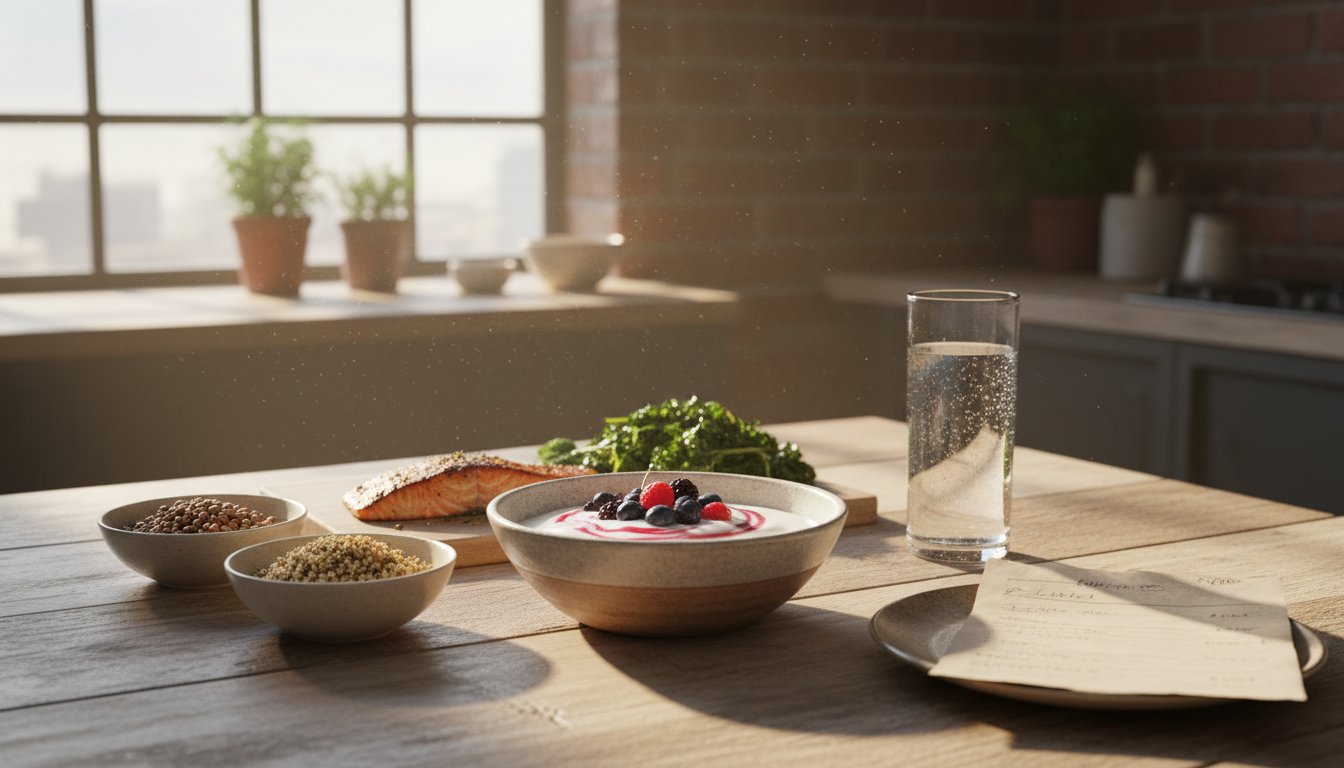
Think in combinations rather than superfoods. A bowl of yogurt with fruit and seeds is more useful than a single “menopause food” promoted as a cure. So is a bean-and-vegetable soup with whole-grain toast, or salmon with greens and potatoes. Ordinary food, assembled consistently, beats a dramatic reset.
How Much Protein Do Women Need During Menopause?
Protein deserves more attention than it usually gets. It helps support muscle, and maintaining muscle becomes an important priority as women move through midlife. Strength training and regular movement matter too, but food is part of that picture.
The practical move is to include a protein source at meals instead of trying to compensate at the end of the day. Breakfast is where many people fall short. Toast or cereal alone may not keep hunger steady for long, while adding eggs, Greek-style yogurt, cottage cheese, tofu, or another protein-rich food creates a more substantial meal.
Protein does not need to mean large portions of meat. Beans, lentils, soy foods, dairy foods, eggs, fish, and poultry all offer options. If you have kidney disease or another condition that affects protein intake, ask your clinician what is appropriate rather than copying a high-protein plan from social media.
Can Diet Help with Menopause Weight Gain?
It can help, but the claim needs to stay grounded. Food choices influence overall energy intake, hunger, meal satisfaction, and body weight. They do not completely control what happens during menopause. Changes in sleep, activity, stress, appetite, muscle, and body composition can all affect the scale and how clothing fits.
This is why aggressive restriction often backfires. A plan that leaves you hungry every afternoon may produce short-term weight loss, but it is difficult to maintain and can turn food into a daily negotiation. A more durable strategy is to make meals filling and predictable: include protein, emphasize produce and fiber-rich foods, and pay attention to drinks, snacks, and portions without treating them as moral failures.
Weight is one health measure, not the entire report card. Waist fit, strength, energy, sleep, digestion, and confidence around food matter too. If weight loss is a goal, it should be pursued without sacrificing nourishment. If weight is stable and your health is improving, that matters as well.
What Should You Eat for Bone Health During Menopause?
Bone health deserves deliberate attention because it is influenced by nutrition, movement, hormones, age, and personal medical history. A diet that supports bones should include calcium-rich foods and adequate vitamin D, along with enough overall nourishment.
Calcium-rich choices can include dairy foods, calcium-fortified alternatives, tofu made with calcium, and some fish eaten with their bones. Vitamin D is found in some foods and may also be recommended as a supplement in certain situations. Whether you need supplementation depends on your diet, health history, medications, and laboratory results. More is not automatically better.
Resistance exercise and weight-bearing activity are also relevant to bone health. Food cannot replace movement, and movement cannot replace adequate nutrition. If you have a history of fractures, low bone density, an eating disorder, or a condition that affects absorption, discuss a personalized plan with a healthcare professional.
Which Foods May Affect Hot Flashes?
Some women notice that particular foods or drinks seem to make hot flashes worse. Commonly reported triggers include alcohol, caffeine, spicy foods, and very hot beverages. That does not mean everyone needs to remove them. It means your own pattern is worth observing.
Keep the experiment simple. If you suspect a trigger, change one thing at a time and note what happens. Removing coffee, chocolate, spicy food, and wine all at once makes it nearly impossible to know what mattered. It can also make the diet unnecessarily narrow.
Persistent or disruptive hot flashes should not be reduced to a food problem. Menopause symptoms vary widely, and treatment may involve options beyond diet. If symptoms are affecting sleep, work, mood, or daily life, bring them to a clinician rather than trying to out-discipline them at the dinner table.
How Can Diet Support Sleep During Menopause?
Food cannot guarantee a good night, but meal timing and drink choices can influence how comfortable bedtime feels. Large, heavy meals close to bed may be unpleasant for some people. Alcohol can also interfere with sleep, even when it seems to make falling asleep easier. Caffeine later in the day can be a problem for people who are sensitive to it.
A calmer evening routine often works better than a collection of sleep supplements. Eat a satisfying dinner, keep late-night grazing from becoming automatic, and notice whether alcohol or caffeine tracks with poor sleep. If hunger wakes you regularly, the answer may be that your daytime meals are too light or too restrictive.
Sleep problems during menopause can have several causes, including hot flashes and other health conditions. Loud snoring, gasping during sleep, persistent insomnia, or severe daytime fatigue should be discussed with a healthcare professional. A meal plan cannot diagnose or treat a sleep disorder.
Key Takeaway: Protein matters more during midlife because preserving muscle becomes a bigger priority, especially when activity, sleep, or appetite changes.
What Helps with Menopause Bloating and Digestion?
Bloating is often blamed on one food, but digestion is rarely that tidy. Changes in fiber intake, constipation, large meals, carbonated drinks, eating quickly, and food intolerances can all play a role. Stress and disrupted routines can make the experience worse.
Fiber-rich foods are useful, but increasing fiber suddenly can create more gas and discomfort. Add beans, lentils, vegetables, fruit, and whole grains gradually, and drink enough fluid. Regular movement can help digestion too. If a particular food consistently causes symptoms, track it rather than eliminating half the kitchen on suspicion.
New, severe, or persistent bloating needs medical attention, especially when it comes with pain, vomiting, blood in the stool, unintentional weight loss, or a noticeable change in bowel habits. “It is just menopause” is not a diagnosis.
Should You Avoid Sugar, Dairy, Soy, or Gluten?
Usually, no blanket ban is necessary. Sugar-heavy foods and drinks can be easy to overconsume and may crowd more nourishing foods out of the diet, but that does not make every sweet food forbidden. A sustainable plan can include treats without turning them into daily staples.
Dairy may be useful for protein and calcium, but people who do not tolerate it have other options. Soy foods can fit into a balanced diet, and there is no general reason to remove them. Gluten avoidance is appropriate for people with celiac disease or another medically identified problem, not simply because an influencer labels gluten as inflammatory.
Elimination diets are sometimes appropriate under professional guidance. They are not automatically healthier, and they can make it harder to meet nutritional needs. Before removing a major food category, ask what problem you are trying to solve and how you will replace the nutrients and enjoyment it provides.
What Does a Simple Day of Menopause-friendly Eating Look Like?
Breakfast could be eggs with vegetables and whole-grain toast, or yogurt with fruit, oats, and seeds. Lunch might be a lentil soup with a side salad, a tofu and vegetable bowl, or a chicken sandwich with fruit. Dinner could be fish, beans, or another protein with roasted vegetables and potatoes, brown rice, or another grain.
Snacks are optional, not mandatory. If you need one, choose something that addresses actual hunger, such as fruit with nuts, yogurt, vegetables with hummus, or a small sandwich. The goal is not to create a flawless menu. It is to prevent the recurring pattern of skipping meals, becoming ravenous, and eating whatever is fastest.
Use convenience foods when they help. Frozen vegetables, canned beans, pre-cooked grains, bagged salad, and plain yogurt can make a nutritious meal possible on a busy night. Cooking from scratch is not a test of character.
How Should You Build a Menopause Diet That Lasts?
Start with one change that removes friction. Add a protein-rich breakfast. Put fruit where you can see it. Keep a quick vegetable option in the freezer. Replace one sugary drink with water or an unsweetened alternative. Choose a regular lunch instead of waiting until you are desperate for food.
Then watch what happens. Are you less hungry at night? Is digestion better? Are you spending less time thinking about food? The useful plan is the one that improves real life, not the one with the longest list of prohibited ingredients.
If symptoms are significant, involve a clinician. Menopause care may include discussions about hot flashes, vaginal symptoms, mood, sleep, sexual health, bone health, and cardiovascular risk. Nutrition is important, but it is one part of care rather than a substitute for it.
The Path Forward
A diet for menopause should help you eat enough of the foods that support strength, bone health, digestion, energy, and a comfortable weight. It should not promise to erase the menopause transition or turn every symptom into a nutrition problem. Build balanced meals, prioritize protein and fiber, include calcium-rich foods, notice personal triggers, and reject extreme restriction.
TrimRx is a GLP-1 weight loss telehealth program, not a menopause clinic. If weight loss is genuinely part of your goal, you can take the TrimRx weight-loss quiz in one sentence: it can help you see whether a supervised program may be worth discussing with a licensed provider.
Bottom line: The most useful approach is not extreme restriction. It is a repeatable eating pattern that reduces dietary chaos and makes healthy choices easier on ordinary days.
FAQ
What Is the Best Diet for Menopause?
There is no single best menu for every woman. A strong starting pattern includes vegetables, fruit, protein foods, fiber-rich carbohydrates, healthy fats, and adequate fluids. The best plan is one that supports your health and can be followed consistently.
What Foods Should You Avoid During Menopause?
Avoiding foods by default is rarely necessary. Some women notice that alcohol, caffeine, spicy foods, or very hot drinks worsen hot flashes. Track your own response rather than eliminating foods without a clear reason.
Does Menopause Cause Weight Gain?
Menopause can coincide with changes in appetite, sleep, activity, muscle, body composition, and weight. Food choices are part of the picture, but weight changes are not caused by one ingredient or solved by one diet.
How Much Protein Should I Eat During Menopause?
Protein needs are individual. Including a protein source at meals is a practical way to support muscle and improve meal satisfaction. Anyone with kidney disease or another condition affecting protein intake should ask a clinician for personalized guidance.
Is Soy Safe During Menopause?
Soy foods can fit into a balanced diet. There is no general reason to avoid them. If you have a specific medical condition, allergy, or medication concern, discuss your diet with your healthcare professional.
Does Diet Help Hot Flashes?
Some women find that certain foods or drinks aggravate hot flashes, particularly alcohol, caffeine, spicy foods, or very hot beverages. Diet may help you identify personal triggers, but persistent or disruptive symptoms deserve medical evaluation.
What Should I Eat for Bone Health During Menopause?
Include calcium-rich foods and adequate vitamin D, along with enough overall nourishment. Dairy foods, calcium-fortified alternatives, and some soy or fish options can contribute. Your clinician can advise whether you need supplements or bone-density testing.
Can I Lose Weight During Menopause Without a Restrictive Diet?
Many people do better with a balanced, repeatable eating pattern than with severe restriction. Build filling meals around protein, produce, and fiber-rich foods, and address sleep and activity as part of the broader plan. The goal is weight loss without sacrificing nutrition.
Disclaimer: This content is for informational purposes only and does not constitute medical advice. It is not intended to diagnose, treat, cure, or prevent any disease or condition. Individual results may vary. Always consult a qualified healthcare professional before starting any treatment or medication.

Transforming Lives, One Step at a Time
Keep reading

Does Rapid Weight Loss on Tirzepatide Affect Bone Density?
Bone density does fall during weight loss, and that is established regardless of how the weight comes off. What is less settled is whether…

Does Wellbutrin Cause Hair Loss? What to Expect
Does Wellbutrin cause hair loss? It’s a question that may come up when you notice increased shedding or changes in your hair after starting…

Is Wellbutrin an SSRI? What You Need to Know
If you’re wondering, “Is Wellbutrin an SSRI?” you’re not alone. Wellbutrin (bupropion) is an antidepressant, but it works differently from common SSRIs by primarily…


