Exercise During Menopause: A Practical Guide to Training, Strength, and Recovery
Introduction
Here is the part of menopause exercise advice that deserves more emphasis: strength training is not an optional extra. Walking and cardio matter, but the menopausal years are a particularly important time to make resistance exercise a regular part of your week.
That does not mean every workout should leave you wrecked. It means your routine should do more than burn calories. Strength, cardiovascular fitness, balance, mobility, and recovery all have a job. The right plan helps you carry groceries, climb stairs, get off the floor, travel, work, and stay independent. It does not merely make you sweaty for an hour.
At TrimRx, our only program is GLP-1 weight loss through telehealth, starting at $179 per month. We are not an exercise clinic or a menopause treatment service. We publish this guide because exercise belongs in the broader conversation about weight and metabolic health. Too many women are told to “just move more” when they need a practical plan they can actually repeat.
At TrimRx, we believe understanding your options is the first step toward taking control of your health. If you want to see whether a personalized treatment plan is a fit for you, you can start with a quick online visit.
Why Is Exercise During Menopause So Important?
Menopause can change the way exercise feels. Sleep may become unreliable. Hot flashes can turn a familiar workout into an uncomfortable one. Joints may feel stiff, recovery may slow, and changes in body composition can affect both strength and confidence.
Quick Answer: Strength training deserves a central place in an exercise plan during menopause because maintaining muscle supports strength, function, and long-term metabolic health.
The answer is not to punish your body for changing. Train with more intention instead.
Regular movement supports cardiovascular fitness, muscular strength, mobility, balance, and everyday function. These are not merely cosmetic goals. They influence how easily you carry groceries, climb stairs, rise from the floor, travel, work, and remain independent.
Exercise can also support bone health. Weight-bearing activity, including walking and certain strength exercises, gives bones a reason to maintain their structure. Resistance training provides another useful stimulus. Exercise does not replace medical evaluation or treatment when bone loss is a concern, but it belongs in the plan.
The most effective routine is rarely the fanciest one. It is the one that includes different types of movement and holds up when real life gets in the way.
What Types of Exercise Should You Do During Menopause?
A balanced routine includes four broad categories:
- Strength training
- Aerobic exercise
- Balance and coordination work
- Mobility and flexibility
The categories overlap. A brisk walk supports aerobic fitness and balance. A resistance exercise can challenge mobility, depending on how you perform it. Yoga or Pilates may involve strength, balance, and range of motion. Do not waste energy trying to file every activity into one perfect category. Avoid building your entire routine around one kind of movement.
Strength training should anchor the plan. Aerobic exercise supports the heart and stamina. Balance work improves control in different positions. Mobility keeps movement comfortable and useful.
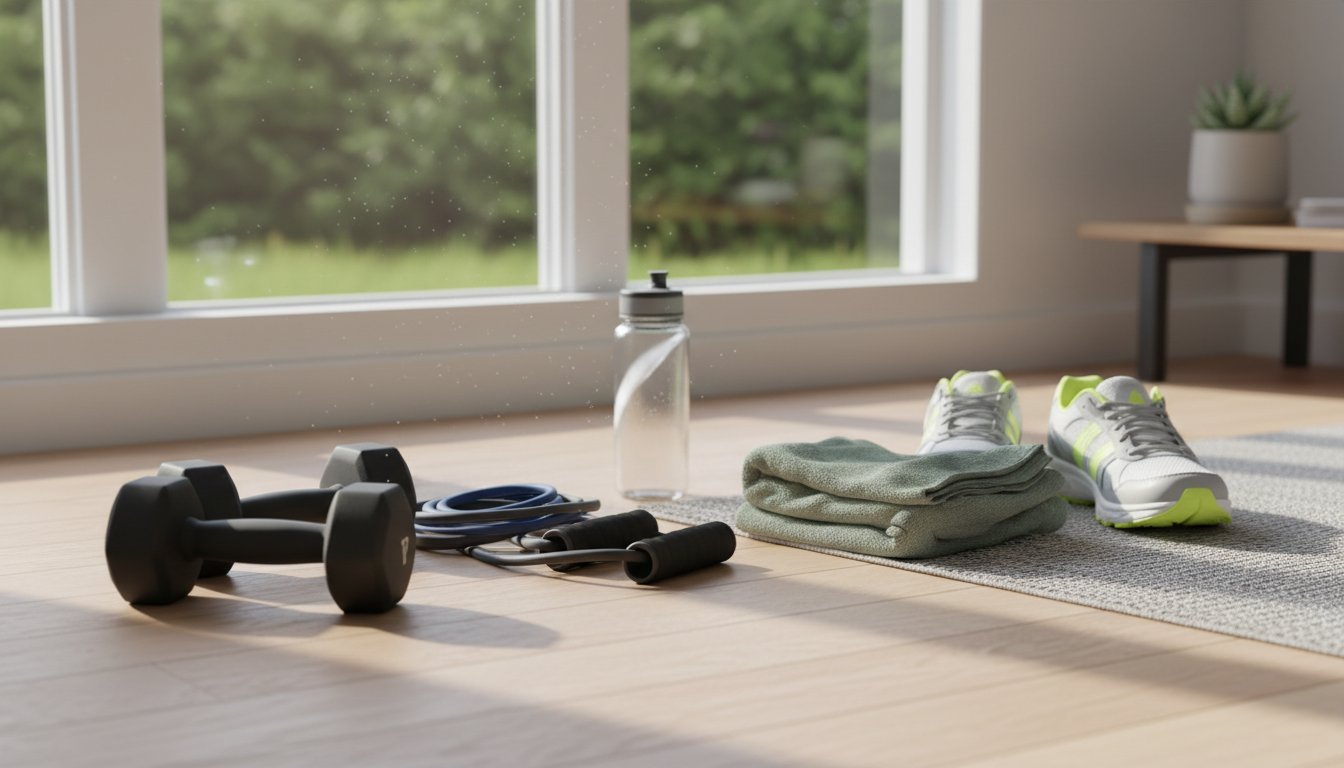
You do not need an elaborate gym setup. Bodyweight exercises, resistance bands, dumbbells, machines, stairs, and brisk walking can all work. The best tool is the one that lets you train safely and consistently.
How Should Strength Training Fit Into a Menopause Exercise Plan?
Strength training asks your muscles to work against resistance. That resistance can come from weights, bands, machines, or your own body.
A practical session might include a squat or sit-to-stand, a hip-hinge movement, a pushing exercise, a pulling exercise, and a core exercise. Adapt each movement to your current ability. A chair can make squats more accessible. A wall can turn a push-up into a manageable starting point. A resistance band can create a real challenge without requiring a full rack of weights.
The aim is not to prove how much you can lift. Give your muscles a clear reason to adapt while keeping your technique controlled.
Choose resistance that feels challenging but still allows good form. Move through a comfortable range. Stop if you experience sharp pain, dizziness, chest discomfort, or unusual shortness of breath. Those symptoms do not prove a workout is working. They are reasons to stop and seek appropriate medical guidance.
Progress can be modest and still count. Use a slightly heavier weight, perform another repetition, improve your control, or complete the movement with more confidence. Progress does not have to look like punishment.
Can Cardio Help with Menopause Symptoms?
Aerobic exercise supports cardiovascular fitness and stamina. Walking, cycling, swimming, dancing, rowing, and other activities all count. If you have been inactive, begin with manageable sessions. Launching into an intense program that leaves you sore and discouraged is not a badge of commitment.
Do not underestimate a brisk walk. It is accessible, easy to adjust, and possible indoors or outside. Increase the challenge by walking uphill, picking up the pace, or adding short bursts of faster movement. On days when sleep or symptoms have been poor, keep the walk gentle.
Some women enjoy intervals. Others find them unpleasant or difficult to recover from. Both responses are valid. No cardio session needs to become a test.
Cardio should complement strength training, not replace it. A cardio-only routine may leave an important part of fitness undertrained. A lifting-only routine may neglect stamina and cardiovascular conditioning. Variety is not a distraction. It is the point.
How Can You Exercise When Hot Flashes or Night Sweats Are an Issue?
Heat can make exercise feel harder, especially when hot flashes are frequent. The fix is usually practical.
Wear breathable layers you can remove easily. Keep water nearby. Choose a cooler room or time of day. Exercise outdoors when the weather is comfortable. Use a fan for indoor sessions. Shorten the workout when necessary instead of abandoning it entirely.
Separate discomfort from danger. Feeling warm or flushed during exercise may be familiar during menopause, but severe symptoms need attention. Stop if you feel faint, confused, unusually weak, or unwell. If symptoms repeatedly interfere with exercise or daily life, discuss them with a qualified healthcare professional.
You do not need to force your way through every session. A ten-minute walk, a short strength circuit, or a mobility session keeps the habit alive. Consistency often depends on scaling the plan instead of quitting it.
What If Menopause Has Made Recovery Harder?
Recovery is training. It is not a prize you receive after finishing the workout.
When sleep is disrupted or symptoms are unpredictable, a rigid, high-intensity schedule can become a trap. Use a flexible structure instead. Keep a few key strength sessions in the week, add walking or other cardio as your energy allows, and use easier days for mobility or gentle movement. The pattern can change. Your routine needs both challenge and relief.
Muscle soreness is not the same as progress. Persistent pain, declining performance, exhaustion, or dread before every session suggests the plan needs work. Reduce the load, shorten the workout, take more recovery time, or seek professional help with technique and programming.
A useful rule: finish most workouts feeling as though you could have done a little more. Occasional hard sessions are fine. Every session should not be hard.
Is Exercise Enough for Weight Loss During Menopause?
Exercise can support weight management, but it does not guarantee weight loss. That distinction matters. Women are often told that a few more workouts will solve every change in body composition. The advice is simplistic, and it can be demoralizing.
Movement increases energy use and supports muscle, fitness, and metabolic health. Strength training can help preserve and develop muscle while you pursue other health goals. Walking and aerobic exercise can make it easier to stay active and may improve how you feel day to day.
Body weight is shaped by more than exercise. Appetite, sleep, medications, stress, health conditions, food intake, and menopause-related changes all matter. If weight loss is your goal, exercise is one part of the plan, not the whole plan.
A scale-only approach can also undermine a good routine. Better strength, improved stamina, easier stairs, and steadier energy are meaningful outcomes, even when weight changes slowly. The scale is one measurement, not the entire report card.
Key Takeaway: Balance, mobility, and recovery matter more than chasing exhaustion. The best plan is one you can repeat through changing symptoms and energy levels.
How Can Exercise Support Metabolic Health?
Metabolic health involves how the body handles energy, blood sugar, blood pressure, body composition, and cardiovascular demands. Exercise supports that larger picture by challenging the muscles and heart in different ways.
Strength training is especially useful because muscles are active tissue that respond to regular use. Aerobic activity supports stamina and cardiovascular conditioning. Walking after long periods of sitting offers a simple way to break up an otherwise inactive day.
None of this requires a punishing routine. A manageable plan repeated over time beats an ambitious plan that lasts two weeks.
Weight can become harder to manage during menopause for several reasons, including changes in sleep, appetite, activity, and body composition. That does not make weight gain inevitable, and it does not mean you have failed. It does mean a strategy built around strength, food habits, sleep, and realistic support makes more sense than relying on willpower alone.
At TrimRx, weight loss is our only clinical focus. Our GLP-1 telehealth program is designed for people seeking medical support with weight loss, but it does not replace exercise, nutrition, or menopause care. The right plan depends on your health history, goals, and the factors actually driving your weight concerns.
What Exercises Are Best for Bone Health During Menopause?
Weight-bearing and resistance exercises are the key categories when bone health is a priority. Walking places regular load through the legs. Strength exercises challenge the body against resistance. Balance work matters too because staying steady can help reduce the risk of falls.
A thoughtful program might include squats or sit-to-stands, step-ups, carries, hip-hinge movements, and upper-body resistance exercises. The right choices depend on your current fitness, joint health, balance, and history of fractures or bone loss.
If you have been told you have osteoporosis, have had a fracture, or are concerned about bone density, get individualized guidance before starting unfamiliar or high-impact movements. More force is not automatically better. Exercise should match your risk profile.
There is no reason to wait for a perfect program. Begin with movements you can control and build gradually. Strong legs and stable balance are useful at every age.
Can Exercise Help with Sleep and Mood During Menopause?
Exercise can support a routine when sleep or mood is changing. It gives the day structure, provides physical activity, and can help you feel more capable in your body. Outdoor movement can also offer a needed break from work, screens, and household demands.
Exercise is not a cure-all. Persistent insomnia, depression, anxiety, severe fatigue, or symptoms that disrupt daily life require proper medical attention. Telling someone to exercise more is not an adequate response to significant mental or physical symptoms.
Timing matters for some people. A vigorous workout close to bedtime may feel stimulating, while a gentle walk or mobility session may fit better. Watch your own response rather than following a universal rule.
When sleep is poor, workouts may need to be shorter and less intense. That is not giving up. It is matching the plan to the body you have today.
How Do You Start Exercising During Menopause If You Are Out of Shape?
Start with movement you can repeat. That might be a short walk, several chair stands, light resistance-band exercises, or a basic mobility routine. The first goal is not peak fitness. It is learning that exercise does not have to overwhelm you.
Use support when needed. Hold a countertop for balance. Choose a chair for seated or assisted exercises. Work with a qualified trainer or physical therapist if pain, weakness, or uncertainty is stopping you from beginning.
A simple week might include strength-focused movement, several walks, and brief mobility work. Add more only after that baseline feels manageable. Leave room for busy days, symptom-heavy days, and ordinary interruptions.
Do not turn one missed workout into a failed week. Resume at the next opportunity. A sustainable exercise habit comes from many ordinary sessions, not a handful of heroic ones.
The Path Forward
Exercise during menopause should make life more capable, not add another source of pressure. Put strength training at the center. Add aerobic movement. Practice balance and mobility. Reduce the workload when sleep or symptoms are poor. You do not need to earn rest, and you do not need to punish your body into changing.
Weight and metabolic health are part of the picture, but they are not the only reasons to exercise. If weight is one of your goals and lifestyle changes have not been enough, TrimRx offers a GLP-1 weight loss telehealth program starting at $179 per month. Take the free assessment quiz to see whether it may be a fit. Whatever path you choose, build around a routine you can keep, not one that only works on your best week.
Bottom line: Exercise can support weight and metabolic health during menopause, but it is not a test of discipline or a guaranteed weight-loss method. A sustainable plan is more useful than an extreme one.
FAQ
What Is the Best Exercise During Menopause?
The best plan combines strength training, aerobic activity, balance work, and mobility. Strength training deserves particular attention because it supports muscle, physical function, and bone-loading activity. Walking and other cardio complement it.
Should Women Lift Weights During Menopause?
Yes. Resistance exercise can be an important part of a menopause fitness plan. Use dumbbells, resistance bands, machines, or bodyweight movements. Start with a manageable challenge and focus on controlled technique rather than lifting as heavily as possible.
Can Exercise Reduce Hot Flashes?
Exercise may support a healthy routine, but it is not a guaranteed treatment for hot flashes. Heat, exertion, and certain environments can make symptoms more noticeable. Choose cooler conditions, breathable layers, and flexible workout intensity.
Is Walking Enough During Menopause?
Walking is valuable for aerobic activity, daily movement, and weight-bearing exercise. A walking-only routine, however, may not provide enough resistance training. Add simple strength exercises to make the plan more complete.
Can Exercise Help with Menopause Weight Gain?
Exercise can support weight management, muscle, fitness, and metabolic health, but it does not guarantee weight loss on its own. Sleep, food intake, medications, health conditions, and other factors also influence weight during menopause.
How Often Should You Exercise During Menopause?
No single schedule suits every woman. A useful plan includes regular strength training, aerobic movement, and balance or mobility work, with time for recovery. Start at a sustainable level and build gradually.
What Should You Do If Exercise Causes Pain?
Stop any movement that causes sharp or unusual pain. Modify the exercise, reduce the resistance, or seek guidance from a qualified healthcare professional. Persistent pain, dizziness, chest discomfort, or unusual shortness of breath should not be dismissed as normal workout discomfort.
Does TrimRx Provide Menopause Exercise Treatment?
TrimRx provides GLP-1 weight loss telehealth. It does not sell exercise programs or claim to treat menopause symptoms. Its role is weight management. Exercise remains an important lifestyle component, and menopause-specific symptoms should be discussed with an appropriate healthcare professional.
Disclaimer: This content is for informational purposes only and does not constitute medical advice. It is not intended to diagnose, treat, cure, or prevent any disease or condition. Individual results may vary. Always consult a qualified healthcare professional before starting any treatment or medication.

Transforming Lives, One Step at a Time
Keep reading

Does Rapid Weight Loss on Tirzepatide Affect Bone Density?
Bone density does fall during weight loss, and that is established regardless of how the weight comes off. What is less settled is whether…

Does Wellbutrin Cause Hair Loss? What to Expect
Does Wellbutrin cause hair loss? It’s a question that may come up when you notice increased shedding or changes in your hair after starting…

Is Wellbutrin an SSRI? What You Need to Know
If you’re wondering, “Is Wellbutrin an SSRI?” you’re not alone. Wellbutrin (bupropion) is an antidepressant, but it works differently from common SSRIs by primarily…


