Top 5 Foods to Pair with GLP-1 Medications
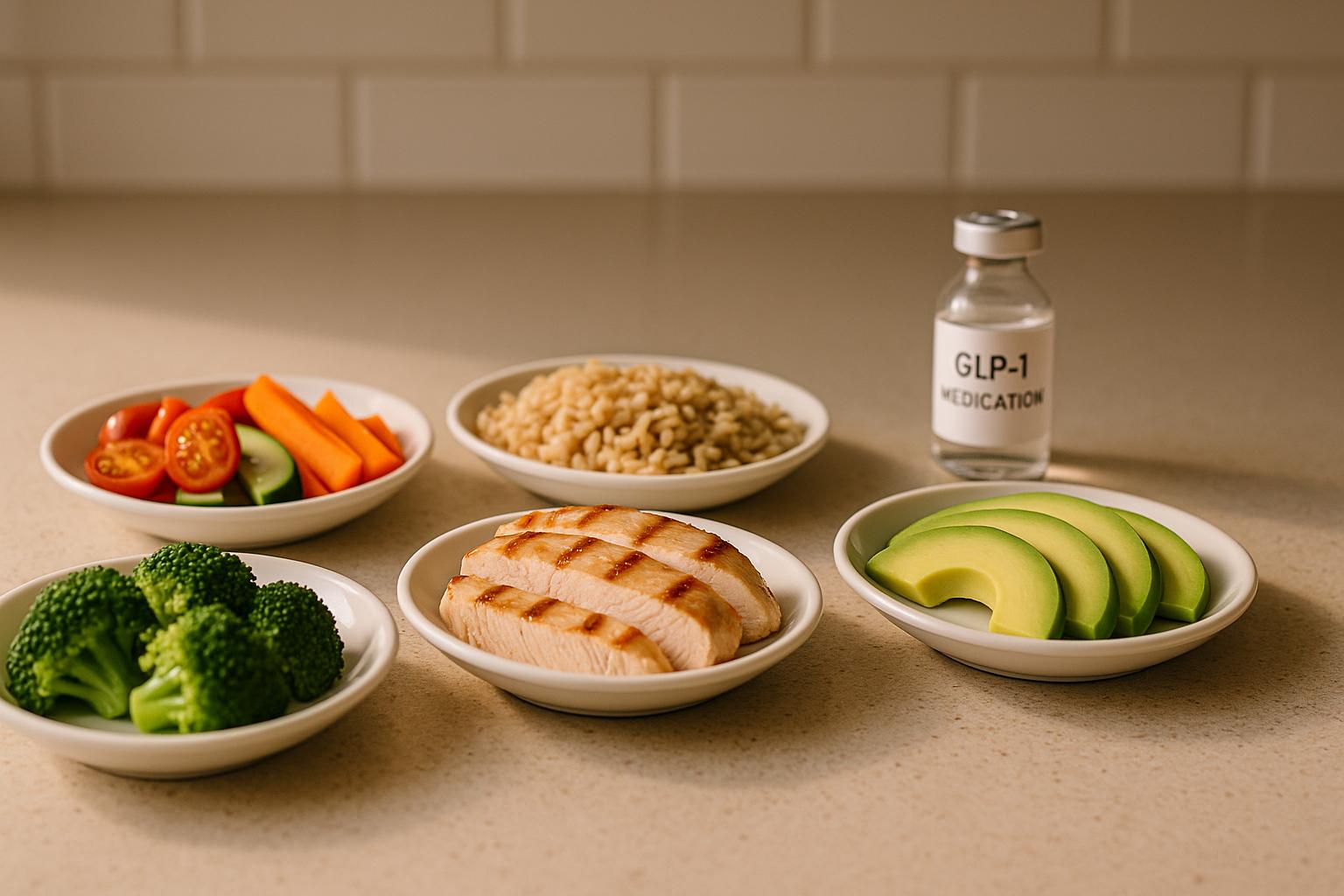
GLP-1 medications help regulate blood sugar and appetite, making them effective for weight loss. But your diet plays a key role in optimizing their benefits. Choosing the right foods can ease common side effects like nausea, constipation, and bloating while supporting muscle retention, energy, and stable blood sugar levels. Here are five food groups to focus on:
- Lean Proteins: Foods like chicken, turkey, fish, tofu, and Greek yogurt help preserve muscle, keep you full, and stabilize blood sugar.
- High-Fiber Vegetables: Options like broccoli, spinach, and Brussels sprouts aid digestion, prevent constipation, and promote gut health.
- Whole Grains: Oats, quinoa, and brown rice provide fiber, steady energy, and help manage side effects like constipation.
- Healthy Fats: Avocados, olive oil, nuts, and fatty fish support nutrient absorption, heart health, and appetite regulation.
- Hydrating Foods: Cucumbers, watermelon, celery, and leafy greens help with hydration, digestion, and reducing nausea.
Avoid fried foods, sugary snacks, ultra-processed items, and limit starchy vegetables or high-sugar fruits to prevent digestive discomfort and blood sugar spikes. Pairing GLP-1 medications with nutrient-dense foods can improve their effectiveness and support your overall health.
Best foods to eat on GLP-1 Ozempic, Mounjaro, Zepbound, Wegovy Diet
1. Lean Proteins
When you’re on GLP-1 medications and your appetite decreases, every bite matters. That’s why including lean proteins in your meals is so important – they help you avoid nutritional gaps while losing weight.
Why Lean Proteins Matter with GLP-1 Therapy
GLP-1 medications can lead to rapid weight loss, but it’s not just fat that you might lose. Muscle and bone density can also take a hit[67-70]. This is where lean proteins step in – they help preserve muscle mass during weight loss, which is especially important for older adults or those who aren’t very active.
Lean proteins pack a punch of essential amino acids without filling you up too quickly. Foods like skinless chicken breast, turkey, cod, tilapia, egg whites, plain Greek yogurt, tofu, and tempeh are excellent choices. These options deliver the nutrients you need while keeping calories low.
How Protein Supports Fullness and Blood Sugar Balance
Protein naturally keeps you full longer, which works hand-in-hand with the appetite-suppressing effects of GLP-1 medications. This means you can eat less without constantly feeling hungry. On top of that, protein helps keep your blood sugar levels steady. When eaten with carbs, it slows their absorption, leading to a more gradual rise in blood sugar. This is especially helpful for people managing diabetes or prediabetes.
A well-rounded meal with lean protein, fiber, and healthy fats can even encourage your body to release more natural GLP-1, boosting appetite control and metabolic health. That’s even more reason to prioritize lean proteins in your diet.
Simple Ways to Add Lean Proteins to Your Meals
Adding lean proteins to your daily meals doesn’t have to be complicated. Start your morning with scrambled egg whites and some veggies, or grab a container of plain Greek yogurt. For lunch and dinner, aim for a palm-sized portion of grilled chicken, baked fish, or lean ground turkey. If you prefer plant-based options, try edamame, lentils, or tofu – they’re easy to mix into almost any dish.
Including lean protein in every meal can help maintain your energy levels and protect your muscle mass as you lose weight.
2. High-Fiber Vegetables
High-fiber vegetables are a perfect match for GLP-1 therapy. Packed with nutrients, low in calories, and helpful for managing treatment side effects, they can make a big difference in your weight loss journey. Let’s break down how they support GLP-1 therapy.
Nutritional Benefits That Complement GLP-1 Therapy
These vegetables are like nutritional powerhouses – they’re full of vitamins, minerals, and antioxidants, all while being light on calories. This means you can enjoy a plateful without worrying about overeating, even with a reduced appetite.
Options like broccoli, Brussels sprouts, cauliflower, spinach, kale, bell peppers, and asparagus not only nourish your body but also provide fiber that supports gut health. That fiber feeds good bacteria in your digestive system, which plays a role in metabolism and overall well-being.
Helping with Common Side Effects Like Constipation
One common side effect of GLP-1 medications is constipation. Since these medications slow digestion as part of their function, they can leave you feeling uncomfortable. High-fiber vegetables can naturally help with this.
Fiber adds bulk to your stool, making digestion smoother. Vegetables like artichokes, green beans, and leafy greens are especially helpful. To keep your digestion on track, include a variety of fiber-rich vegetables in your meals. Just be sure to increase your fiber intake gradually and drink plenty of water – jumping in too quickly can have the opposite effect.
Supporting Fullness and Blood Sugar Stability
High-fiber vegetables also work hand-in-hand with GLP-1 therapy to keep you feeling full longer. Fiber slows down how quickly food leaves your stomach and how fast carbohydrates are absorbed. This not only helps with satiety but also keeps your blood sugar levels steady.
For those managing diabetes or insulin resistance, this is a game-changer. Vegetables like zucchini, cabbage, mushrooms, and tomatoes are excellent choices because they won’t cause blood sugar spikes while keeping you satisfied.
Easy Ways to Add Them to Your Meals
The great thing about high-fiber vegetables? They’re incredibly simple to include in your daily routine. Start your morning with a veggie-packed omelet using spinach and bell peppers. At lunch, toss together a side salad with mixed greens and cherry tomatoes.
For snacks, keep pre-cut veggies like baby carrots or snap peas handy – they’re perfect for crunching on the go. You can quickly steam frozen vegetables or blend leafy greens into a smoothie for a fast, nutrient-packed addition to your meal. By making vegetables the centerpiece of your meals, you’ll not only boost your nutrition but also enhance the effectiveness of your GLP-1 therapy.
3. Whole Grains
Whole grains keep their natural parts intact – bran, germ, and endosperm – making them rich in fiber, vitamins, and minerals. These nutrients can work hand-in-hand with GLP-1 therapy to support your overall health.
Nutritional Benefits That Pair with GLP-1 Therapy
Whole grains like oats, quinoa, brown rice, barley, and farro are nutritional powerhouses. They provide B vitamins, iron, magnesium, selenium, and prebiotic fiber, which helps nourish gut bacteria and supports a healthy metabolism.
In September 2024, Samantha Snashall, RDN, LD, from Ohio State Wexner Medical Center, advised patients using GLP-1 medications to include whole grains such as oats, barley, or brown rice in their diets to reduce potential side effects.
Easing Side Effects Like Constipation
Constipation is a common issue for those on GLP-1 medications. The fiber in whole grains can help by adding bulk to stool and promoting smoother digestion, making it easier to stay regular.
In November 2025, MyObesityTeam.com highlighted high-fiber whole grains like oatmeal, quinoa, brown rice, barley, and farro as excellent choices for preventing constipation and enhancing fullness while on GLP-1 drugs.
If you’re new to whole grains, introduce them gradually. Adding fiber too quickly can lead to gas or diarrhea, so give your digestive system time to adjust.
Helping with Fullness and Blood Sugar Stability
Whole grains digest more slowly than refined grains, which helps you feel full for longer and provides steady energy. Unlike white bread or sugary cereals, they won’t cause sudden blood sugar spikes and crashes. For those managing diabetes or insulin resistance, combining GLP-1 therapy with whole grains can be a powerful way to maintain stable blood sugar levels.
Simple Ways to Add Whole Grains to Your Meals
Start your day with oatmeal topped with fresh berries and a sprinkle of cinnamon. For lunch, swap white rice for quinoa, and at dinner, pair your lean protein with brown rice or barley.
Batch cooking can make things even easier. Cook a big pot of brown rice or farro at the start of the week, portion it out, and store it in the fridge. This gives you a quick, nutritious base for meals throughout the week. Even small changes, like switching to whole grain bread or whole wheat pasta, can boost your fiber intake and support your nutrition goals while on GLP-1 therapy.
Adding whole grains to your diet not only promotes fullness and stable blood sugar but also complements other nutrient-dense foods, making it easier to stay on track with your health journey.
sbb-itb-e2779c3
4. Healthy Fats
To round out a balanced meal that includes lean proteins, fiber-rich vegetables, and whole grains, healthy fats play a critical role. They not only help your body absorb key nutrients but also keep you feeling full longer. When paired with GLP-1 therapy, healthy fats bring essential nutrients to the table while supporting your weight loss goals. Think avocados, nuts, seeds, olive oil, and fatty fish – these foods provide the kinds of fats your body thrives on.
Nutritional Benefits That Support GLP-1 Therapy
Healthy fats deliver nutrients that complement the effects of GLP-1 therapy. For instance, omega-3 fatty acids – found in salmon, sardines, and walnuts – help reduce inflammation in the body. Meanwhile, the monounsaturated fats in avocados and olive oil can improve cholesterol levels, promoting heart health. These fats also aid in the absorption of fat-soluble vitamins like A, D, E, and K, which are essential for immune support, bone strength, and overall well-being.
Nuts and seeds offer a triple benefit: healthy fats, protein, and fiber. A quarter cup of almonds, for example, provides about 15 grams of fat, 6 grams of protein, and 4 grams of fiber. These nutrients work hand in hand with GLP-1 medications to help regulate appetite effectively.
Impact on Fullness and Blood Sugar Stability
Healthy fats are a powerhouse when it comes to stabilizing blood sugar and keeping hunger at bay. They slow down digestion, helping you feel full longer, and they also moderate the absorption of carbohydrates for more stable blood sugar levels. This complements the appetite-regulating effects of GLP-1 medications.
For example, swapping plain toast for whole grain toast topped with avocado can make a big difference. The fat in the avocado slows how quickly carbohydrates are absorbed, leading to a steady energy release rather than a rapid spike and crash.
Simple Ways to Add Healthy Fats to Your Diet
Incorporating healthy fats into your meals is easier than you might think. A drizzle of olive oil over your salad or roasted veggies, a handful of walnuts or almonds in your oatmeal, or a smear of avocado on whole grain toast are all quick ways to boost your intake.
For omega-3s, aim for two servings of fatty fish like salmon, mackerel, or sardines per week. If fresh fish isn’t an option, canned salmon or sardines are convenient and shelf-stable alternatives.
Since healthy fats are calorie-dense, portion control is key. A tablespoon of olive oil has about 120 calories, and a quarter cup of nuts ranges from 160 to 200 calories. Start by measuring portions to ensure you’re getting the benefits without overdoing it. A tablespoon or two of olive oil or half an avocado per meal is usually a good balance.
5. Hydrating Foods
Staying hydrated is especially important when you’re on GLP-1 medications. But hydration isn’t just about drinking water – eating water-rich foods can also help keep you hydrated while adding valuable nutrients to your diet. Foods like cucumbers, watermelon, celery, tomatoes, strawberries, and leafy greens are excellent choices. These not only support hydration but also complement the nutrient strategies we’ve already discussed.
Nutritional Perks That Pair with GLP-1 Therapy
These hydrating foods pack a punch when it comes to nutrition. They’re rich in minerals like potassium and magnesium and contain antioxidants, all while being low in calories. For example, watermelon and strawberries are loaded with vitamins that promote overall health. Leafy greens such as spinach and lettuce bring hydration along with a touch of fiber, and tomatoes add both vitamins and potassium. Together, these foods can enhance the appetite-regulating effects of GLP-1 medications by making you feel fuller without overloading on calories.
Easing Digestive Discomfort
Hydrating foods can also help with common side effects like nausea and constipation by encouraging regular digestion. Light, refreshing options like cucumber slices, watermelon, or simple snacks like celery with almond butter can provide soothing relief while delivering essential fluids.
Supporting Fullness and Balanced Blood Sugar
Similar to lean proteins and whole grains, hydrating foods can help you feel full and keep your energy levels steady by regulating blood sugar. Their high water and fiber content promotes satiety without adding many calories, leaving room for other nutrient-dense options like lean proteins or healthy fats. Plus, many of these foods have a minimal impact on blood sugar when eaten as part of a balanced meal.
Simple Ways to Add Hydrating Foods to Your Day
Incorporating these foods into your meals can be easy and delicious. Start your day by adding cucumber slices or a handful of strawberries to your water, or blend watermelon into a refreshing smoothie. For lunch, build a salad with leafy greens, cucumbers, and tomatoes, then top it with your favorite protein.
For snacks, keep pre-cut celery, cucumber rounds, or bell pepper strips on hand. Cherry tomatoes are a no-prep, portable option, and frozen watermelon cubes make a great cooling treat during warmer months. Soups and broths with ingredients like tomatoes, celery, and zucchini are another great way to stay hydrated, and a chilled gazpacho can be especially refreshing on hot days.
Try to include several servings of these hydrating foods in your daily meals. Not only are they flavorful and nutritious, but they also help you stay refreshed and support your overall wellness while you’re on GLP-1 therapy.
Foods to Limit or Avoid
While nutrient-packed foods enhance the benefits of GLP-1 therapy, certain choices can hinder your progress. Steering clear of these can help you avoid setbacks and make the most of your nutritional efforts.
Fried Foods and High-Fat Options
GLP-1 medications naturally slow digestion, so eating fried, high-fat foods – like french fries, fried chicken, and onion rings – can make things worse. These foods delay stomach emptying, which may lead to nausea, bloating, acid reflux, and other digestive discomforts.
Sugary Snacks and Beverages
Candy bars, cookies, pastries, sodas, and sweetened coffee drinks are loaded with added sugars. These cause rapid spikes and crashes in blood sugar, working against the steady energy release that GLP-1 therapy supports. Plus, they add calories without offering any meaningful nutrients.
Ultra-Processed Foods
Packaged snacks, frozen meals, instant noodles, and processed meats are often low in nutrition and can aggravate digestive issues. They may also lead to blood sugar instability and are typically high in unhealthy fats, further slowing digestion.
Starchy Vegetables and High-Sugar Fruits
Not all vegetables and fruits are created equal. Starchy vegetables like white potatoes, corn, peas, and winter squash, as well as high-sugar fruits like bananas, mangoes, pineapples, and grapes, can cause blood sugar spikes. While you don’t have to cut them out completely, keeping portions in check and combining them with protein or healthy fats can help maintain stable glucose levels. Making these adjustments can preserve the balance achieved through your other healthy food choices.
Conclusion
Combining nutrient-packed foods with GLP-1 medications can significantly enhance your weight loss journey. This guide has highlighted how specific food choices can complement and support the effectiveness of your therapy.
By prioritizing nutrient-rich options and steering clear of fried foods, sugary snacks, ultra-processed items, and limiting portions of starchy vegetables and high-sugar fruits, you set a strong foundation for progress. Staying hydrated throughout the day is equally important, as it helps manage side effects and supports your body’s natural functions.
Since everyone’s needs are different, it’s essential to personalize your approach. Expert advice can help you fine-tune your nutritional choices to maximize the benefits of GLP-1 therapy. For tailored support, TrimRX offers personalized consultations, custom dosing, and ongoing guidance to seamlessly integrate your nutritional plan with GLP-1 treatment.
While GLP-1 medications are highly effective, they work best when paired with thoughtful eating habits. By centering your meals around the five food groups discussed and avoiding foods that could slow your progress, you’re creating a well-rounded strategy for lasting weight loss success.
FAQs
What are some practical ways to include the top recommended foods in my diet while taking GLP-1 medications?
Incorporating nutritious foods into your meals while using GLP-1 medications can amplify their effectiveness and support your weight loss journey. Prioritize protein-rich options like chicken, fish, tofu, or beans to help you stay full and preserve muscle mass. Include fiber-packed choices such as leafy greens, whole grains like quinoa or oats, and berries to aid digestion and help stabilize blood sugar levels. For a dose of healthy fats, turn to avocados, nuts, or olive oil, which can contribute to overall wellness.
To reduce the chance of side effects, consider eating smaller, more frequent meals throughout the day. This approach can help ease gastrointestinal discomfort and make it easier to stay on track. Pairing a well-rounded diet with GLP-1 medications can play a key role in achieving steady and lasting weight loss.
How can I manage common side effects like nausea and constipation while taking GLP-1 medications?
Managing side effects like nausea and constipation while using GLP-1 medications doesn’t have to be complicated. A few simple adjustments can make a big difference.
For nausea, try sticking to plain, easy-to-digest foods like crackers, toast, rice, or clear soup. It’s best to steer clear of spicy, greasy, or overly rich meals, as they can worsen the discomfort. Eating smaller portions and taking your time to chew thoroughly can also help calm your stomach.
If constipation becomes a concern, staying hydrated is essential – make it a habit to drink plenty of water throughout the day. Adding high-fiber foods like leafy greens, whole grains, fresh fruits, and nuts to your meals can support digestion. Even light physical activity, such as a short walk, can encourage regularity and help ease symptoms.
Why should certain foods like fried or sugary snacks be avoided while taking GLP-1 medications?
When you’re on GLP-1 medications, it’s a good idea to steer clear of fried and sugary foods. These can not only trigger side effects like nausea, bloating, or stomach discomfort but also cause blood sugar spikes. Such spikes can interfere with the medication’s role in managing appetite and aiding weight loss.
To get the most out of your treatment and support your overall health, opt for nutrient-packed choices. Think lean proteins, whole grains, fruits, and vegetables – they’re better for your body and work in harmony with your medication.
Related Blog Posts

Transforming Lives, One Step at a Time
Keep reading

GLP-1 Medications and Mental Health: What to Expect and When to Get Support
Most of what gets written about GLP-1 medications covers the body. Dosing, appetite, nausea, what to eat, what to expect on the scale. Less…

Mons Pubis Fat Loss on GLP-1s: The “Pubic Area” Change Nobody Mentions
One change that surprises people on GLP-1 medications rarely comes up in conversation: the mons pubis, the soft fat pad over the pubic bone,…
How to Adjust Weight Loss Goals on GLP-1 Medications
Adjust weight goals on GLP-1 meds by tracking body composition and labs, optimizing protein, activity, sleep, and working with your provider on dosing.


