How Minoxidil Works
Introduction
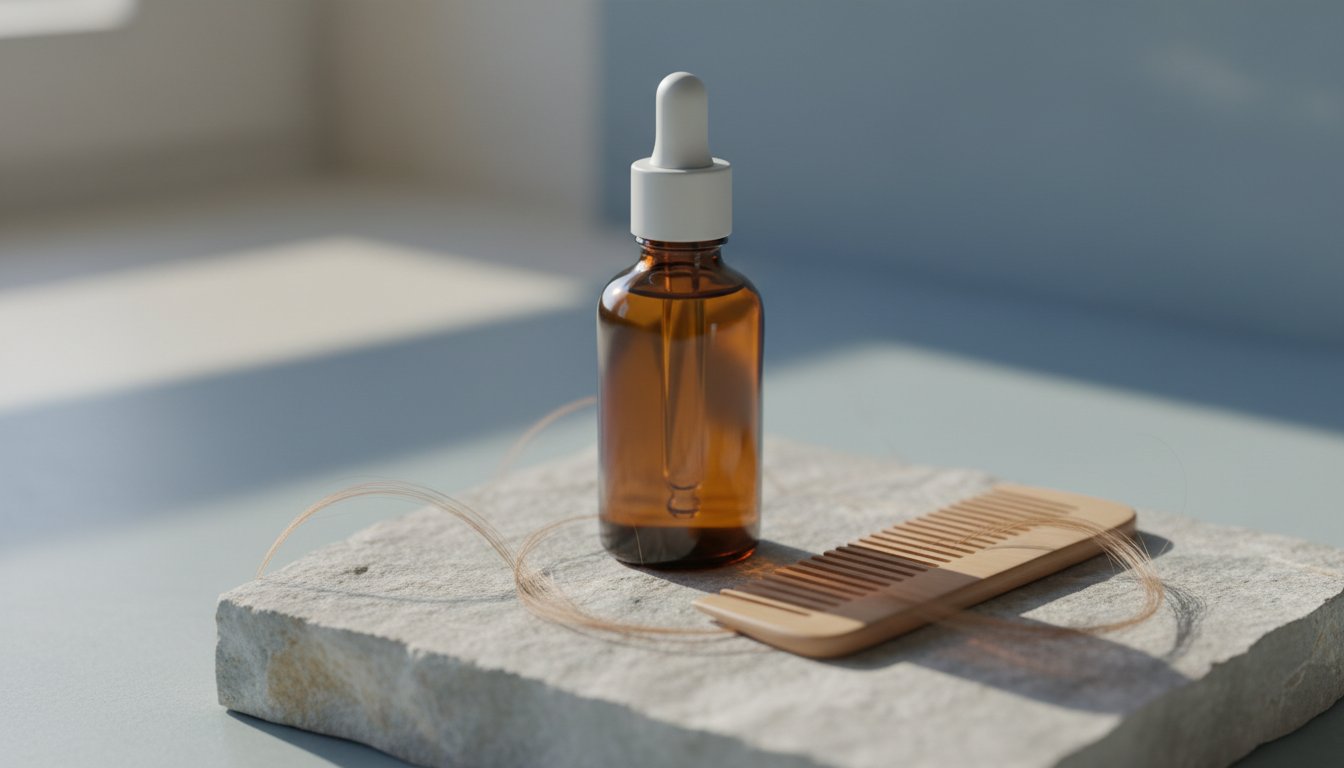
A hair follicle does not disappear the moment a strand falls out. It moves through a cycle. The strand grows, rests, sheds, and the follicle begins again. Minoxidil matters because it can influence what happens inside that cycle, not because it coats the hair or repairs a damaged strand.
That distinction explains much of the confusion around minoxidil. It does not produce an instant cosmetic change. It does not work like a styling product. And it does not permanently reset the biology of a follicle after a few applications. Its role is more practical: support follicles that are still capable of producing hair and help keep that support in place with continued use.
This guide explains how minoxidil works, why early shedding may occur, how topical and oral forms differ, what happens after stopping, and why identifying the cause of hair loss matters before choosing a treatment.
At TrimRx, we believe understanding your options is the first step toward taking control of your health. If you want to see whether a personalized treatment plan is a fit for you, you can start with a quick online visit.
How Does Minoxidil Work at the Hair Follicle?
Minoxidil acts on the follicle during the hair-growth cycle. Its precise mechanism is not fully understood, but it is known to influence follicular activity in ways that support the active growth phase. It may also help maintain or increase the size of follicles that have become smaller over time.
Quick Answer: Minoxidil works at the hair follicle rather than treating hair like a surface problem.
Hair follicles do not all produce identical strands forever. In some forms of hair loss, follicles gradually become less productive. The hairs they produce can become finer and shorter before visible thinning becomes obvious. Minoxidil is used to support those weakened follicles while they remain active.
That is why consistency matters. A follicle needs time to move through its cycle. Applying minoxidil once or twice does not give it enough time to produce a visible change. The medication works through repeated use and a longer biological timeline, not through an immediate effect on the hair shaft.
Why Does Minoxidil Affect Hair Growth?
One important action of minoxidil is its effect on the length and behavior of the growth phase, also called anagen. When a follicle spends more time in that phase, it has more opportunity to produce a visible strand.
Minoxidil may also help follicles produce thicker hairs by supporting follicle size. This does not mean every follicle will return to its earlier state. Hair loss can progress for different reasons, and follicles that have been inactive for a long time may not respond in the same way as follicles that are still producing fine hairs.
The practical point is simple: minoxidil is better understood as follicle support than as a cure. It can help create better conditions for growth, but the response depends on the condition of the follicles and the reason the hair is thinning.
Does Minoxidil Regrow Hair or Prevent Further Loss?
Minoxidil can do both, depending on the person and the underlying hair-loss pattern. Some people notice reduced shedding or improved coverage. Others see fine new growth that gradually adds to the appearance of density. Some people see little visible change but may still be slowing the loss of hair that would otherwise become thinner.
The word “regrow” can create unrealistic expectations. A treatment may improve the output of a weakened follicle without restoring a full head of hair. It may also work better in areas where follicles are still active than in areas that have been smooth or inactive for a long time.
Minoxidil is therefore not a guaranteed reset. It is a tool that can support remaining follicular function. A useful evaluation asks what kind of hair loss is present, how long it has been happening, and whether the scalp still contains follicles capable of responding.
Why Can Minoxidil Cause Early Shedding?
Some people notice more loose hairs after starting minoxidil. That can feel like the treatment is making the problem worse, but a change in shedding may reflect the hair cycle shifting. Older hairs can shed as follicles move toward a new growth phase.
This is one reason an early reaction should not be judged in isolation. Hair does not grow on a daily scorecard. A few days of shedding cannot tell you whether the treatment will be useful. The pattern over time matters more than one moment in the cycle.
Still, not every change should automatically be blamed on minoxidil or dismissed as normal. Sudden, severe, patchy, or rapidly progressing hair loss deserves medical evaluation. A clinician may need to consider other causes rather than assuming the treatment is responsible.
How Long Does Minoxidil Take to Work?
Minoxidil requires patience because hair growth is slow and follicles operate on cycles. A visible change may take time, and early shedding can make the process look worse before it looks better.
The first signs are not always dramatic. A person may notice less shedding, small changes in coverage, or fine hairs before seeing a meaningful difference in density. Progress can also be uneven. One area may respond more clearly than another.
Taking consistent photographs under similar lighting can make changes easier to judge than relying on memory. Hair appearance is affected by parting, styling, lighting, and length. A treatment decision based on one mirror check is easily distorted.
If there is no improvement, if the loss continues quickly, or if the diagnosis was never clear, the right move is not simply to apply more. It is to reassess the cause and the treatment plan with a qualified clinician.
What Happens If You Stop Using Minoxidil?
Minoxidil’s benefits depend on continued use. If it has been supporting follicles, stopping removes that support. Over time, the hair maintained or improved during treatment may move back toward the pattern that would have occurred without it.
That does not mean every strand falls out immediately after the last application. Hair cycles unfold over time, so the change is usually gradual rather than an instant switch. The key point is that minoxidil does not permanently eliminate the underlying tendency toward hair loss.
This is a common source of disappointment. Someone may see improvement, stop because the hair looks better, and then assume the medication caused a new problem when the benefit fades. The more accurate way to view it is maintenance treatment. If the underlying hair-loss process remains active, ongoing treatment is generally needed to preserve the effect.
Is Topical or Oral Minoxidil More Effective?
Topical minoxidil is applied directly to the scalp. Oral minoxidil is taken by mouth and affects the body more broadly, so it is a prescription treatment that requires medical supervision.
The two forms should not be treated as interchangeable versions of the same routine. Topical treatment raises practical questions about scalp application, consistency, and local irritation. Oral treatment raises systemic safety questions because the medication is not limited to the scalp.
Oral minoxidil may be considered by a clinician in situations where topical treatment is difficult to use or has not been suitable. That decision requires a review of medical history, current medications, and possible cardiovascular effects. A stronger route is not automatically a better route.
If someone is considering oral minoxidil, the important question is not only whether it might help hair. It is whether the potential benefit justifies whole-body exposure for that particular person.
Key Takeaway: Minoxidil only continues to help while it is being used. Stopping allows the treated hair to move back toward its prior pattern over time.
How Should Topical Minoxidil Be Used?
Topical minoxidil should be applied to the scalp as directed by the product instructions or prescribing clinician. The goal is to place it where the follicles are thinning rather than simply spreading it through the hair.
Consistency is more important than improvisation. Applying extra product does not guarantee faster growth, and changing the routine repeatedly makes it difficult to judge whether the treatment is helping. The scalp should also be considered. Irritation, persistent redness, or discomfort is a reason to contact a clinician rather than push through indefinitely.
Careful application matters for another reason: minoxidil is intended for the scalp. Unwanted hair growth can occur if the medication repeatedly contacts areas outside the treatment zone. Washing hands after application and following the product directions helps keep the routine controlled.
Topical treatment is not a substitute for diagnosis. If the hair loss is patchy, sudden, painful, associated with scalp changes, or accompanied by other symptoms, evaluation should come before assuming routine thinning.
Can Minoxidil Work for Every Type of Hair Loss?
No. Hair loss is a description, not a single disease. Pattern hair loss, sudden shedding after a physical stressor, patchy autoimmune hair loss, and hair loss caused by scalp inflammation do not all behave the same way.
Minoxidil is most often discussed in connection with pattern hair loss, where follicles gradually become less productive. It may also be used in other clinical situations, but that does not mean it addresses the root cause in every case.
A person can also have more than one process happening at once. Someone with gradual thinning may experience a separate period of increased shedding. Someone with a scalp condition may have breakage and follicle inflammation in addition to density loss. Treating only one part of that picture can produce a disappointing result.
The diagnosis should shape the plan. A clinician may ask about the timing of the loss, family pattern, medications, recent illness, stressors, nutrition, scalp symptoms, and other health changes. That information is more valuable than guessing from a product label.
What Side Effects Can Minoxidil Cause?
Topical minoxidil can cause local scalp irritation and unwanted hair growth outside the intended area. Some people also experience a temporary increase in shedding when beginning treatment. The response depends on the formulation, application habits, and individual sensitivity.
Oral minoxidil has broader effects because it circulates through the body. Medical supervision matters because it can affect blood pressure and fluid balance. A prescriber should decide whether it is appropriate and what monitoring is needed.
A person should seek clinical advice for concerning symptoms rather than adjusting the dose alone. This is particularly important with oral treatment, where taking more does not simply concentrate the medication on the scalp.
“Over the counter” does not mean “right for every scalp.” The safest routine is one that matches the person’s diagnosis, health history, and chosen formulation.
Does Weight or Metabolic Health Affect Hair Loss?
Weight and metabolic health can be relevant to hair, although they do not explain every case. The body can respond to major physiological changes with shifts in hair shedding, and broader health issues may overlap with a hair-loss complaint.
That connection does not make minoxidil a weight-loss treatment, and it does not mean losing weight will resolve every thinning pattern. It does mean hair deserves to be considered in the context of the whole person rather than treated as an isolated cosmetic issue.
At TrimRx, our only program is GLP-1 weight loss through telehealth, starting from $179 per month. We do not treat hair loss, prescribe minoxidil, or claim that weight management replaces a hair evaluation. We do believe that changes in hair can be worth discussing alongside other changes in health, especially when weight, nutrition, medications, or metabolic concerns are part of the picture.
The Path Forward
Minoxidil works by supporting hair follicles through their growth cycle. It may help weakened follicles remain active, support thicker growth, and maintain hair while it is being used. It is not an instant fix, and it does not permanently remove the process causing hair loss.
The best next step is to identify the pattern before committing to a long-term routine. Gradual thinning, sudden shedding, patchy loss, and scalp inflammation call for different questions. Topical and oral minoxidil also carry different practical and safety considerations.
TrimRx is a GLP-1 weight-loss telehealth program, not a hair-loss clinic. If your hair changes are happening alongside concerns about weight or metabolic health, our free assessment quiz can help you explore whether the TrimRx program is a fit. For persistent or unusual hair loss, bring the full picture to a qualified clinician.
Bottom line: TrimRx focuses on GLP-1 weight loss, not hair-loss treatment, but metabolic health can still be part of a broader conversation about changes in the body, including hair.
FAQ
How Does Minoxidil Work?
Minoxidil supports hair follicles during the active growth phase and may help maintain or increase the size of follicles that have become less productive. Its complete mechanism is not fully understood, but its effect is centered on follicular activity rather than the hair shaft.
Does Minoxidil Permanently Regrow Hair?
No. Any benefit from minoxidil depends on continued use. If treatment is stopped, hair supported by the medication may gradually return toward the pattern that would have occurred without treatment.
Why Does Minoxidil Cause Shedding?
Minoxidil can coincide with a shift in the hair-growth cycle. Older hairs may shed as follicles move into a new growth phase. Sudden, severe, or patchy loss should still be evaluated instead of automatically being attributed to treatment.
How Long Does Minoxidil Take to Work?
Hair follicles need time to move through their growth cycle, so visible improvement is gradual rather than immediate. Fine new growth or reduced shedding may appear before a clear change in overall density.
Is Oral Minoxidil Better Than Topical Minoxidil?
Not automatically. Topical minoxidil is applied to the scalp, while oral minoxidil affects the body more broadly and requires medical supervision. The appropriate option depends on the person, the diagnosis, and the safety profile.
Can Minoxidil Treat All Hair Loss?
No. Hair loss has multiple causes, including gradual pattern thinning, sudden shedding, patchy loss, and scalp conditions. Minoxidil is not a universal treatment, which is why the pattern and timing of hair loss matter.
Can Weight Loss Cause Hair Shedding?
Major changes in the body, including changes involving weight, nutrition, medications, or overall health, can be relevant to hair shedding. That does not mean every episode of hair loss is caused by weight loss. Persistent or unusual changes should be assessed clinically.
Does TrimRx Prescribe Minoxidil?
No. TrimRx offers a GLP-1 weight-loss telehealth program and does not treat hair loss or prescribe minoxidil. Hair concerns should be addressed with a qualified clinician who can evaluate the scalp and the pattern of loss.
Disclaimer: This content is for informational purposes only and does not constitute medical advice. It is not intended to diagnose, treat, cure, or prevent any disease or condition. Individual results may vary. Always consult a qualified healthcare professional before starting any treatment or medication.

Transforming Lives, One Step at a Time
Keep reading

Does Rapid Weight Loss on Tirzepatide Affect Bone Density?
Bone density does fall during weight loss, and that is established regardless of how the weight comes off. What is less settled is whether…
Does Wellbutrin Cause Hair Loss? What to Expect
Does Wellbutrin cause hair loss? It’s a question that may come up when you notice increased shedding or changes in your hair after starting…

Is Wellbutrin an SSRI? What You Need to Know
If you’re wondering, “Is Wellbutrin an SSRI?” you’re not alone. Wellbutrin (bupropion) is an antidepressant, but it works differently from common SSRIs by primarily…


