Menopause and Skin Changes
Introduction
The skin that suddenly feels tight after washing is often the first clue. A moisturizer that worked for years may no longer be enough, makeup can settle differently, and the face may alternate between flushed heat and dry irritation. Menopause skin changes are not imaginary, and they are not limited to wrinkles.
The timeline matters. During the menopause transition, hormone levels fluctuate. After menopause, estrogen remains lower than it was during the reproductive years. Those shifts can affect moisture, oil production, collagen, elasticity, blood vessels, and the way skin responds to heat or irritation. The result is not a single “menopause skin” pattern. It is a collection of changes that can show up on the face, hands, arms, legs, and elsewhere.
At TrimRx, we publish practical health information and run a physician-supervised GLP-1 weight loss program. Skin concerns are not a condition our program treats, but body changes, weight goals, and menopause often overlap in real life. This guide explains what may be connected, what belongs with a dermatologist or menopause clinician, and which simple habits are worth keeping.
At TrimRx, we believe understanding your options is the first step toward taking control of your health. If you want to see whether a personalized treatment plan is a fit for you, you can start with a quick online visit.
What Causes Menopause Skin Changes?
Estrogen influences several processes involved in skin structure and function. As hormone levels change during perimenopause and remain lower after menopause, the skin may hold less moisture and gradually lose some thickness, elasticity, and firmness. That can make familiar lines look more pronounced and can change the way skin feels from day to day.
Quick Answer: Menopause skin changes often begin with dryness, tightness, itching, and a shift in texture as estrogen levels change.
The outer skin barrier also matters. This barrier helps keep water in and irritants out. When it is less effective, skin can feel dry, tight, rough, or itchy. Fragrance, hot water, harsh cleansers, and over-exfoliation can then make the discomfort worse.
Not every skin change after midlife is caused by menopause. Sun exposure, genetics, medications, thyroid disease, eczema, allergies, and other health conditions can affect the skin too. A new symptom should be assessed on its own rather than automatically assigned to hormones.
When Do Menopause-related Skin Changes Begin?
They can begin during perimenopause, the transition before menstrual periods stop. Hormone levels are changing during this stage, so symptoms may appear unevenly. Skin can feel dry for several weeks, then oilier or more breakout-prone at another point. Some people notice changes before their final menstrual period, while others notice them afterward.
The transition does not follow a tidy schedule. Menstrual changes, hot flashes, sleep disruption, mood symptoms, and skin complaints may overlap, but they do not all start together. A symptom diary can help connect skin changes with heat, products, stress, medications, or other symptoms.
If itching, a rash, or a change in pigmentation persists, do not assume the calendar explains it. Menopause is common. That does not make every new skin problem a menopause symptom.
How Does Menopause Affect Skin Moisture?
Dryness is a classic complaint. Skin may feel tight after bathing, look dull or flaky, or become uncomfortable under makeup. The hands, lower legs, elbows, and face can all be affected. Some people also notice more sensitivity to products they previously tolerated.
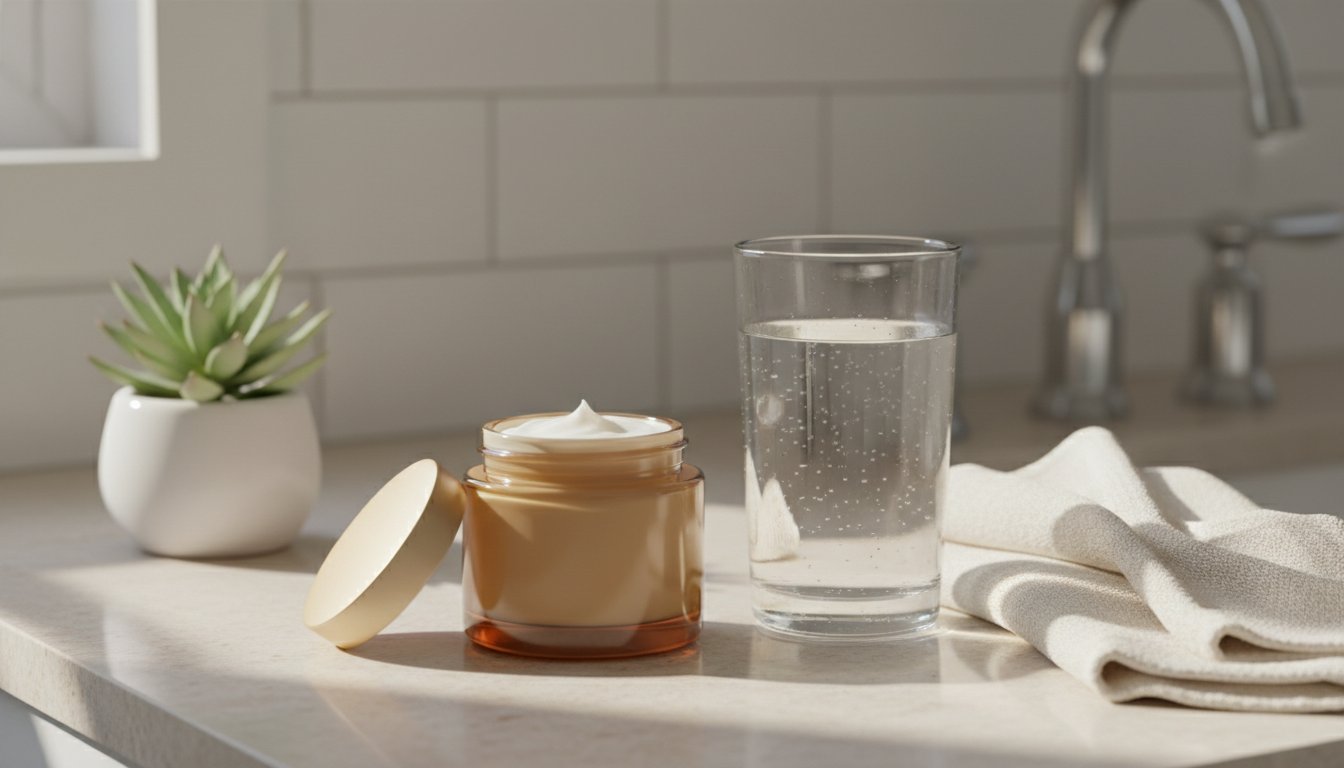
A moisturizer works best when it is used consistently, especially after washing while the skin is still slightly damp. Creams and ointments generally provide more barrier support than very thin lotions. Look for products made for sensitive skin and avoid adding several new products at once. If a product stings, burns, or causes a rash, stop using it.
The cleanser matters as much as the moisturizer. Use lukewarm rather than hot water, keep bathing from becoming an extended soaking session, and choose a gentle cleanser instead of a strongly fragranced or abrasive product. The goal is to clean the skin without stripping away the barrier it is trying to protect.
Can Menopause Make Skin Thinner or Less Elastic?
Yes. Lower estrogen is associated with changes in skin thickness, collagen, and elasticity. Skin may appear less firm, and fine lines may become more visible. The backs of the hands and forearms can look more crepey, while the face may show changes around the eyes, mouth, and jawline.
Thinner skin is also more vulnerable to friction and minor injury. It may bruise more easily or take longer to recover from irritation. That does not mean every bruise is hormonal. Frequent unexplained bruising, large bruises, bleeding, or a sudden change should be discussed with a clinician, especially if you take medication that affects clotting.
Sun protection remains important. Ultraviolet exposure contributes to wrinkles, uneven pigmentation, and loss of elasticity at every age. A broad-spectrum sunscreen, protective clothing, and shade can help reduce ongoing exposure. Sunscreen cannot reverse menopause, but it can reduce another source of skin damage.
Why Do Hot Flashes Change How Skin Feels?
A hot flash can bring a sudden wave of heat and visible flushing, often across the face, neck, or upper chest. Sweating may follow. Once the skin cools, evaporation and repeated washing can leave it feeling dry or irritated.
Heat, spicy foods, alcohol, warm rooms, stress, and tight clothing can trigger flushing in some people, though triggers vary. A fan, breathable layers, and a gentle cleanser can make the aftermath easier on the skin. Avoid scrubbing flushed skin or applying multiple active products while it feels hot and reactive.
Persistent facial redness is a different issue. Rosacea, contact dermatitis, medication reactions, and other conditions can resemble menopausal flushing. If redness lasts between hot flashes, causes burning, or develops bumps or visible vessels, a dermatologist can help identify the cause.
Can Menopause Cause Itching or a Rash?
Dryness can cause itching, and an impaired skin barrier can make ordinary products feel irritating. Itching may be worse after a hot shower, during cold weather, or when clothing rubs against the skin. Scratching can create small breaks in the skin and sustain the cycle.
A rash is not automatically a hormone symptom. Eczema, hives, fungal infections, allergies, psoriasis, and medication reactions can all cause itching or visible changes. The appearance, location, duration, and associated symptoms matter.
Seek medical care for a rash that spreads quickly, becomes painful, blisters, drains, is accompanied by fever, or affects the eyes or mouth. Itching without a visible rash can also have causes unrelated to the skin. If it is persistent or interferes with sleep, bring it up with a clinician rather than repeatedly changing products.
Key Takeaway: Hot flashes and sweating can make the skin feel flushed, prickly, or uncomfortable, while changing oil production can contribute to breakouts.
Why Can Acne Return During Menopause?
Hormone fluctuations can alter oil production and the balance between oil and dryness. Some people develop blemishes along the jawline, chin, or lower face during the menopause transition. At the same time, the rest of the skin may feel drier than it did in earlier adulthood. That combination makes aggressive acne routines a poor fit for many people.
Scrubs, strong astringents, and frequent use of drying products can damage the skin barrier without solving the underlying problem. A gentle cleanser and non-comedogenic moisturizer are a better foundation. Acne treatments such as retinoids or benzoyl peroxide may help some people, but they can also irritate dry or sensitive skin and should be introduced carefully.
Adult acne can also be related to medications or other hormonal conditions. Sudden severe acne, acne with excess facial hair, or other abrupt changes deserve a proper evaluation. Menopause may be part of the picture, but it should not be used as a shortcut diagnosis.
What Routine Helps with Menopause Skin Changes?
Keep the routine boring enough to follow. In the morning, cleanse gently if needed, moisturize, and apply broad-spectrum sunscreen. At night, remove makeup and sunscreen, cleanse without scrubbing, and moisturize again. If the skin is very dry, a thicker cream or ointment on the driest areas may help.
Introduce only one new product at a time. Patch-testing a product on a small area can reduce the chance of covering the face with an irritant. Fragrance-free products are often easier for sensitive skin, although “natural” does not automatically mean non-irritating.
Retinoids can improve the appearance of fine lines and support skin renewal, but they commonly cause dryness or irritation when started too quickly. If you want to use one, ask a dermatologist or other qualified clinician how to choose and introduce it. Anyone who is pregnant or trying to become pregnant should discuss retinoid use with a clinician before starting.
Exfoliation is not a requirement. If the skin is already tight, flaky, burning, or itchy, scrubbing usually makes the barrier problem worse. Moisture and consistency come first.
When Should You See a Dermatologist?
Make an appointment for a new or changing mole, a spot that bleeds or does not heal, a persistent rough patch, or a lesion that becomes painful. These findings can have several explanations, but they should not be dismissed as menopause skin changes.
A dermatologist can also help with persistent acne, rosacea-like redness, stubborn itching, recurrent rashes, significant pigmentation changes, or hair and nail changes. Bring a list of medications, supplements, skincare products, and the timing of the symptoms. Photos taken over time can be useful when a change comes and goes.
If broader menopause symptoms are affecting daily life, a primary care clinician, gynecologist, or menopause-focused provider can discuss the overall picture. Women’s care may be available through established health systems and telehealth services such as WomenRX.com or MeriHealth.com, depending on the service offered and the clinician’s scope. Skin-specific findings still belong with a qualified medical provider who can examine them directly.
Can Weight and Metabolic Health Affect the Skin?
Weight and skin are connected, but the relationship is not a reason to blame yourself for every change. Weight shifts can alter skin folds, friction, sweating, and comfort. Metabolic health can also matter for how the body functions overall. Still, dry skin, a new mole, a persistent rash, or facial redness should not be treated as a weight problem.
Menopause can make weight management feel different because sleep, appetite, activity, and body composition may change during the transition. A weight goal may be part of a broader health plan, but it is separate from dermatologic care. Losing weight does not replace sunscreen, moisturizer, or evaluation of a suspicious skin finding.
This distinction matters at TrimRx. Our program is designed for medically supervised GLP-1 weight loss. It does not diagnose or treat menopause-related dryness, acne, itching, rashes, pigmentation, or other skin conditions. If weight is among your goals, a clinician-reviewed assessment can help determine whether the program may fit your situation.
The Path Forward
Menopause skin changes can include dryness, tightness, itching, flushing, acne, thinner-feeling skin, and reduced elasticity. Start with the fundamentals: gentle cleansing, regular moisturizing, sun protection, and fewer irritating products. Do not write off a persistent, painful, bleeding, rapidly changing, or unusual finding as “just hormones.”
TrimRx can help with medically supervised GLP-1 weight loss. It cannot diagnose or treat menopause-related skin conditions, and skin symptoms should go to a qualified clinician or dermatologist. If weight is part of your health goal, take the free TrimRx quiz to see whether a GLP-1 weight loss program may be appropriate for you.
Bottom line: New, persistent, painful, bleeding, or rapidly changing skin findings deserve evaluation rather than being blamed on menopause automatically.
FAQ
What Are Common Menopause Skin Changes?
Common changes include dryness, tightness, itching, rough texture, flushing, increased sensitivity, more visible fine lines, reduced elasticity, and occasional acne. Skin may also bruise or become irritated more easily. Not every new skin finding is caused by menopause, so persistent or unusual symptoms deserve evaluation.
How Can I Relieve Dry Skin During Menopause?
Use a gentle cleanser, lukewarm water, and a moisturizer regularly, especially after bathing while the skin is still slightly damp. Creams and ointments may provide more barrier support than thin lotions. Avoid scrubbing, harsh fragrances, and frequent use of drying products when the skin feels tight or irritated.
Can Menopause Cause Itchy Skin Without a Rash?
Dryness and a weakened skin barrier can cause itching without an obvious rash. Persistent itching can also come from eczema, allergies, medications, or other health conditions. If itching continues, interferes with sleep, or occurs without a clear skin explanation, discuss it with a clinician.
Why Is My Skin Suddenly Breaking Out During Menopause?
Hormone fluctuations can change oil production and contribute to acne, often around the lower face and jawline. Because menopausal skin may also be dry, strong scrubs and drying acne products can worsen irritation. Sudden or severe acne should be evaluated rather than attributed to menopause automatically.
Does Estrogen Loss Change Skin Thickness?
Changes in estrogen are associated with reduced skin thickness, collagen, and elasticity. Skin may look less firm or more crepey, and fine lines may become more visible. Sun exposure also contributes to these changes, so daily broad-spectrum sunscreen remains useful.
When Is a Menopause Skin Change a Warning Sign?
Seek evaluation for a new or changing mole, a spot that bleeds or does not heal, a persistent rough patch, a painful lesion, a rapidly spreading rash, blistering, or unexplained frequent bruising. Persistent redness, severe itching, or a rash that does not improve also deserves medical attention.
Should I See a Dermatologist or a Menopause Clinician?
A dermatologist is the right choice for suspicious spots, persistent rashes, acne, rosacea-like redness, pigmentation changes, or other skin-specific concerns. A primary care clinician, gynecologist, or menopause-focused provider can help with the broader menopause picture. You may need both when skin symptoms occur alongside significant hormonal symptoms.
Can a GLP-1 Weight Loss Program Treat Menopause Skin Changes?
No. TrimRx is a GLP-1 weight loss telehealth program, not a treatment for menopause-related dryness, itching, acne, rashes, pigmentation, or other skin conditions. If weight is also among your goals, the free TrimRx quiz can help you explore whether a medically supervised weight loss program may be a fit.
Disclaimer: This content is for informational purposes only and does not constitute medical advice. It is not intended to diagnose, treat, cure, or prevent any disease or condition. Individual results may vary. Always consult a qualified healthcare professional before starting any treatment or medication.

Transforming Lives, One Step at a Time
Keep reading

Does Rapid Weight Loss on Tirzepatide Affect Bone Density?
Bone density does fall during weight loss, and that is established regardless of how the weight comes off. What is less settled is whether…
Does Wellbutrin Cause Hair Loss? What to Expect
Does Wellbutrin cause hair loss? It’s a question that may come up when you notice increased shedding or changes in your hair after starting…

Is Wellbutrin an SSRI? What You Need to Know
If you’re wondering, “Is Wellbutrin an SSRI?” you’re not alone. Wellbutrin (bupropion) is an antidepressant, but it works differently from common SSRIs by primarily…


