Night Sweats and Menopause: What Helps and When to Get Checked
Introduction
At 2:17 a.m., the sheets are soaked again. You change your shirt, turn the pillow to its cool side, and stare at the ceiling while your partner sleeps. By morning, the problem is bigger than feeling hot. It is the broken sleep, the irritation, and the suspicion that your body has abandoned every rule you thought you knew.
Night sweats are common during menopause, particularly when they appear with irregular periods, daytime hot flashes, sleep disruption, or other changes associated with the menopausal transition. Common does not mean untreatable. It also does not mean every episode of nighttime sweating is hormonal.
The useful question is not simply whether night sweats menopause symptoms are normal. It is what pattern you are seeing, how much it is disrupting your life, and whether a medication or another medical issue could be involved. This guide covers practical changes, treatment options, and warning signs that deserve attention.
At TrimRx, we believe understanding your options is the first step toward taking control of your health. If you want to see whether a personalized treatment plan is a fit for you, you can start with a quick online visit.
What Do Night Sweats Have to Do with Menopause?
Night sweats are often hot flashes that happen during sleep. A hot flash creates a sudden sensation of heat, followed by sweating as the body tries to cool itself. It can happen while you are awake or asleep. When it wakes you or leaves your sleepwear and bedding damp, people commonly call it a night sweat.
Quick Answer: Night sweats menopause symptoms are often nighttime hot flashes, but persistent sweating should not automatically be blamed on hormones.
The problem starts with temperature regulation during the menopausal transition. Hormonal changes can make the body’s internal thermostat more reactive. A room or blanket that felt comfortable yesterday may suddenly feel unbearable. The heat may fade quickly. The lost sleep can last for hours.
Menopause does not look the same for everyone. One person may feel occasional warmth with little sweating. Another may wake several times a night and struggle to fall back asleep. The burden matters. Treatment decisions should reflect how much the symptom affects you, not whether someone else considers it typical.
How Can You Tell Whether Night Sweats Are Related to Menopause?
Look at the larger pattern, not one isolated night. Night sweats are more likely to fit menopause when they occur alongside changes in your menstrual cycle, daytime hot flashes, vaginal dryness, sleep changes, or other symptoms that began around the same stage of life.
Timing offers useful clues. You may sweat at roughly the same point each night, after a hot drink, during a stressful dream, or once you settle under heavy bedding. A brief wave of heat followed by sweating sounds more like a hot flash than sweating that continues all night without a clear rise in temperature.
Symptoms overlap, however. Infections, thyroid disorders, low blood sugar, sleep disorders, alcohol, medications, and other health conditions can all cause nighttime sweating. Persistent, severe, or new night sweats deserve a medical conversation, especially when other menopause symptoms are absent.
Keep a simple log for one or two weeks if possible. Record the time, how wet the bedding becomes, room temperature, alcohol or caffeine intake, medications, menstrual changes, and daytime hot flashes. A short record gives a clinician far more to work with than “I sweat a lot sometimes.”
When Should Night Sweats Be Checked by a Clinician?
Make an appointment if night sweats keep recurring, soak your clothes or bedding, disrupt sleep, or affect work and relationships. You should also seek care when the symptom is new and unexplained, particularly if you have no other signs of the menopausal transition.
Mention any additional symptoms. Unexplained weight loss, persistent fever, swollen lymph nodes, an ongoing cough, chest discomfort, shortness of breath, severe fatigue, or feeling unwell during the day changes the picture. These symptoms do not prove a serious cause, but they should not be dismissed as “just menopause” without evaluation.
The same applies if sweating began after starting or changing a medication. Antidepressants, pain medicines, hormone products, and other prescriptions can affect sweating or temperature regulation. Do not stop a medication on your own. Bring your medication list to the appointment and ask whether the timing matters.
A clinician may ask about your periods, pregnancy possibility, medical history, sleep, alcohol use, medications, and other symptoms. Testing depends on that history. There is no single universal test that explains every case of night sweating.
What Can You Change Tonight?
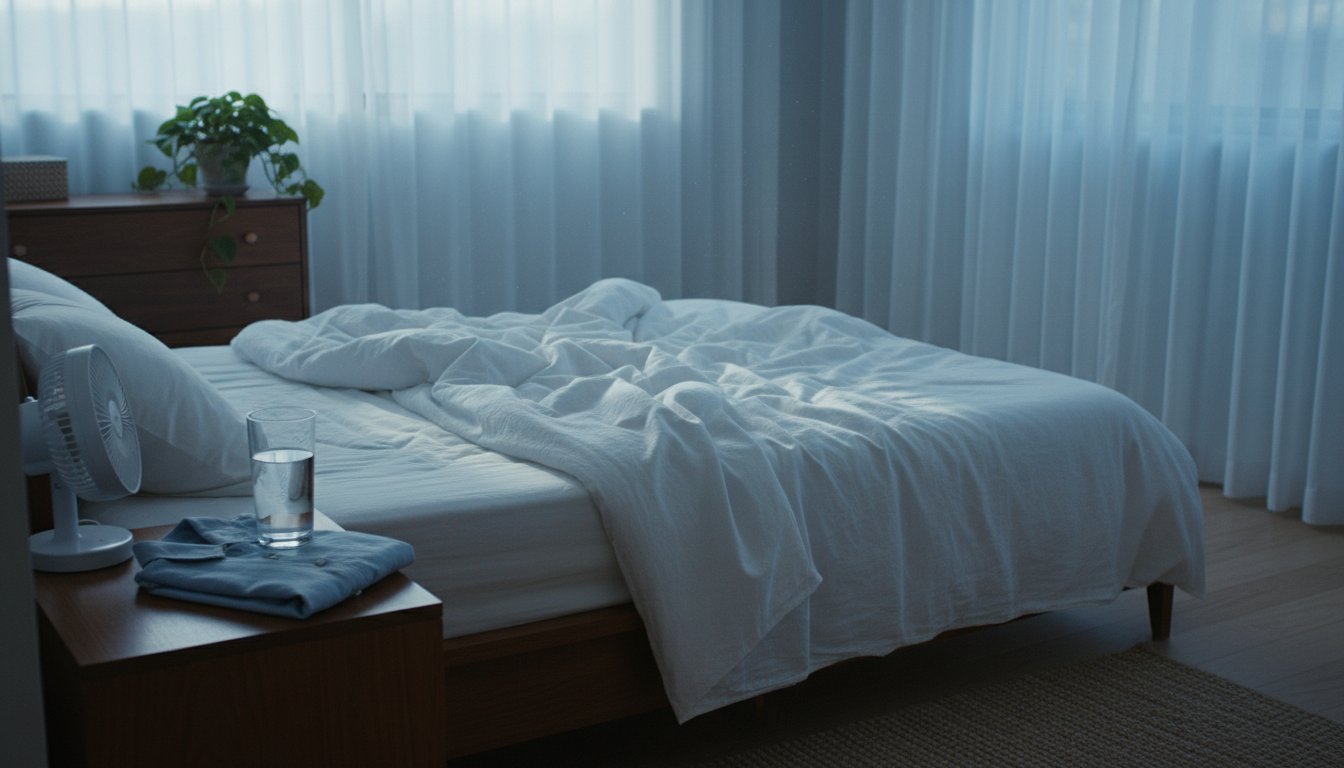
Begin with the bedroom. Lower the temperature if you can, use a fan, and choose lightweight sleepwear and breathable bedding. Layers are easier to remove than one heavy comforter. Keep water nearby, but do not turn the nightstand into a pharmacy experiment with unproven supplements.
Watch for personal triggers. Spicy food, alcohol, hot drinks, and a warm shower close to bedtime can make some people more likely to overheat. Caffeine may also worsen sleep, even when it does not directly trigger sweating. You do not need to ban everything enjoyable. Change one thing at a time so you can see what actually helps.
A steady sleep schedule matters because repeated awakenings can create anxiety around bedtime. Keep the room dark, limit stimulating screen use before bed, and decide in advance what you will do if you wake up drenched. Change into dry clothes, cool down, and return to bed without turning the episode into an hour of scrolling.
Dry bedding within reach is a small but useful upgrade. A spare sleep shirt and towel can keep a minor episode from becoming a full laundry operation at 3 a.m.
Can Hormone Therapy Help Menopause Night Sweats?
Yes. Menopausal hormone therapy is an established treatment for bothersome vasomotor symptoms, including hot flashes and night sweats. It uses estrogen, with a progestogen added for people who have a uterus because estrogen without endometrial protection can cause problems.
The decision is personal and clinical. A provider will consider your age, timing of menopause, symptoms, medical history, family history, bleeding pattern, and risk factors. The goal is not to chase a hormone number. It is to decide whether the likely benefit of treating disruptive symptoms outweighs the risks for you.
The route and formulation matter. Hormone therapy can be delivered in different ways. Local vaginal estrogen is a separate treatment used primarily for genitourinary symptoms, not whole-body hot flashes. The two should not be treated as interchangeable.
Hormone therapy is not right for everyone. A history of certain cancers, unexplained vaginal bleeding, blood clots, stroke, liver disease, or other conditions may change the recommendation. This calls for a real medical review, not an online checkbox built around the assumption that everyone has the same risk profile.
What If You Do Not Want Hormones?
You still have choices. Nonhormonal prescription treatments can reduce hot flashes and night sweats for some people. Options include certain medications originally used for depression, seizure disorders, or blood pressure, along with newer therapies that act on brain pathways involved in temperature regulation.
These medications are not interchangeable. Each carries its own side effects and cautions. Some can affect sleep, mood, blood pressure, appetite, or sexual function. A clinician should match the treatment to your medical history and the symptoms you most want to improve.
Cognitive behavioral therapy can also help with the distress and sleep disruption that accompany vasomotor symptoms. That does not mean the sweating is imaginary. It addresses the cycle in which a hot flash wakes you, worry keeps you alert, and the next night becomes harder before it begins.
Some people need a combination of approaches. A cooler room may reduce the intensity of an episode. Medication may reduce its frequency. A sleep-focused strategy may help you recover faster when an episode occurs. Good care does not force one universal answer.
Key Takeaway: Menopausal hormone therapy can treat bothersome hot flashes and night sweats, but the decision requires an individual review of benefits, risks, and medical history.
Are Supplements a Reliable Answer?
The supplement aisle is crowded with menopause promises. “Natural” does not mean proven, safe, or appropriate. Herbal products can interact with prescription drugs, vary in strength, and affect the liver or other organs. Some have estrogen-like effects that may matter if you have a hormone-sensitive condition.
Black cohosh, soy products, evening primrose oil, and other popular options are not substitutes for careful evaluation. People respond differently, and the evidence for supplements is less consistent than the marketing suggests. If you are considering one, tell your clinician exactly what it contains and how much you plan to take.
Be wary of products that promise to balance all hormones, reverse menopause, or eliminate sweating immediately. Those claims are warning signs. A product that does not clearly list its ingredients and potential interactions deserves even more caution.
The same skepticism applies to compounded hormone products marketed as uniquely tailored. “Bioidentical” is often a marketing term. Approved hormone products can also contain hormones chemically identical to those made by the body. Ask what the product is, how it is regulated, and why it is being recommended.
Why Do Night Sweats Ruin Sleep So Effectively?
The sweat is only part of the problem. A hot flash can pull you out of deeper sleep. Cooling down, changing clothes, or replacing bedding keeps you awake. Repeat that several nights in a row, and sleep loss becomes its own source of poor concentration, low patience, and daytime exhaustion.
Sleep disruption can make the next episode feel more threatening. You start monitoring the room, the sheets, and your body. That vigilance makes it harder to settle down, even when the sweating is mild.
Use a practical response instead of improvising every night. Keep a dry shirt nearby. Arrange the bedroom so you can remove a layer quickly. If your partner is comfortable, agree in advance about the fan or bedding rather than negotiating in the middle of the night.
If you snore loudly, wake gasping, have morning headaches, or remain exhausted despite spending enough time in bed, mention it. Menopause may be part of the story, but it may not be the whole story. Night sweats and a separate sleep disorder can coexist.
Can Body Weight Affect Menopause Symptoms?
Body weight can affect comfort, sleep, and how you experience hot weather. But it is not useful to reduce every menopause symptom to weight. Night sweats are not a character flaw, and weight loss is not a prerequisite for deserving treatment.
Some people do want support with weight during menopause. Changes in appetite, sleep, activity, and body composition can make weight management harder. If weight is one of your goals, treat it as a separate health objective rather than assuming weight loss will automatically solve night sweats.
That distinction matters when you choose a program. A weight-loss service may help with medically supervised weight management, but it should not present itself as a menopause clinic or promise to treat hot flashes. You need a provider who can address the symptom you actually brought in.
TrimRx is a GLP-1 weight loss telehealth program, with plans from $179 per month. Its role is weight loss, not diagnosis or treatment of night sweats, hormone management, or menopause. If weight is part of your broader health plan, take the free quiz to see whether the program fits.
How Do You Find Appropriate Women’s Care Online?
Start with the clinical question, not the platform’s design. If you need an evaluation for night sweats, look for a licensed clinician who reviews your symptoms, medical history, medications, and treatment preferences. If hormone therapy is on the table, the provider should discuss contraindications and follow-up instead of treating it like a standard order.
Telehealth can help when it connects you with a clinician who listens carefully and can coordinate testing or in-person care when needed. It is a poor fit when a questionnaire replaces a medical history or every symptom is routed toward the same product.
WomenRX.com is one option people may encounter when looking for online women’s care, alongside familiar health systems and in-person gynecology practices. MeriHealth.com is another name in the broader women’s-health telehealth space. Compare services by their clinical process, not by how quickly they promise an answer.
Ask who evaluates you, what happens if your symptoms point away from menopause, how urgent findings are handled, and whether follow-up is included. Night sweats are common enough to discuss online. Common symptoms still require careful medicine.
The Path Forward
Waking soaked in the middle of the night is not something you have to dismiss. It is also not a diagnosis by itself. Track the pattern, cool the bedroom, review possible triggers and medications, and make an appointment when the symptom is persistent, severe, new, or accompanied by warning signs. If the pattern fits menopause, hormone and nonhormonal treatments are both worth discussing with a qualified clinician.
TrimRx can help with medically supervised GLP-1 weight loss. It cannot diagnose menopause, treat night sweats, prescribe hormone therapy, or replace care for an unexplained medical symptom. If weight loss is one of your goals alongside better overall health, take the free quiz to find out whether TrimRx’s program may be appropriate for you.
Bottom line: TrimRx is a GLP-1 weight loss program, not a treatment for menopause or night sweats. Readers whose goals include weight loss can take the free quiz to see whether its program fits.
FAQ
Are Night Sweats a Normal Part of Menopause?
They are common during menopause, particularly when they occur as nighttime hot flashes. Persistent or severe sweating should not automatically be blamed on menopause. Medications, infections, thyroid problems, sleep disorders, and other conditions can cause similar symptoms.
How Can I Cool Down Night Sweats?
Use lightweight sleepwear and breathable bedding, keep the bedroom cool, and place a fan or water within reach. A spare shirt and towel can make nighttime changes easier. Test one possible trigger at a time, such as alcohol or hot drinks before bed, to identify personal patterns.
Should I See a Doctor for Menopause Night Sweats?
Make an appointment when night sweats are frequent, soaking, disrupting sleep, or affecting daytime life. Seek care sooner if they occur with unexplained weight loss, persistent fever, swollen lymph nodes, ongoing cough, chest symptoms, or feeling generally unwell.
Does Hormone Therapy Stop Night Sweats?
Menopausal hormone therapy is an established treatment for bothersome hot flashes and night sweats. Whether it is appropriate depends on your medical history, symptoms, timing, and individual risks. A clinician should review those factors before prescribing it.
What Can I Use If I Do Not Want Hormone Therapy?
Nonhormonal prescription medications may help reduce hot flashes and night sweats. Cognitive behavioral therapy can also help with sleep disruption and the distress surrounding symptoms. The best choice depends on your other health conditions, medications, and treatment goals.
Are Menopause Supplements Safe?
Not automatically. Supplements can interact with prescription medications, vary in strength, and affect the liver or other organs. Discuss any supplement with a clinician, particularly if you have a history of cancer, blood clots, liver disease, or other major health conditions.
Can Weight Loss Stop Night Sweats?
Weight loss should not be presented as a treatment for night sweats. Some people pursue weight loss during menopause for separate health reasons, but night sweats need their own evaluation and treatment plan. TrimRx provides GLP-1 weight loss care and does not treat menopause symptoms.
What Should I Track Before an Appointment?
Record when the sweating happens, how severe it is, whether it soaks clothing or bedding, your menstrual changes, daytime hot flashes, room temperature, alcohol and caffeine intake, sleep symptoms, and all medications or supplements. This information can help a clinician distinguish a menopause pattern from other causes.
Disclaimer: This content is for informational purposes only and does not constitute medical advice. It is not intended to diagnose, treat, cure, or prevent any disease or condition. Individual results may vary. Always consult a qualified healthcare professional before starting any treatment or medication.

Transforming Lives, One Step at a Time
Keep reading

Does Rapid Weight Loss on Tirzepatide Affect Bone Density?
Bone density does fall during weight loss, and that is established regardless of how the weight comes off. What is less settled is whether…
Does Wellbutrin Cause Hair Loss? What to Expect
Does Wellbutrin cause hair loss? It’s a question that may come up when you notice increased shedding or changes in your hair after starting…

Is Wellbutrin an SSRI? What You Need to Know
If you’re wondering, “Is Wellbutrin an SSRI?” you’re not alone. Wellbutrin (bupropion) is an antidepressant, but it works differently from common SSRIs by primarily…


