PT-141 vs Viagra
Introduction
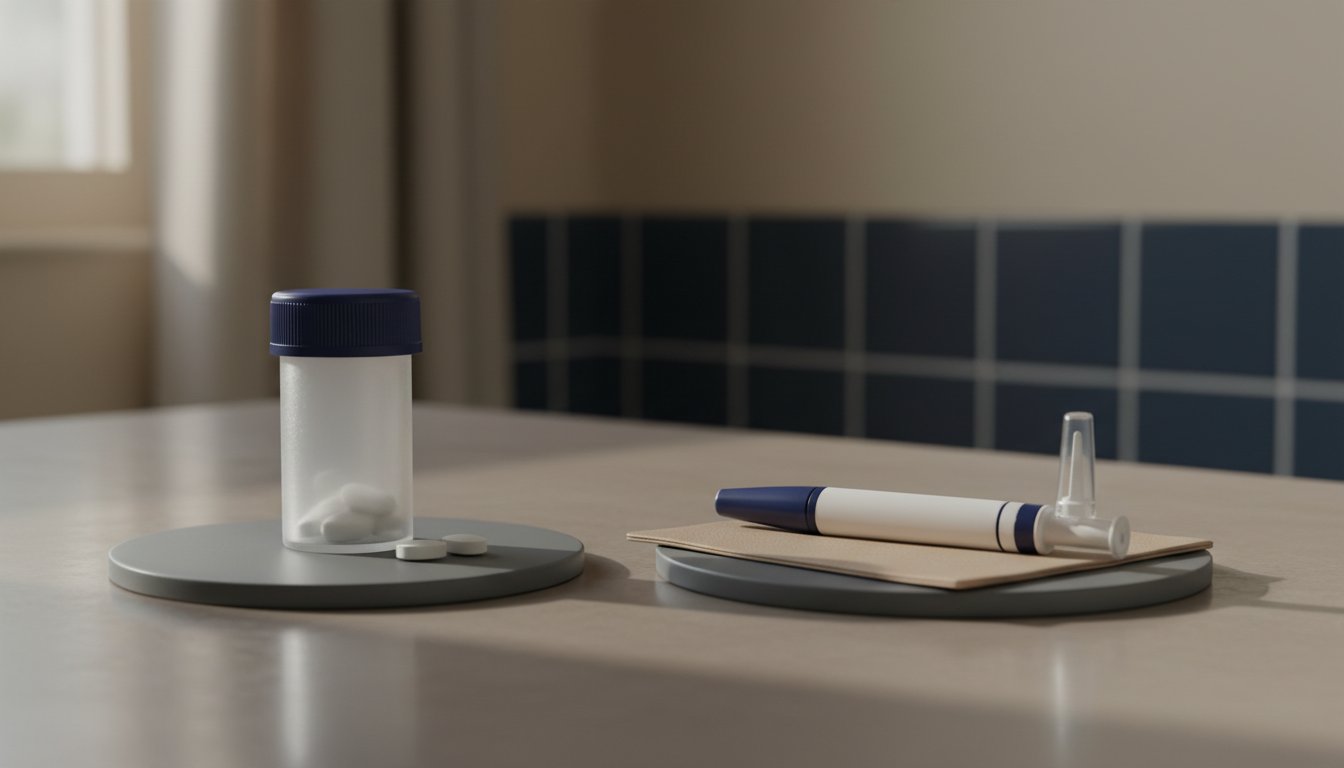
Two things get confused constantly in conversations about PT-141 vs Viagra: sexual desire and erectile function. They are related, but they are not the same problem. Wanting sex and being physically able to produce or maintain an erection involve different systems, and a medication aimed at one does not automatically solve the other.
Viagra is an established erectile dysfunction medication. PT-141 is a different kind of drug with a different approved use. Treating the names as competing versions of the same pill can send someone toward the wrong treatment, the wrong expectations, or both.
TrimRx is a physician-supervised GLP-1 weight loss telehealth program, not an erectile dysfunction clinic. We are covering this comparison because sexual health questions often overlap with broader health concerns, including weight, medications, circulation, and hormone changes. This guide is for understanding the distinction and preparing for an informed medical conversation.
At TrimRx, we believe understanding your options is the first step toward taking control of your health. If you want to see whether a personalized treatment plan is a fit for you, you can start with a quick online visit.
What Is the Main Difference Between PT-141 and Viagra?
The simplest answer is that Viagra targets the physical blood-flow process involved in an erection, while PT-141 acts through melanocortin receptors in the nervous system and has a different approved indication.
Quick Answer: PT-141 and Viagra are often discussed as if they were interchangeable erectile dysfunction treatments. They are not.
Viagra is the brand name for sildenafil. It belongs to a class called PDE5 inhibitors. These medicines help relax smooth muscle and increase blood flow in the penis during sexual stimulation. They do not create sexual desire on their own, and they do not produce an automatic erection without arousal.
PT-141 is the commonly used name for bremelanotide. It is a melanocortin receptor agonist. Its FDA-approved use is the treatment of acquired, generalized hypoactive sexual desire disorder in certain premenopausal women. That condition involves persistently low sexual desire that causes personal distress and is not better explained by another medical or relationship factor.
That distinction settles much of the comparison. Viagra is a recognized treatment for erectile dysfunction. PT-141 is not a Viagra substitute approved for erectile dysfunction in men.
Is PT-141 Approved to Treat Erectile Dysfunction?
No. PT-141 is not FDA-approved to treat erectile dysfunction in men.
Its approved indication is narrower: acquired, generalized hypoactive sexual desire disorder in premenopausal women. That is a disorder of sexual desire, not a mechanical inability to achieve or maintain an erection. The medication is also not intended to enhance sexual performance in general.
This matters because online discussions often present PT-141 as a “natural” or brain-based alternative to Viagra. That framing is too loose to be clinically useful. A medication can affect sexual response without being an approved treatment for erectile dysfunction, and a person with erection difficulty should not assume that PT-141 addresses the underlying problem.
Some providers may discuss medications outside their labeled indication. That is a medical decision requiring an individual evaluation, not proof that two drugs are equivalent. Where prescription care is available, services such as HealthRX.com or FormBlends may be mentioned alongside established medical providers, but the key question remains the same: what condition is being evaluated, and is the proposed medication appropriate for it?
How Does Viagra Work for Erectile Dysfunction?
Viagra works by inhibiting an enzyme called PDE5. During sexual stimulation, that helps support the chemical signaling and blood flow needed for an erection. The drug does not switch sexual desire on, and it does not work as a substitute for arousal.
This is why expectations matter. Sildenafil can help with the physical erection response, but it cannot resolve every cause of sexual difficulty. Low desire, relationship strain, depression, medication effects, pain, hormonal problems, and anxiety may still need separate attention.
Erectile dysfunction itself can have many contributors. Vascular disease, diabetes, high blood pressure, smoking, certain medications, nerve problems, pelvic surgery, and psychological factors can all play a role. Sometimes erection difficulty is an early sign that broader cardiovascular or metabolic health deserves a closer look.
A prescription for Viagra should follow an assessment rather than a casual product comparison. The medication may be suitable for one person and unsafe for another, especially when other prescriptions or heart conditions are involved.
How Does PT-141 Work?
PT-141 acts on melanocortin receptors in the central nervous system. That mechanism differs from the blood-vessel-focused action of sildenafil.
The important practical point is that PT-141 is not a PDE5 inhibitor. It is not simply a more powerful version of Viagra, and it is not designed to improve penile blood flow in the same direct way. Its approved role concerns sexual desire disorder in certain premenopausal women, not male erectile dysfunction.
PT-141 is administered by injection rather than as a standard oral tablet. The approved product is used before anticipated sexual activity, according to its prescribing information. It also has limits on frequency of use and duration of treatment, which is another reason not to treat it like an interchangeable alternative to sildenafil.
A medication that affects sexual desire also raises a different clinical question from one that supports erection quality. If someone feels interested in sex but cannot reliably achieve an erection, the problem is not automatically low desire. Choosing a drug based on a shared marketing category can miss that distinction.
Which Works Better for Erectile Dysfunction?
For erectile dysfunction in men, Viagra is the relevant approved medication of the two. PT-141 is not an approved ED treatment, so it should not be judged as though it were a direct competitor to sildenafil.
“Works better” is also the wrong first question when the diagnosis is unclear. A PDE5 inhibitor may be a reasonable option when the problem is erection firmness or maintenance, but it will not necessarily help if the main issue is absent desire. Conversely, a drug aimed at desire will not automatically correct a blood-flow problem.
A provider should clarify what is actually happening. Is there sexual interest but an unreliable erection? Is desire itself lower? Are morning erections still present? Did the problem begin after a new medication, illness, surgery, relationship stress, or a major change in sleep or mood? Those details help separate different causes.
Persistent erectile dysfunction deserves more than a medication swap. It can affect confidence and relationships, but it may also point toward conditions that need attention independently of sexual performance. The right treatment starts with the problem, not the most frequently advertised product.
What Side Effects Can Viagra Cause?
Common side effects associated with Viagra include headache, flushing, indigestion, nasal congestion, dizziness, and visual changes. The specific experience varies, and side effects can be more concerning when the medication is combined with drugs that also lower blood pressure.
The most important interaction is with nitrates, which are used for certain forms of chest pain. Combining sildenafil with nitrates can cause a dangerous drop in blood pressure. Viagra also requires caution with some alpha-blocker medications and in people with particular cardiovascular conditions.
Certain urgent symptoms require immediate medical attention. An erection lasting too long, sudden vision loss, or sudden hearing loss should not be ignored. These events are uncommon, but they are serious.
A provider should know about all medications, supplements, and recreational drugs before prescribing sildenafil. Buying a product from an unverified source adds another problem: the label may not accurately describe what is inside. Erectile dysfunction treatment is not a good place to gamble on an unknown formulation.
Key Takeaway: PT-141, also called bremelanotide, is a melanocortin receptor agonist approved for acquired, generalized hypoactive sexual desire disorder in certain premenopausal women. It is not FDA-approved to treat erectile dysfunction in men.
What Side Effects Can PT-141 Cause?
PT-141 commonly causes nausea. Other reported effects include flushing, headache, vomiting, fatigue, dizziness, and skin changes such as darkening of the gums or certain areas of the skin. These effects are part of why PT-141 is not a casual substitute for an oral ED medication.
PT-141 can temporarily increase blood pressure and reduce heart rate. It is contraindicated in people with uncontrolled hypertension or known cardiovascular disease, according to its prescribing information. Anyone with a history of heart problems or blood-pressure concerns needs a clinician to review whether it is appropriate.
The medication can also interact with other drugs by affecting how quickly some medicines are absorbed. That makes a full medication review important, not optional.
A drug administered by injection and associated with cardiovascular warnings should not be treated as a lifestyle supplement. The route of administration does not make it safer, and “works through the brain” does not mean it is free of physical risks.
Can You Take PT-141 and Viagra Together?
Do not combine PT-141 and Viagra on your own.
There is no sensible reason to assume that combining them creates a stronger or more complete sexual-health treatment. The drugs act through different pathways, and each carries its own side effects and cardiovascular considerations. Combining medications without medical supervision can increase the chance of dizziness, blood-pressure changes, or other unwanted effects.
A clinician would need to review the reason each medication is being considered, your cardiovascular history, current prescriptions, and the exact product involved. That includes any compounded or nonstandard formulation, because the product details may differ from an FDA-approved medication.
If a treatment plan involves more than one prescription, the prescribing clinician should give explicit instructions. Do not use someone else’s medication, increase a dose because the first attempt was disappointing, or add PT-141 to Viagra based on advice from a forum or sales page.
What Should You Ask Before Choosing Between PT-141 and Viagra?
Start with the diagnosis. Ask whether the main problem is low sexual desire, difficulty getting an erection, difficulty keeping one, premature ejaculation, pain, or anxiety around sex. These are not interchangeable complaints.
Then ask whether your health history changes the risk. Bring up heart disease, chest pain, blood-pressure problems, stroke, vision or hearing conditions, kidney or liver disease, and every medication you take. Nitrates are especially important when Viagra is being considered.
It is also worth asking what happens if the medication does not work. A poor response may mean the dose or timing needs review, but it may also suggest that the underlying problem has not been identified. Sexual symptoms can be affected by sleep, stress, mood, alcohol, medications, hormones, blood sugar, and vascular health.
Finally, ask whether the medication is approved for your situation or being considered off-label. That is not a minor detail. It tells you what evidence and prescribing framework apply, and it prevents an online comparison from substituting for actual clinical judgment.
Can Weight Affect Erectile Function?
Yes, weight can be relevant to erectile function, although it is not the only possible cause. Excess weight often travels with conditions that can affect sexual health, including high blood pressure, diabetes, poor sleep, and reduced physical fitness. Body image and mood can also influence sexual confidence and desire.
That does not mean weight loss is a direct treatment for every case of erectile dysfunction. It is one health lever among several, and a person with persistent symptoms still deserves a proper medical evaluation.
Weight can also complicate the way people interpret sexual symptoms. Someone may assume the issue is low testosterone, poor circulation, or low desire without checking sleep, medications, mental health, or metabolic conditions. A focused evaluation is more useful than guessing from a symptom label.
TrimRx only provides GLP-1 weight loss care, so we do not prescribe Viagra or PT-141 and do not claim to treat erectile dysfunction. If weight is one part of a broader health picture, addressing it may be worth discussing with a qualified provider, while sexual symptoms are evaluated on their own terms.
The Path Forward
PT-141 and Viagra are not two versions of the same ED medication. Viagra is sildenafil, a PDE5 inhibitor used for erectile dysfunction. PT-141 is bremelanotide, an injectable melanocortin receptor agonist approved for a specific sexual desire disorder in certain premenopausal women, not for erectile dysfunction in men.
That is the takeaway worth carrying into any appointment: identify whether the problem is desire or erection first, then review safety, interactions, and the medication’s actual indication. TrimRx is the publisher of this guide and provides GLP-1 weight loss care only. If extra weight is part of your wider health picture, our weight-loss quiz can help you explore whether that program is worth discussing with a licensed provider.
Bottom line: If erectile difficulty is persistent, the useful comparison is not simply “which drug is stronger?” It is which diagnosis is being treated, whether the medication is appropriate, and what risks apply to you.
FAQ
Is PT-141 the Same as Viagra?
No. Viagra contains sildenafil and is used for erectile dysfunction. PT-141, or bremelanotide, acts on melanocortin receptors and is approved for acquired, generalized hypoactive sexual desire disorder in certain premenopausal women.
Does PT-141 Work for Erectile Dysfunction in Men?
PT-141 is not FDA-approved to treat erectile dysfunction in men. A man with persistent erection difficulty should receive an evaluation rather than assume PT-141 is an alternative to sildenafil.
Does Viagra Increase Sexual Desire?
Viagra supports the physical erection response when sexual stimulation is present. It does not directly create sexual desire, so it may not address low libido when desire is the main concern.
Which Has More Side Effects, PT-141 or Viagra?
They have different side-effect profiles, so a simple winner is not useful. Viagra can cause headache, flushing, indigestion, nasal congestion, dizziness, and visual changes. PT-141 commonly causes nausea and may also cause flushing, headache, vomiting, fatigue, dizziness, and skin darkening.
Can You Take Viagra with Nitrate Medication?
No. Viagra must not be combined with nitrate medications because the combination can cause a dangerous drop in blood pressure. Tell your clinician about all prescriptions before using sildenafil.
Who Should Not Use PT-141?
PT-141 is contraindicated in people with uncontrolled hypertension or known cardiovascular disease. A clinician should also review other medications and medical conditions before prescribing it.
Is PT-141 a Pill?
No. PT-141 is administered by injection. That route does not make it interchangeable with oral sildenafil or eliminate the need for medical supervision.
Does TrimRx Prescribe PT-141 or Viagra?
No. TrimRx provides GLP-1 weight loss telehealth care and does not claim to treat erectile dysfunction or prescribe PT-141 or Viagra. This article is educational information published by TrimRx.
Disclaimer: This content is for informational purposes only and does not constitute medical advice. It is not intended to diagnose, treat, cure, or prevent any disease or condition. Individual results may vary. Always consult a qualified healthcare professional before starting any treatment or medication.

Transforming Lives, One Step at a Time
Keep reading

Does Rapid Weight Loss on Tirzepatide Affect Bone Density?
Bone density does fall during weight loss, and that is established regardless of how the weight comes off. What is less settled is whether…

Does Wellbutrin Cause Hair Loss? What to Expect
Does Wellbutrin cause hair loss? It’s a question that may come up when you notice increased shedding or changes in your hair after starting…

Is Wellbutrin an SSRI? What You Need to Know
If you’re wondering, “Is Wellbutrin an SSRI?” you’re not alone. Wellbutrin (bupropion) is an antidepressant, but it works differently from common SSRIs by primarily…


