Rosemary Oil for Hair Loss
Introduction
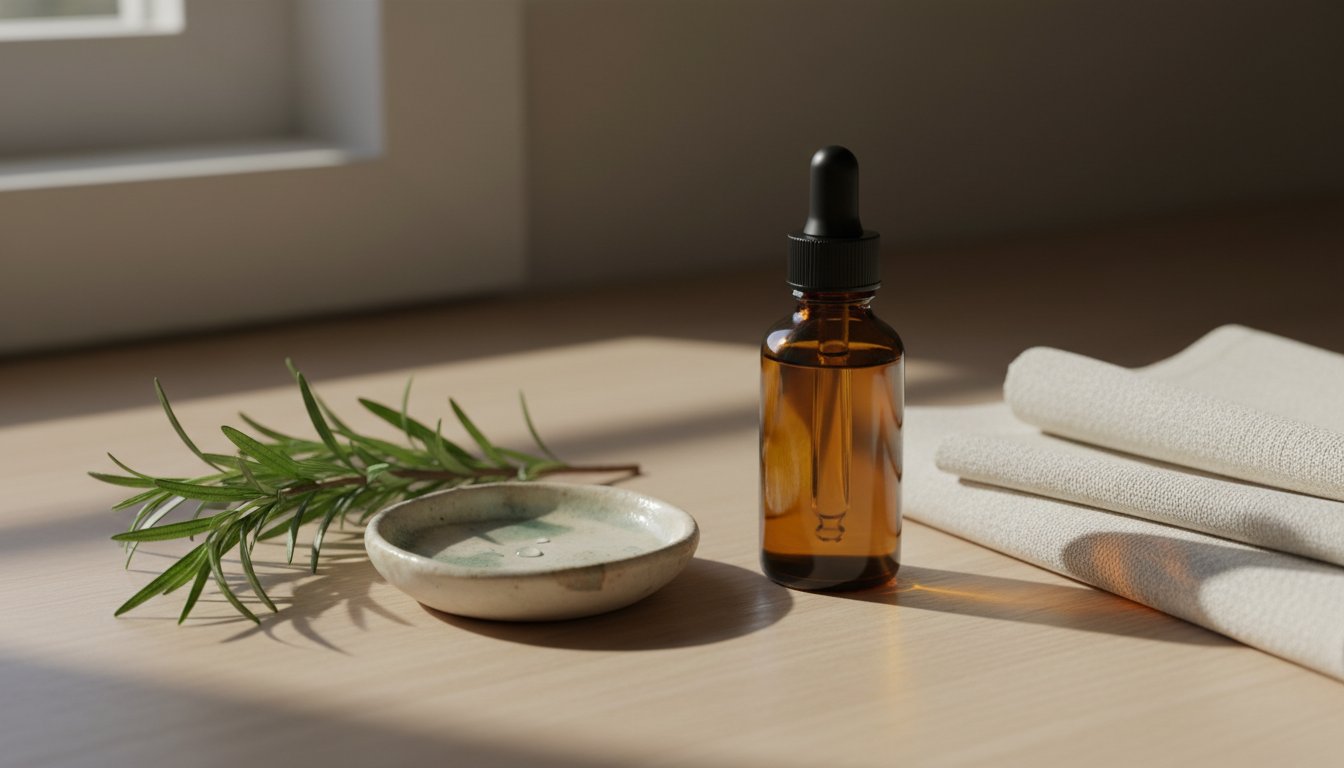
A dropper bottle makes hair care look easy. A few drops, a brief scalp massage, and the promise of fuller hair. The harder part is finding out why the hair is thinning in the first place.
That gap explains rosemary oil’s appeal. The routine is simple. The ingredient sounds natural. The hoped-for result is easy to picture. Hair biology, unfortunately, does not follow marketing timelines.
Rosemary oil may fit into a broader hair-care routine. It is not a universal fix, and it cannot replace an evaluation of the cause. Hair loss can stem from genetics, hormonal changes, illness, stress, medication, nutritional problems, scalp inflammation, or mechanical damage. A topical oil cannot address every one of those pathways.
This guide looks at what rosemary oil may reasonably offer, how people use it, and where the risks begin. It also covers when to stop trying products at home and seek a clearer answer.
At TrimRx, we believe understanding your options is the first step toward taking control of your health. If you want to see whether a personalized treatment plan is a fit for you, you can start with a quick online visit.
What Is Rosemary Oil for Hair Loss?
Rosemary oil is an essential oil made from the rosemary plant. In hair-care routines, people generally massage it onto the scalp in diluted form or add it to a carrier oil or formulated product.
Quick Answer: Rosemary oil is a popular topical option for hair loss, but popularity is not the same as proof.
The phrase “rosemary oil for hair loss” makes it sound like a defined treatment category. A more accurate description is a topical cosmetic or complementary option whose effect on hair growth has not been established to the same degree as treatments specifically developed for hair loss.
That distinction matters when thinning is progressing.
Rosemary oil feels accessible. There is no complicated device, clinic visit, or prescription routine. But easy access can turn into tunnel vision. People may focus on the visible symptom while the underlying process continues unchecked.
If thinning is mild and the scalp is healthy, a cautious trial may be reasonable. If hair is falling out in patches, the scalp is painful or inflamed, or the change is rapid, start by finding out what is happening.
Can Rosemary Oil Actually Regrow Hair?
The evidence is limited. Rosemary oil has attracted interest as a possible aid for scalp and hair concerns, but that does not establish a reliable hair-regrowth effect for every type of hair loss.
Hair grows slowly and unevenly. Even after someone changes a routine, the difference may not show quickly. New hair must become long and dense enough to notice, while continued shedding can hide any improvement.
That is why before-and-after photos deserve caution. Lighting, styling, hair length, and camera angle can change the result dramatically.
Ask a more useful question than “Does rosemary oil regrow hair?” Ask, “What type of hair loss am I dealing with, and does this option fit that problem?” General scalp care is not the same as treatment for pattern hair loss, an inflammatory scalp disorder, or sudden shedding after a health event.
Rosemary oil may be worth discussing with a qualified clinician as one part of a plan. It should not be presented as guaranteed regrowth.
Which Types of Hair Loss Might It Help?
The answer depends on the cause, which is often impossible to determine from a mirror alone.
Some people notice gradual thinning around the part or hairline. Others find more hair in the shower, on a pillow, or in a brush. Some develop a sharply defined patch. Those patterns do not necessarily point to the same condition.
Gradual thinning can involve genetic or hormonal factors. Diffuse shedding can follow physical or emotional strain. Breakage may come from styling, heat, chemical processing, traction, or fragile hair rather than a problem with the follicle itself. Scaling, tenderness, itching, or redness adds another concern.
There is no clear reason to treat rosemary oil as the answer to all of these problems. It cannot correct tight hairstyles that keep pulling on the roots. It cannot diagnose a scalp condition. It cannot replace a review of medication changes, recent illness, or major nutritional shifts.
The pattern is useful information, not a diagnosis. Take photos in consistent lighting and record when the change began. That information is more valuable than switching among several oils every few days.
How Do People Use Rosemary Oil on the Scalp?
Most people apply a small amount to the scalp and massage it gently with their fingertips. Essential oil is not a standard skin moisturizer. It is concentrated, and direct application can irritate the skin.
A carrier oil or properly formulated hair product may make application easier. Follow the product directions. More oil and more frequent use do not automatically mean better results. An irritated scalp is not a healthier scalp.
Use a light touch. The goal is contact with the scalp, not vigorous friction that pulls on the hair. Wash the product out if it causes discomfort. Do not continue because a label or social-media routine claims that tingling proves the product is working. Tingling may signal irritation.
If you already use other scalp products, introduce one change at a time. Otherwise, when itching or redness appears, you may not know which product caused it.
Should Rosemary Oil Be Diluted?
Yes. Dilution is an important safety step when applying an essential oil to skin. Undiluted rosemary oil can cause redness, burning, itching, or a rash.
Use a product designed for scalp application, or dilute the essential oil according to reliable product instructions. Do not make the mixture stronger on the assumption that higher concentration means greater effectiveness. Do not apply it to broken, scratched, sunburned, or inflamed skin.
Patch testing may help identify a reaction before broader use, although a small test cannot guarantee that repeated application will remain comfortable. Stop if you develop persistent irritation, swelling, blistering, or worsening scalp symptoms. Seek medical advice for a significant reaction.
Keep essential oils away from the eyes and mouth. Store them securely, especially around children and pets. “Natural” describes an ingredient’s source, not its safety at every concentration or frequency of use.
What Are the Possible Side Effects?
Scalp irritation is the main concern. Rosemary oil can cause itching, redness, burning, dryness, or a rash, particularly when it is undiluted, overused, or applied to sensitive skin.
An irritated scalp complicates hair care. Scratching can worsen discomfort and add to breakage. If the scalp becomes flaky or sore after you start using rosemary oil, continuing is not a test of commitment. Stop and reassess.
Fragrance sensitivity matters too. A product may smell pleasant in the bottle and become unpleasant after sitting on the scalp for hours. Anyone with a history of reactions to fragranced products or essential oils should be especially cautious.
Do not use oil to cover up persistent pain, crusting, bleeding, marked scaling, or pus. Those symptoms call for medical evaluation, not another round of scalp massage.
How Long Should You Try Rosemary Oil?
There is no responsible universal deadline. The cause of hair loss determines what improvement would look like.
Someone dealing with breakage may notice less damage after changing styling habits. Someone with active shedding may continue to lose hair while the trigger remains. Someone with a scalp disorder may need targeted treatment.
That is why promises such as “new growth in a few weeks” should raise suspicion. Hair cycles are not synchronized, and thinning progresses differently from person to person. Product claims often reduce a complicated process to a neat schedule.
Decide what you will monitor before starting. Is shedding decreasing? Is the part widening? Are new patches appearing? Does the scalp feel better or worse? Take periodic photos under similar conditions instead of checking the mirror several times a day.
If loss continues, worsens, or becomes more noticeable despite careful use, stop experimenting and seek an evaluation. Repeatedly changing products can delay the useful step.
Key Takeaway: Hair loss has many possible causes, and rosemary oil cannot address every one of them.
When Should You See a Clinician About Hair Loss?
Sudden or severe hair loss deserves attention. So do patchy loss, a rapidly widening part, thinning accompanied by scalp symptoms, or shedding that continues without an obvious explanation.
A clinician can ask about timing, family history, health changes, medications, nutrition, styling practices, and symptoms elsewhere in the body. That history often provides more direction than the product aisle. Depending on the pattern, an examination or testing may be needed.
Do not wait for a home remedy to prove itself if the scalp is painful, inflamed, infected-looking, or developing distinct bald spots. Hair loss can be upsetting, but embarrassment is not a medical strategy. Early evaluation can prevent months of guessing.
Bring a list of products and supplements you use, along with photos showing when the change began. Mention any recent illness, major stress, dietary restriction, pregnancy-related change, or weight-loss effort. Timing can be an important clue.
Can Rosemary Oil Replace Established Hair-loss Treatment?
No. Rosemary oil should not replace a diagnosis or treatment chosen for a specific type of hair loss.
That does not make it worthless. Some people may prefer a simple topical routine while monitoring their scalp or discussing options with a clinician. Its role, however, should remain proportionate. Rosemary oil is a possible personal-care option, not a diagnostic tool or guaranteed therapy.
The right plan depends on the problem. Breakage calls for less damaging hair practices. A scalp condition calls for appropriate care. Ongoing thinning requires attention to its pattern and cause. Anyone who starts with rosemary oil should also know what would count as failure and when to seek help.
Be skeptical of claims containing words such as “cure,” “guaranteed,” or “works for everyone.” Hair loss is too varied for that kind of promise.
Does Weight Loss Have Anything to Do with Hair Shedding?
Timing matters. If shedding begins during or after a significant weight-loss effort, tell a clinician. Do not assume rosemary oil is the only relevant variable. Changes in body weight, food intake, overall health, or medication use may all belong in the history.
This does not mean every episode of hair loss is caused by weight loss. It means the timeline deserves a close look. Note when shedding started, what changed beforehand, and whether the scalp looks or feels different.
TrimRx provides GLP-1 weight-loss telehealth, and GLP-1 weight loss is the only program we offer. We do not treat hair loss, and rosemary oil is not part of our program. If hair concerns appeared during a weight-loss journey, use the weight-loss quiz only to explore whether medically supervised weight-loss support fits your goals. Take the hair symptoms to a clinician who can evaluate them directly.
How Should You Judge a Rosemary Oil Product?
Start with the label, not the testimonial. Look for clear scalp-use directions, dilution information when relevant, and warnings about skin contact. A vague product paired with dramatic regrowth promises deserves caution.
Check how many new ingredients the formula introduces. If irritation develops, a complicated blend makes the cause harder to identify. A simple routine is easier to monitor.
Consider whether the product works in real life. If it leaves your scalp uncomfortable, makes washing difficult, or encourages frequent rubbing, it may be a poor fit regardless of the marketing.
A routine can be pleasant without treating the cause of hair loss. Those are different standards. Keep expectations modest.
The Path Forward
Rosemary oil can be a cautious scalp-care option. It is not a promise of regrowth. Dilute essential oil appropriately, stop if irritation develops, and do not let a home routine delay evaluation of sudden, patchy, painful, or persistent hair loss.
TrimRx is a GLP-1 weight-loss telehealth brand, not a hair-loss clinic. We cover this topic for education, not to claim that rosemary oil can treat hair loss. If shedding began during a weight-loss effort, that detail may help a clinician see the larger picture.
Bottom line: TrimRx focuses on GLP-1 weight loss, not hair-loss treatment. If shedding began during a weight-loss effort, that timing is worth mentioning to a clinician.
FAQ
Does Rosemary Oil Help Hair Loss?
Rosemary oil may serve as a complementary scalp-care option, but the evidence is limited. It is not a guaranteed hair-regrowth treatment, and its usefulness depends on the cause and pattern of hair loss.
Can I Put Rosemary Oil Directly on My Scalp?
Undiluted essential oil can irritate the scalp. Use a product formulated for scalp application or follow reliable dilution instructions. Stop if you develop burning, itching, redness, swelling, or a rash.
How Often Should I Use Rosemary Oil for Hair Loss?
There is no universal schedule for every person or product. Follow the product directions. Do not assume more frequent use works better, and introduce only one new scalp product at a time so you can identify irritation.
How Long Does Rosemary Oil Take to Work?
There is no dependable timeline for hair regrowth from rosemary oil. Hair changes slowly, and the underlying cause affects what improvement would look like. Be skeptical of fixed schedules and guaranteed-result claims.
Can Rosemary Oil Stop Hair Shedding?
Do not rely on it to stop shedding without identifying the cause. Ongoing, sudden, severe, or patchy hair loss may require clinical evaluation rather than continued experimentation with oils.
Is Rosemary Oil Safe for an Irritated Scalp?
An irritated scalp is a poor place for essential oil. Do not apply rosemary oil to broken or inflamed skin, and stop if symptoms worsen. Persistent pain, scaling, crusting, or other concerning changes warrant medical advice.
Can Weight Loss Be Related to Hair Shedding?
Shedding during or after a weight-loss effort is worth reporting to a clinician. That timing does not prove weight loss caused the problem, but it is relevant history that can help guide an evaluation.
Does TrimRx Treat Hair Loss?
No. TrimRx offers GLP-1 weight-loss telehealth and does not treat hair loss or provide rosemary oil therapy. If hair shedding began during a weight-loss effort, discuss the symptom directly with a qualified clinician.
Disclaimer: This content is for informational purposes only and does not constitute medical advice. It is not intended to diagnose, treat, cure, or prevent any disease or condition. Individual results may vary. Always consult a qualified healthcare professional before starting any treatment or medication.

Transforming Lives, One Step at a Time
Keep reading

Does Rapid Weight Loss on Tirzepatide Affect Bone Density?
Bone density does fall during weight loss, and that is established regardless of how the weight comes off. What is less settled is whether…

Does Wellbutrin Cause Hair Loss? What to Expect
Does Wellbutrin cause hair loss? It’s a question that may come up when you notice increased shedding or changes in your hair after starting…

Is Wellbutrin an SSRI? What You Need to Know
If you’re wondering, “Is Wellbutrin an SSRI?” you’re not alone. Wellbutrin (bupropion) is an antidepressant, but it works differently from common SSRIs by primarily…


