Foods to Eat with GLP-1 Medications
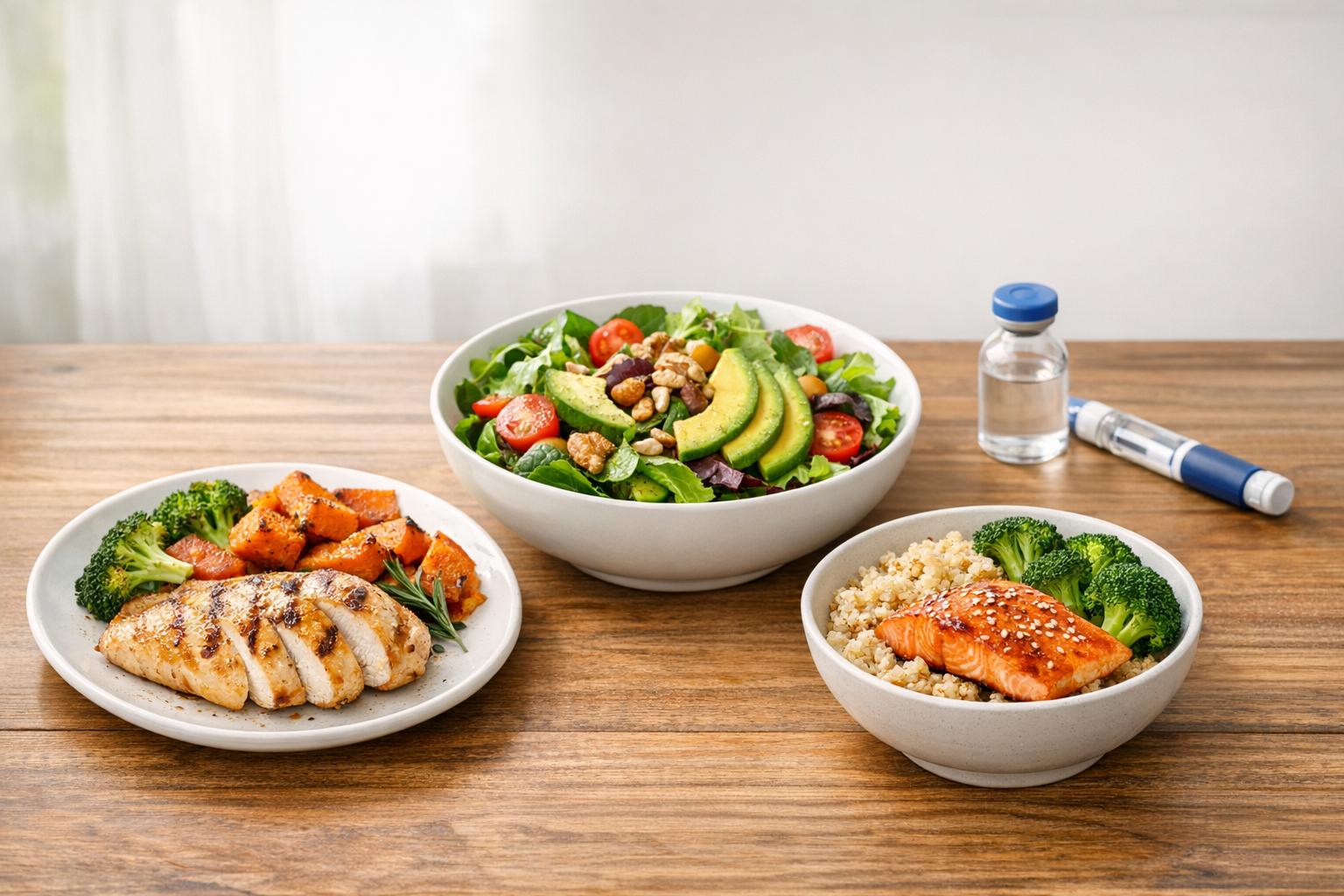
GLP-1 medications like Semaglutide and Tirzepatide can reduce calorie intake by 16% to 39%, but your diet plays a key role in maximizing their benefits. The right foods can help manage side effects, maintain muscle mass, and support overall health. Here’s what you need to know:
- Protein is essential: Aim for at least 60 grams daily to preserve muscle during weight loss. Eggs, fish, poultry, lentils, and chickpeas are excellent options.
- Fiber combats side effects: Leafy greens, broccoli, oats, quinoa, and berries help with digestion and reduce constipation.
- Healthy fats matter: Avocados, nuts, and seeds provide lasting energy and aid natural GLP-1 production.
- Low-glycemic fruits: Apples, kiwis, blueberries, and strawberries stabilize blood sugar and keep you full longer.
Eating smaller, nutrient-dense meals and staying hydrated (64+ oz water daily) can further enhance results. Pairing these foods with GLP-1 therapy ensures you’re meeting nutritional needs while minimizing side effects.
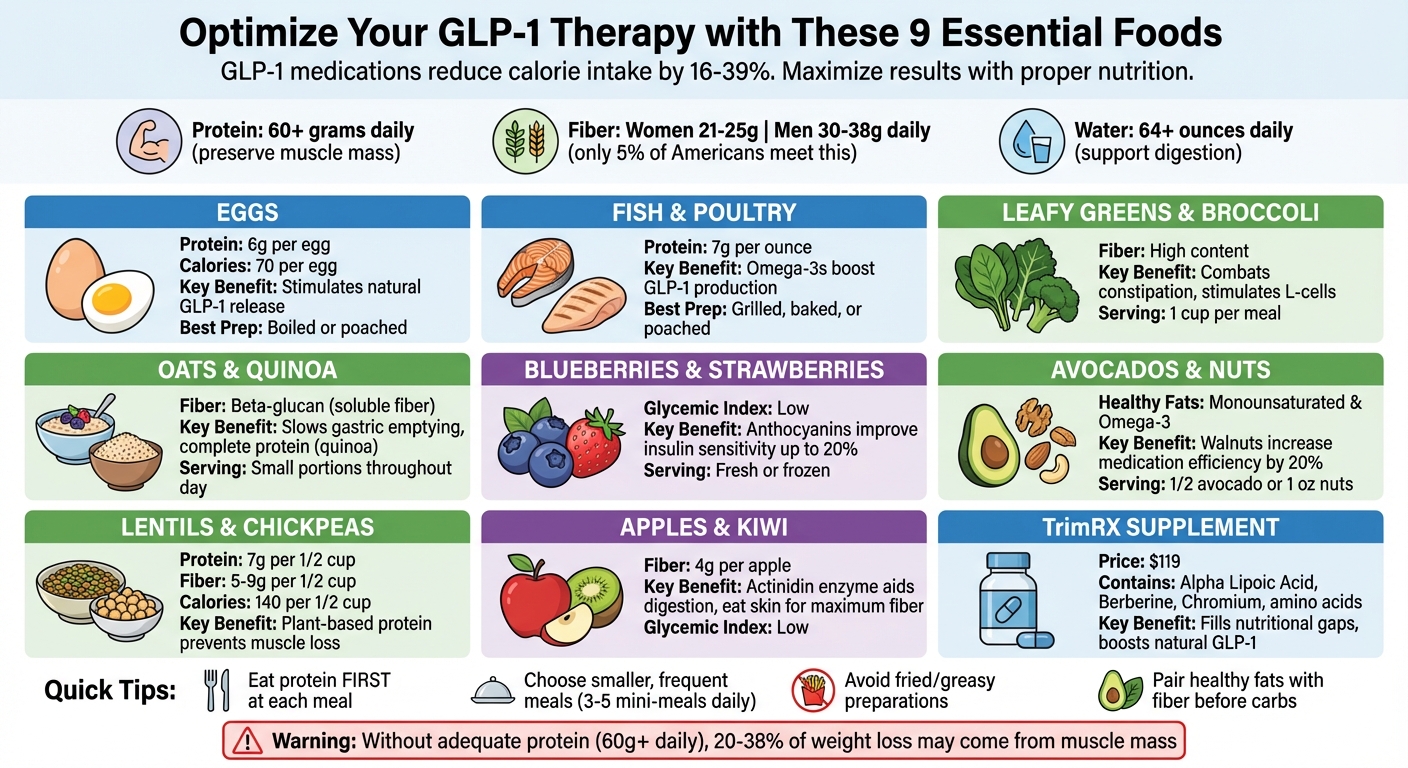
Best Foods to Eat with GLP-1 Medications: Nutritional Guide
1. Eggs
Nutritional Benefits for Weight Loss
Eggs pack a punch when it comes to nutrition. Each egg contains about 6 grams of protein and only 70 calories, making them an excellent choice for those looking to manage their weight. They’re also loaded with eight essential nutrients, vitamins, and minerals that help fill in any nutritional gaps. Plus, the protein in eggs plays a vital role in maintaining muscle mass, which is especially important during weight loss.
Support for GLP-1 Medication Effectiveness
Eggs bring more to the table than just protein – they’re also rich in amino acids like glutamine, arginine, and phenylalanine. These amino acids stimulate L-cells in your body to release GLP-1, a hormone that plays a key role in appetite control and blood sugar regulation. This means eggs can complement your GLP-1 medication, enhancing its effectiveness. Additionally, the monounsaturated fats in eggs further boost this natural hormone release.
"Eating high-quality protein sources, like eggs and lean meat, can support the function of GLP-1 medications." – Sarah Jividen, RN
By aiding hormone release and supporting muscle health, eggs become a valuable addition to your diet plan.
Satiety and Blood Sugar Regulation
Eggs excel at keeping you full and your energy steady. Their high-protein, low-carb profile helps regulate blood sugar levels throughout the day. Unlike quick-fix breakfasts like sugary cereals or white bread that can cause energy crashes, eggs provide a steady source of fuel without triggering cravings.
"Eggs are high-protein and low-carbohydrate, which helps stabilize blood sugar levels and keep you full." – Jessica DeGore, RD, LDN, Registered Dietitian and Diabetes Care Specialist
The combination of protein and healthy fats in eggs slows down digestion, keeping you satisfied for longer.
Ease of Integration into a Balanced Diet
Eggs are incredibly versatile and easy to incorporate into your daily routine, especially if you’re following a GLP-1 therapy plan. Starting your day with scrambled eggs and veggies can provide long-lasting energy while avoiding the nausea that sugary breakfasts sometimes cause. Eating eggs at the beginning of a meal ensures you get enough protein before the medication’s satiety effects kick in, making it harder to finish your food.
For the best results, opt for boiled or poached eggs rather than fried ones, as frying adds unnecessary fats that might worsen nausea or bloating. Pairing eggs with fiber-rich foods like leafy greens or avocado can further stimulate GLP-1 release and help manage common medication side effects, such as constipation. This simple strategy fits seamlessly into a balanced, nutrient-rich meal plan.
2. Fish and Poultry
Nutritional Benefits for Weight Loss
Fish and poultry are excellent additions to your diet when paired with GLP-1 therapy, offering lean protein without piling on extra calories or saturated fat. Just one ounce of cooked chicken, turkey, or fish packs about 7 grams of protein, helping you meet your daily protein goals while preserving muscle mass – a key factor in maintaining a healthy metabolism. Why does this matter? Because muscle tissue burns calories even when you’re at rest.
"Protein also keeps your body from losing muscle instead of fat." – Cleveland Clinic
Fatty fish like salmon and sardines come with an extra perk: they’re among the few natural sources of Vitamin D, a nutrient that many Americans are short on. To prevent muscle loss while on GLP-1 therapy, experts suggest aiming for at least 60 grams of protein daily, or about 0.55 grams per pound of your body weight. For instance, if you weigh 150 pounds, your target would be roughly 82 grams of protein per day. Additionally, the amino acids found in fish and poultry can further enhance GLP-1 release, adding to the therapy’s benefits.
Support for GLP-1 Medication Effectiveness
Fish and poultry aren’t just nutritious – they actively support the effectiveness of GLP-1 medications. They contain amino acids and omega-3 fatty acids (like DHA) that naturally boost GLP-1 production and help regulate blood sugar levels. This combination amplifies the appetite-suppressing effects of your treatment, making it easier to stick to your weight-loss goals.
Ease of Integration into a Balanced Diet
Fish and poultry are incredibly versatile and easy to incorporate into your meals. Grilling, baking, or poaching keeps these proteins light and easy to digest, while avoiding fried or greasy options helps minimize side effects like nausea or bloating. Eating your protein first during meals ensures you meet your nutritional needs before the medication’s satiety effects kick in.
If the idea of eating meat feels unappealing, consider simpler options like turkey sandwiches, chicken soups, or cold salmon salads. Smaller, more frequent meals – around 3 to 5 mini-meals a day – can also help with slower digestion. Pair your proteins with hydrating vegetables for a balanced and satisfying meal plan.
| Protein Source | Key Benefit | Optimal Prep |
|---|---|---|
| Chicken/Turkey | High protein, low saturated fat | Grilled, baked, or roasted |
| Salmon/Tuna | Omega-3s boost natural GLP-1 | Steamed, grilled, or poached |
| White Fish (Cod/Halibut) | Very low calorie, easy to digest | Baked or lightly seared |
3. Leafy Greens and Broccoli
Nutritional Benefits for Weight Loss
Leafy greens like spinach, kale, and Swiss chard, along with broccoli, are nutritional powerhouses that complement GLP-1 therapy perfectly. These vegetables deliver essential vitamins and minerals without piling on the calories. Since GLP-1 therapy typically reduces portion sizes by about 50%, making every bite count is crucial.
"If you’re only able to eat 50%, you should make every bite as nutritious as possible – protein, fiber, and hydration is the name of the game." – Shannon Christen, Registered Dietitian and Diabetes Educator
Fiber is a standout feature of these vegetables. For women aged 19–50, the daily fiber recommendation is 25 grams, while men in the same age group need 38 grams. Yet, only 5% of U.S. adults hit these targets. The fiber in leafy greens and broccoli not only supports digestion but also helps alleviate constipation, a common side effect of GLP-1 medications. By including these nutrient-rich vegetables, you’re fueling your body and enhancing the medication’s effectiveness.
Support for GLP-1 Medication Effectiveness
The fiber in these vegetables plays a vital role in supporting GLP-1 therapy. It stimulates L-cells in the lower intestine and colon, encouraging your body to produce more natural GLP-1.
"Non-starchy vegetables like broccoli, spinach, kale, cauliflower, and Brussels sprouts are excellent choices. These vegetables are low in calories and carbohydrates but high in fiber, which helps maintain stable blood sugar levels." – Linda Khoshaba, NMD, Naturopathic Endocrinologist
Satiety and Blood Sugar Regulation
Fiber doesn’t just aid digestion – it also slows glucose absorption, preventing blood sugar spikes that can lead to cravings. With their low glycemic index, leafy greens and broccoli are excellent for managing Type 2 diabetes or insulin resistance. Fiber also slows gastric emptying, meaning food stays in your stomach longer, keeping you satisfied between meals.
Ease of Integration into a Balanced Diet
Adding leafy greens and broccoli to your meals is easy and versatile. Roast broccoli for a flavorful side, toss spinach or kale into a colorful salad, or blend them into a smoothie for a nutrient-packed drink. Using a mix of greens in your salads can expand your nutrient intake while keeping meals exciting.
"Focus first on what’s really needed for muscle, and for health and hormones, and that’s protein and fat." – Kimberly Gomer, RD, LDN
If nausea or difficulty with solid foods is an issue, blending leafy greens into a protein-packed smoothie can be a great alternative. Aim to include at least one cup of vegetables with every meal, and stay hydrated by drinking at least 64 ounces of water daily. This helps the fiber do its job effectively, keeping your digestion on track.
4. Oats and Quinoa
Nutritional Benefits for Weight Loss
Oats and quinoa are power-packed whole grains that deliver a lot of nutrition in every bite – perfect for those on GLP-1 medications, which can reduce calorie intake by 16% to 39%. Quinoa stands out as a complete plant-based protein, offering all nine essential amino acids, while oats bring beta-glucan, a soluble fiber that naturally boosts your body’s GLP-1 secretion.
Boosting GLP-1 Medication’s Impact
These grains do more than just provide nutrients – they actively support the effectiveness of GLP-1 medications. The soluble fiber in oats stimulates L-cells in the lower intestine, encouraging your body to release GLP-1 naturally. This creates a powerful one-two punch: the medication works chemically to signal satiety, while the fiber adds a physical sense of fullness.
"When nutrients – especially fats, proteins, and soluble fibers – interact with these [L-cells], they stimulate GLP-1 release." – Patricia Bannan, Registered Dietitian
Additionally, the fiber in both oats and quinoa can help combat constipation, a common side effect of GLP-1 therapy.
Satiety and Blood Sugar Control
Like the protein sources mentioned earlier, oats and quinoa help with both satiety and blood sugar management. The beta-glucan in oats slows down how quickly your stomach empties, keeping you feeling full longer between meals. This physical fullness works alongside the medication’s chemical satiety signals, helping to reduce cravings and quiet the constant "food noise."
The slow-digesting carbs in these grains also provide a steady energy source, avoiding the blood sugar spikes that can lead to hunger. For those managing type 2 diabetes along with weight loss, oats and quinoa offer an added perk: they improve insulin sensitivity and help stabilize blood sugar levels, unlike refined carbs such as white rice or pasta.
Simple Ways to Add Them to Your Diet
Incorporating these grains into your meals is easier than you think. Start your morning with oatmeal topped with protein powder and fresh berries for a balanced mix of fiber and protein. For lunch or dinner, use quinoa as the base for a hearty bowl, adding grilled chicken or tofu and plenty of non-starchy vegetables. To get the most out of these meals, eat your protein first – this ensures you meet your nutritional needs before the medication’s satiety kicks in.
"Protein, fiber, and hydration is the name of the game." – Shannon Christen, Registered Dietitian and Diabetes Educator, UCHealth
Since GLP-1 medications slow digestion, aim for smaller portions of these grains spread throughout the day instead of large servings all at once. And don’t forget to drink 8–10 glasses of water daily – staying hydrated helps the fiber do its job and keeps constipation at bay.
5. Blueberries and Strawberries
Nutritional Benefits for Weight Loss
Blueberries and strawberries pack a punch when it comes to nutrition, making them a smart choice for those on GLP-1 medications, which often reduce appetite and food intake. These berries are loaded with antioxidants and vitamins but are low in calories and sugar – perfect for supporting your health without overloading on energy.
One of their standout features is their anthocyanin content. These natural compounds don’t just give the berries their vibrant color – they also play a key role in improving insulin sensitivity. For example, research has shown that drinking a blueberry-supplemented smoothie for six weeks can enhance insulin sensitivity in people with obesity and insulin resistance. This improvement helps your body manage glucose more effectively, complementing the effects of your medication and supporting your weight loss journey.
Boosting GLP-1 Medication Effectiveness
Berries might also give your body’s natural GLP-1 production a little nudge. The anthocyanins in blueberries, especially delphinidin 3-rutinoside, stimulate L-cells in the intestine to release endogenous GLP-1. This creates a powerful combination: while your medication provides synthetic GLP-1, the berries encourage your body to produce more of its own.
"Increasing endogenous GLP-1 secretion is an alternative therapeutic approach that could possibly help treat diabetes and decrease the required medication doses." – April J Stull, PhD, University of Maryland Eastern Shore
And here’s another bonus: most Americans fall short of the recommended daily fiber intake – 21–25 grams for women and 30–38 grams for men. Adding berries to your diet can help close that gap.
Satiety and Blood Sugar Regulation
Berries have a low glycemic index, which means they digest slowly and help prevent sudden blood sugar spikes. This steady digestion supports a gradual glucose release, encouraging continuous GLP-1 secretion. Plus, their soluble fiber slows down stomach emptying, keeping you feeling full for longer. Combined with the appetite control signals from your medication, this makes berries a satisfying and effective addition to your diet.
"Fruits like berries and apples stabilize blood sugar levels and promote good digestion." – Catherine Gervacio, RDN, Nutritionist and Writer
Easy Ways to Add Them to Your Diet
Incorporating these berries into your meals is a breeze. Toss them into Greek yogurt or cottage cheese for a protein-packed snack that helps regulate blood sugar and maintain muscle mass during weight loss. Sprinkle fresh strawberries over your morning oatmeal or blend blueberries into a high-protein smoothie. Their high water content also helps keep you hydrated, making them a refreshing and versatile option.
6. Avocados and Nuts
Nutritional Benefits for Weight Loss
When incorporating foods that complement GLP-1 medications, avocados and nuts are powerhouses of nutrition in small portions. They deliver monounsaturated fats, omega-3 fatty acids, fiber, and protein, all of which play a role in supporting vitamin absorption, hormone balance, and steady blood sugar levels.
The healthy fats in these foods are multitaskers. They assist in absorbing fat-soluble vitamins (A, D, E, and K), aid hormone production during weight loss, and provide lasting energy without causing blood sugar spikes. Walnuts, in particular, shine here – studies suggest their omega-3 fatty acids can enhance GLP-1 medication effectiveness by up to 20%.
| Food Item | Key Nutrients for GLP-1 Support | Primary Benefit |
|---|---|---|
| Avocados | Monounsaturated fats, Soluble fiber | Boosts natural GLP-1; helps prevent constipation |
| Walnuts | Omega-3 fatty acids, Fiber | May increase medication efficiency by up to 20% |
| Almonds | Healthy fats, Protein | Stabilizes blood sugar; curbs unnecessary cravings |
| Chia/Flax Seeds | Omega-3s, High fiber | Slows digestion; supports long-term fullness |
Support for GLP-1 Medication Effectiveness
These nutrient-dense foods don’t just complement GLP-1 medications – they amplify their impact. For example, a 2019 study found that eating a whole avocado with a meal elevated levels of GLP-1 and peptide YY (another hormone tied to fullness), while also lowering insulin levels. This means these foods can help your body naturally produce more GLP-1, working in tandem with your medication.
"Healthy fats, like monounsaturated fats and omega-3 fatty acids (such as DHA), can help release more GLP-1. Including these healthy fats in your diet can improve how well GLP-1 medications control blood sugar levels." – Sarah Jividen, RN, Health.com
Additionally, the high fiber content in these foods promotes regular digestion, addressing common digestive concerns for those on medications like semaglutide or tirzepatide.
Satiety and Blood Sugar Regulation
The pairing of healthy fats and fiber not only supports medication effectiveness but also helps stabilize appetite and blood sugar levels. These nutrients slow digestion, leading to a gradual release of glucose instead of sudden spikes. This steady glucose response encourages ongoing GLP-1 release in your gut, complementing your medication and keeping you feeling full longer.
"Eating protein and/or fat together with dietary fiber before carbohydrate is most effective at enhancing GLP-1 secretion." – Candace Pumper, MS, RD, LD, Ohio State Wexner Medical Center
Not all nuts are created equal. Almonds, pistachios, and peanuts offer a well-rounded mix of protein, fiber, and healthy fats that can help reduce cravings for sugary or high-carb snacks, making them practical additions to daily meals.
Ease of Integration into a Balanced Diet
Incorporating these foods into your diet is simple. Blend half an avocado into your morning smoothie for a creamy twist, or spread it on whole-grain toast. Keep a small handful of raw walnuts or almonds (about 1 ounce) handy for a quick snack. Sprinkle chia seeds or crushed almonds on Greek yogurt or salads for added crunch and nutrition.
Stick to modest portions – think a few avocado slices or a small handful of nuts – to maintain a calorie deficit while staying full and satisfied. For an added benefit, eat these healthy fats and proteins before carbohydrates during meals to naturally boost GLP-1 levels and stabilize blood sugar. And since nuts are high in fiber, make sure to drink at least 64 ounces of water daily to keep digestion running smoothly.
"While on a GLP-1 medication, you may experience changes in hunger and even experience food aversions. However, it’s essential you’re still getting enough nutrients and total calories for proper body functions." – Brittany Werner, MS, RDN, Director of Coaching, Working Against Gravity
sbb-itb-e2779c3
7. Lentils and Chickpeas
Nutritional Benefits for Weight Loss
Lentils and chickpeas pack a punch when it comes to fiber and protein. Just half a cup provides 7 grams of protein and 5–9 grams of fiber for about 140 calories. This combination helps curb hunger effectively.
"They’re a good source not only of fiber, but of protein too. That makes them a double-whammy winner, because protein is an appetite-tamer." – Kimberly Gomer, RD, LDN
For those using GLP-1 medications like semaglutide or tirzepatide, the protein in these legumes is particularly beneficial. These medications can lead to muscle loss along with fat loss. Lentils and chickpeas provide plant-based protein to support muscle retention during weight loss.
| Food Item (1/2 Cup Cooked) | Protein Content | Fiber Content | Benefits for GLP-1 Users |
|---|---|---|---|
| Lentils | 7g | 5–9g | Low calorie (140 cal) and high satiety |
| Chickpeas | 7g | 5–9g | Stabilizes blood sugar and supports digestion |
| Hummus (6 tbsp) | 7g | Varies | Convenient snack to boost protein intake |
Support for GLP-1 Medication Effectiveness
Lentils and chickpeas don’t just provide nutrients – they also complement GLP-1 medications. The soluble fiber and protein found in these legumes encourage the body’s natural GLP-1 release by activating L-cells, which can enhance the medication’s effects.
Additionally, their fiber content helps with a common side effect of GLP-1 medications: constipation. Including these legumes in your diet can promote smoother digestion and regularity.
Satiety and Blood Sugar Regulation
With their low glycemic index, lentils and chickpeas release glucose slowly, preventing sharp blood sugar spikes. This is especially helpful for maintaining steady energy levels.
"With a reduction of calories, it’s so important that enough protein is eaten throughout the day at all three meals. This is key for your body’s ability to make and maintain lean muscle mass." – Joan Salge Blake, RDN, LDN, Boston University
The combination of fiber and protein keeps you feeling full longer, which is particularly valuable when your appetite is already reduced by medication.
Easy to Incorporate into Your Diet
Lentils and chickpeas are versatile and easy to include in your meals. Toss chickpeas into salads, whip up some hummus, or add lentils to soups. If you’re cutting back on meat, these legumes serve as an excellent plant-based protein option.
"If meat is unappealing… Try high-protein vegetarian options like beans, dairy, eggs, tofu and plant-based proteins." – Summer Kessel, RD, CSOWM, LDN
Start with portions of half a cup to one cup per meal. If nausea or a reduced appetite is an issue, divide your intake into smaller servings throughout the day for easier consumption.
8. Apples and Kiwi
Nutritional Benefits for Weight Loss
Apples and kiwis pack a lot of nutrition into a low-calorie package. A single apple delivers 4 grams of fiber, while eating kiwi with its skin boosts your fiber intake even more. Since GLP-1 medications tend to curb your appetite, every bite matters. These fruits provide essential vitamins, minerals, and antioxidants your body needs when your overall food intake is reduced.
The insoluble fiber in apple skins helps with digestion and can ease constipation, a common side effect of GLP-1 medications. This fiber adds bulk to stool and speeds up the movement of food through your digestive system. On the other hand, kiwis contain actinidin, a natural enzyme that supports protein digestion.
"Kiwis contain a natural enzyme called actinidin, which aids digestion, which can make them particularly beneficial for GLP-1 users experiencing gastrointestinal side effects." – Lauren Manaker, M.S., RDN
Adding these fruits to your diet isn’t just about flavor – it’s about getting the nutrients your body needs to make the most of your GLP-1 therapy.
Support for GLP-1 Medication Effectiveness
Apples and kiwis work well with GLP-1 therapy by releasing glucose slowly, thanks to their low glycemic index. This helps prevent sudden spikes or drops in blood sugar, which could interfere with your medication’s effectiveness. Plus, the fiber in these fruits interacts with L-cells in your gut, promoting your body’s natural GLP-1 production and enhancing the medication’s benefits.
"Fruits like berries and apples stabilize blood sugar levels and promote good digestion." – Catherine Gervacio, RDN
Ease of Integration into a Balanced Diet
It’s easy to add apples and kiwis to your meals while boosting your nutrition. Keep the skin on – both apple and kiwi skins are rich in fiber, which can help manage constipation. For a quick snack, slice an apple and pair it with Greek yogurt or a handful of nuts for a mix of fiber and protein. Chop up some kiwi to sprinkle over your morning oats or quinoa for added texture and nutrients. To avoid any digestive discomfort, try eating these fruits in small portions throughout the day.
9. TrimRX GLP-1 Daily Support Supplement
Nutritional Benefits for Weight Loss
GLP-1 medications are known to curb appetite, but this can sometimes lead to nutrient gaps in your diet. The TrimRX GLP-1 Daily Support Supplement ($119) is designed to address these gaps with a blend of Alpha Lipoic Acid, Berberine, Chromium, and essential multivitamins. These ingredients play a role in supporting your metabolism and ensuring you hit key nutritional targets – like consuming 60 grams of protein and 21–38 grams of fiber daily. This helps maintain muscle mass while also managing side effects such as constipation. The supplement works hand-in-hand with your GLP-1 medication to replenish vital nutrients and keep your body functioning optimally.
Support for GLP-1 Medication Effectiveness
What sets this supplement apart is its inclusion of amino acids like glutamine, arginine, and phenylalanine. These amino acids help boost your body’s natural GLP-1 production, improving insulin response and blood sugar regulation. By enhancing your body’s own ability to stabilize blood sugar and slow down the digestive process, these nutrients complement the effects of your GLP-1 medication, making it even more effective.
Ease of Integration into a Balanced Diet
Adding this supplement to your daily routine is straightforward. Pair it with nutrient-dense foods like eggs, fish, leafy greens, and fruits – foods already highlighted earlier in this guide. This combination ensures you’re getting the most out of your GLP-1 therapy while covering all your nutritional bases.
10 Best Foods to Eat on GLP-1 meds Ozempic, Wegovy, Mounjaro & Zepbound : Doctor Explains
Conclusion
Combining GLP-1 medications with nutrient-packed foods can significantly enhance weight loss efforts. By prioritizing lean proteins, healthy fats, fiber-rich carbs, and a variety of fruits and vegetables, you not only complement your medication but also support your body’s natural GLP-1 secretion. This approach helps regulate appetite and maintain stable blood sugar levels.
Research highlights the importance of a balanced diet alongside GLP-1 therapy. While clinical trials show these medications can lead to a 5%–18% reduction in body weight, failing to consume at least 60 grams of protein daily could result in 20%–38% of that weight loss coming from muscle. That’s why including protein-rich foods like eggs, fish, and poultry in every meal is essential. As endocrinologist Dr. Aaron Erez explains:
"Medication can’t outpace an unhealthy lifestyle in the long run. Diet is absolutely foundational. The right nutrition plan can have life-changing results."
Incorporating high-fiber foods and staying hydrated can also ease common medication side effects. With only 5% of U.S. adults meeting the recommended daily fiber intake, adding foods like oats, lentils, leafy greens, and berries can make a noticeable difference in managing side effects and improving overall results with GLP-1 therapy.
If whole foods alone don’t cover all your nutritional needs, targeted supplements can bridge the gap. For instance, the TrimRX GLP-1 Daily Support Supplement provides key nutrients like Alpha Lipoic Acid, Berberine, and essential amino acids to support metabolism and fill nutritional voids caused by a reduced appetite. Paired with a nutrient-rich diet, this supplement can help ensure your body gets the vitamins, minerals, and support it needs to thrive. Whether you’re starting or optimizing your weight loss journey, TrimRX offers personalized programs with expert consultations, tailored dosing, and ongoing support to help you achieve lasting results.
FAQs
What are the best protein-rich foods to eat while taking GLP-1 medications?
Protein is a powerhouse when it comes to supporting weight loss alongside GLP-1 medications. It helps maintain muscle mass, keeps hunger in check, and even enhances the release of hormones that promote a feeling of fullness. By opting for lean, nutrient-packed protein sources, you can make meals both satisfying and easy to digest while maximizing your progress.
Here are some excellent protein options to consider:
- Fish: Salmon, tuna, or cod are great choices. A 3–4 oz serving provides around 20–25 g of protein.
- Poultry: Skinless chicken or turkey breast delivers a solid protein punch in a 3–4 oz portion.
- Eggs: One large egg contains about 6 g of protein, and egg whites are a lighter alternative.
- Dairy: Greek yogurt, cottage cheese, or low-fat cheese are tasty options, with ½ cup of Greek yogurt offering approximately 10 g of protein.
- Plant-based proteins: Tofu, tempeh, edamame, or cooked beans like lentils and chickpeas provide 7–9 g of protein per ½ cup serving.
- Lean red meats: Cuts like sirloin or tenderloin (3–4 oz) are another excellent source of protein.
- Protein powders: Whey or plant-based powders can be a quick and convenient way to boost your intake.
Aim to include 1–2 servings of these proteins in each meal to hit the recommended 0.8–1.2 g of protein per pound of body weight. This helps support muscle maintenance and overall well-being. For a more tailored approach, TrimRX offers personalized consultations and meal plans to align with your GLP-1 medication and weight loss objectives.
What can I do to manage constipation while taking GLP-1 medications?
Constipation is a frequent side effect of GLP-1 medications because they slow down how quickly the stomach empties and can decrease overall food intake. To tackle this, make hydration a priority. Women should aim for about 73 oz of water daily, while men should target 100 oz daily. Instead of drinking large amounts at once, sip water consistently throughout the day. If plain water feels too bland, adding a squeeze of lemon or a few slices of cucumber can make it more enjoyable.
Adding more fiber-rich foods to your diet can also help. Think leafy greens, apples, berries, carrots, whole grains, quinoa, and beans. Try to consume 25–30 g of fiber each day and combine it with healthy fats like avocado or olive oil for better digestion. Light exercise, such as a brisk 20-minute walk after meals, can further support regularity.
If constipation continues to be an issue, it’s a good idea to check in with your healthcare provider. Programs like TrimRX can provide personalized guidance to help you manage side effects and stay on track with your GLP-1 treatment.
What fruits and vegetables work best with GLP-1 medications?
Fruits and vegetables that are rich in fiber, low in carbs, and have a low glycemic index are excellent choices when using GLP-1 medications. These foods play a key role in keeping blood sugar steady, boosting feelings of fullness, and delivering important nutrients to support overall well-being.
Here are some great options to consider:
- Leafy greens and low-carb vegetables like spinach, kale, romaine lettuce, broccoli, and carrots. These are packed with nutrients and low in calories, making them a smart addition to any meal.
- Berries, including strawberries, blueberries, raspberries, and blackberries. They’re loaded with fiber and antioxidants while keeping sugar content on the lower side.
- Apples, which are high in fiber, help curb hunger, and have a mild effect on blood sugar levels.
- Citrus fruits and avocados, offering a mix of vitamin C, potassium, and healthy fats, all with minimal carbs.
Adding a variety of these fruits and vegetables to your meals – especially when paired with a protein source – can enhance the appetite-regulating and blood-sugar-balancing effects of GLP-1 medications. For a tailored plan, TrimRX offers personalized weight-loss programs that combine GLP-1 prescriptions with expert nutrition advice and ongoing support.
Related Blog Posts

Transforming Lives, One Step at a Time
Keep reading

How to Adjust Weight Loss Goals on GLP-1 Medications
Adjust weight goals on GLP-1 meds by tracking body composition and labs, optimizing protein, activity, sleep, and working with your provider on dosing.
Falsified Mounjaro pens prompt urgent safety advisory
MHRA warns of counterfeit Mounjaro pens (batch D873576); stop use and check batch numbers for infection risk.

Novo Nordisk shares drop as Alzheimer’s hopes for weight-loss drug fade
Novo Nordisk’s semaglutide failed to slow Alzheimer’s in large trials, prompting shares to fall and expert reactions.


