How to Track Progress with GLP-1 Medications
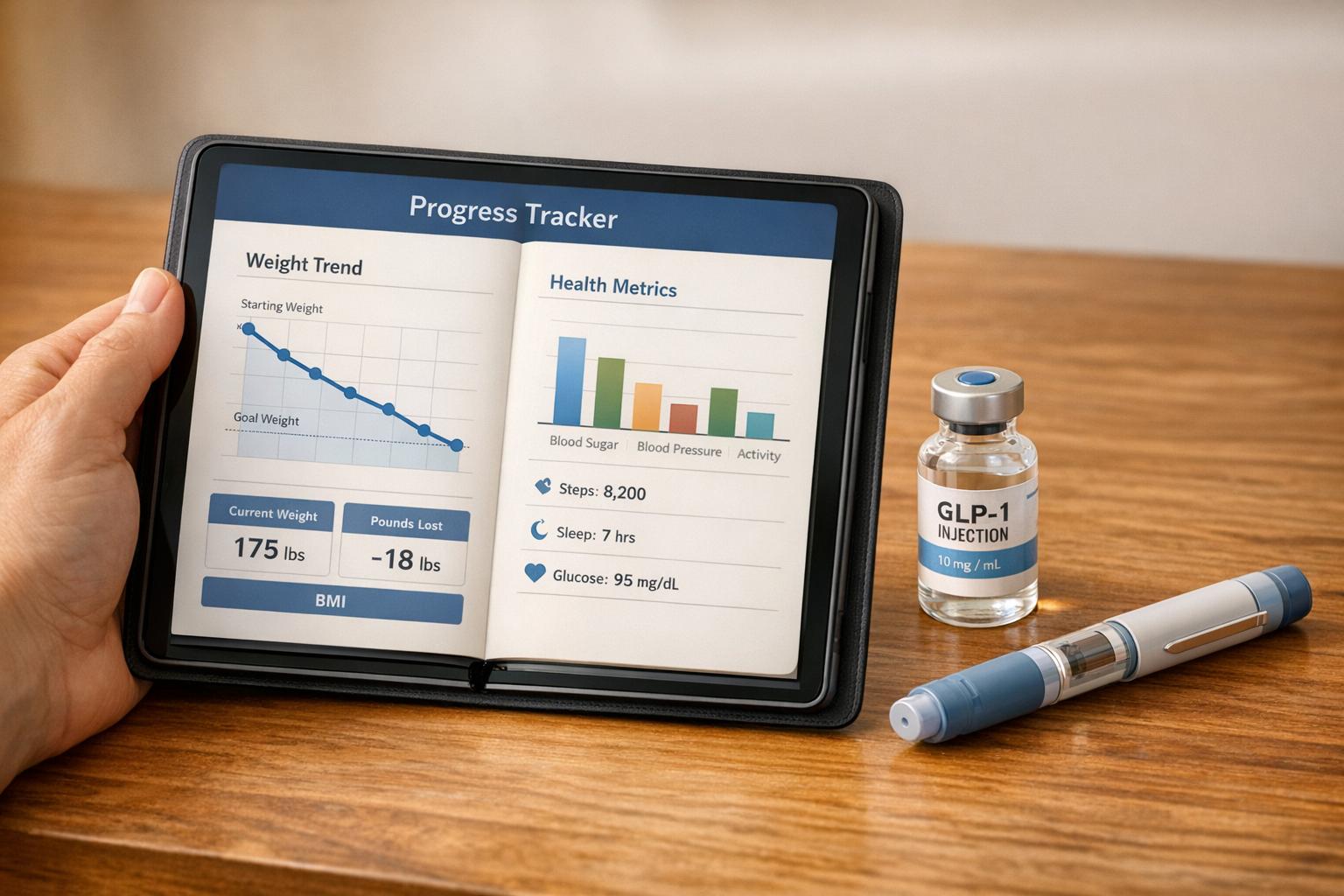
Tracking your progress with GLP-1 medications like Semaglutide or Tirzepatide is essential for effective results and long-term success. Here’s what you need to know:
- Why Track? Monitoring helps you measure weight loss, adjust dosages, and identify side effects. Research shows consistent tracking can lead to better outcomes – up to 9% weight loss in 3 months vs. 5.9% without tracking.
- What to Track? Start with baseline metrics like weight, body measurements, and lab results (e.g., HbA1c, fasting glucose). Weekly updates on weight, appetite, energy levels, and injection details are key.
- Non-Scale Wins: Notice improvements in energy, how clothes fit, or reduced joint pain – these changes matter too.
- Tools: Use apps like Shotsy for medication tracking or smart scales for automated weight logging. Regular check-ins with healthcare providers ensure you’re on the right track.
Bottom line: Consistent tracking turns guesswork into actionable insights, helping you and your provider fine-tune your treatment plan for the best results.
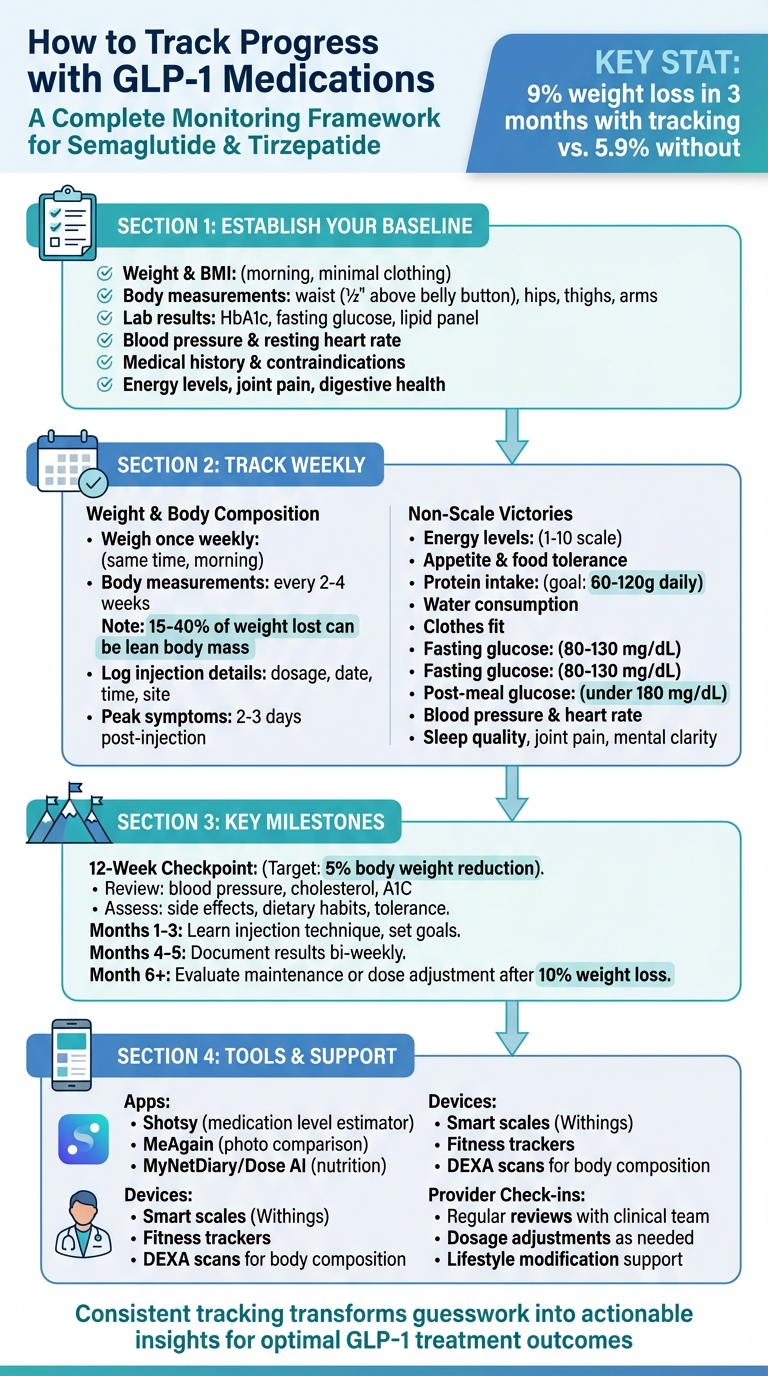
Complete GLP-1 Medication Progress Tracking Guide: What to Monitor Weekly
I’m Done Measuring Progress by the Scale!! | GLP-1 Weight Loss
Establish Your Starting Point
Before starting your GLP-1 treatment, it’s crucial to set a clear baseline to track your progress effectively.
Record Your Initial Weight and Body Measurements
Start by weighing yourself on a digital scale in the morning, right after using the bathroom. Wear minimal clothing, and ensure the scale is on a flat, firm surface. Record your weight in pounds and calculate your BMI.
Next, grab a fabric tape measure to take your body measurements. Focus on key areas: your waist (half an inch above your belly button), hips at their widest point, thighs, and upper arms. Make sure the tape is snug but not tight and stays level. Pay particular attention to your waist circumference – it’s a key indicator of visceral fat, the type of fat that surrounds your organs and poses health risks.
For a more detailed analysis, consider getting a DEXA scan. This method provides precise data on body composition, including visceral fat, lean muscle mass, and bone density. It’s a great way to ensure that any weight loss comes primarily from fat rather than muscle.
Document Your Health Metrics
Collect baseline lab results, including HbA1c, fasting glucose, and a full lipid panel. These numbers are essential because even a modest weight loss of 5–10% can lead to better blood sugar control and lower your risk of heart disease.
Measure and record your blood pressure and resting heart rate at different times of the day to establish a consistent baseline. Since some GLP-1 medications can affect heart rate, these readings will help your care team monitor any changes during your treatment.
"Ensuring safety and appropriate rate of weight loss is always a concern among healthcare providers who are remotely monitoring patients on GLP1 medication. Without having patients come into a physical clinic, there hasn’t been a means of checking health metrics, such as weight and blood pressure, in a way that they can be easily transferred into their electronic medical record for trending over time." – Kristin Baier, MD, VP of Clinical Development, Calibrate
Lastly, document your medical history, including any conditions that may contraindicate treatment (e.g., MTC, MEN2). Note additional factors like energy levels, joint pain, and digestive health – these non-scale indicators can provide valuable insights into your progress.
With these baseline metrics in place, you’ll be ready to track weekly changes and assess the effectiveness of your treatment.
What to Track Each Week
Weekly tracking plays a key role in recognizing patterns, understanding what’s effective, and addressing potential issues before they escalate.
Track Weight and Body Composition
Weigh yourself once a week at the same time – ideally in the morning, right after using the bathroom and before eating. This helps eliminate the daily fluctuations caused by water retention, meals, or hormonal changes. Record your weight in pounds and focus on trends over time rather than individual weigh-ins.
Update body measurements every 2–4 weeks, focusing on key areas like your waist, hips, thighs, and arms. Even if the scale doesn’t show much movement, you may notice inches lost, especially if you’re building muscle through exercise.
If possible, use tools like bioelectrical impedance or periodic DEXA scans to determine whether your weight loss comes from fat or muscle. Research shows that lean body mass can make up 15% to 40% of total weight lost during GLP-1 therapy. Keeping an eye on body composition ensures you’re maintaining muscle, which is vital for a healthy metabolism and long-term weight management.
"If we see that pounds are going down but their body fat percentage is staying the same and their muscle mass is decreasing, we can modify lifestyle components such as their type and frequency of exercise and food intake." – Kristin Baier, MD, VP of Clinical Development, Calibrate
Log injection details like dosage, date, time, and injection site, while noting any peak symptom days (usually two to three days post-injection). Rotating injection sites is key to avoiding lipohypertrophy (skin lumps) that could affect how your medication is absorbed.
In addition to measurements and numbers, pay attention to how you feel on a daily basis.
Record Non-Scale Improvements
The scale is just one part of the story. Non-scale victories (NSVs) can highlight progress that weight alone might not show.
Track your energy levels daily on a scale of 1 to 10, and note functional improvements. For example, can you climb stairs more easily, play with your kids longer, or cut back on caffeine without feeling drained?
Monitor your appetite and food tolerance. GLP-1 medications reduce hunger and slow digestion, so take note of which foods cause discomfort or nausea, especially as your dosage changes. Keep a log of your daily protein intake (aim for at least 60g) and water consumption (in ounces). Many people unknowingly eat 30% to 50% less protein than recommended, which can affect muscle preservation and energy levels.
Notice how your clothes fit. Feeling like your jeans are looser or needing to tighten your belt by an extra notch can be clear signs of progress. Taking progress photos every four weeks, from consistent angles and lighting, can also reveal changes that the scale might not capture.
Track broader health improvements. If you’re managing type 2 diabetes, record your fasting glucose levels (targeting 80–130 mg/dL) and post-meal readings (ideally under 180 mg/dL) as advised by your healthcare provider. Keep an eye on blood pressure and heart rate as well, since weight loss may lead to adjustments in your other medications. Even losing 5% to 10% of your body weight can improve blood sugar control and lower the risk of heart disease.
"Non-Scale Victories (or NSVs) are the often-overlooked signs that your body, your mindset, and your health are changing for the better." – West Texas Bariatrics
Document changes in sleep, joint pain, and mental clarity. These subtle but meaningful improvements reflect progress in your overall health. Whether you use a journal or a tracking app, recording these observations helps provide a more complete picture of your journey for both you and your healthcare provider.
sbb-itb-e2779c3
Tools and Resources for Tracking Progress
Keeping track of your progress is easier than ever with the help of modern tools and apps. These resources can transform your observations into actionable steps, helping you monitor everything from medication schedules to nutrition, side effects, and changes in your body. Many of these tools work seamlessly with the strategies already discussed.
Tracking Apps and Devices
There are apps specifically designed for users of GLP-1 medications like semaglutide and tirzepatide. For instance, Shotsy includes a medication level estimator, which visualizes how much of the drug remains in your system based on its half-life. This can help you anticipate when side effects like nausea might peak – usually two to three days after an injection. Another app, MeAgain, uses photo overlays to compare your current progress photos with earlier ones, highlighting subtle changes in body composition that a scale might miss.
For nutrition tracking, apps like MyNetDiary and Dose AI can help you keep an eye on meal timing and macronutrient intake. A key goal is to aim for 80 to 120 grams of protein daily, which supports muscle preservation during weight loss.
"There’s a real opportunity and need to provide free nutrition guidance and content to educate a growing population of people accessing GLP-1 medications for weight loss so they have long-term, sustainable outcomes." – Mike Fisher, CEO, MyFitnessPal
Smart devices like wearables and scales that sync with platforms like Apple Health or Google Fit can further simplify tracking. For example, Withings smart scales automatically log your weight, while fitness trackers monitor steps, sleep quality, and heart rate. These metrics provide a fuller picture of your overall health beyond just the number on the scale.
While digital tools are a great asset, personalized support from healthcare providers can take your progress tracking to the next level.
Personalized Support with TrimRX Check-Ins

TrimRX offers unlimited check-ins with clinical experts to guide you through every stage of your journey, from the first month to beyond six months. These sessions allow you to review your bi-weekly results with your provider team, helping identify which lifestyle changes are working and where tweaks might be needed. This tailored approach ensures that your medication dosage, nutrition plan, and exercise routine align with your progress.
The program follows a structured roadmap that adapts to your needs:
- Months 1–3: Focus on learning how to use the injection pen and setting both short-term and long-term health goals.
- Months 4–5: Track momentum by documenting results every two weeks.
- Month 6 and beyond: After achieving at least 10% body weight loss, your provider team will help you decide whether to maintain your current dose, adjust it, or transition to a maintenance phase.
"Upon achieving your target weight, our team will collaborate with you to determine the optimal treatment strategy for transitioning to a weight maintenance phase. This may involve a dose reduction or complete discontinuation of medication." – Trim
These check-ins also provide clinical support to address challenges like side effects. By offering precise, evidence-based adjustments, TrimRX ensures you stay on track, even when progress slows or obstacles arise.
Review and Adjust Your Goals with Your Provider
As you track your weekly progress, it’s essential to revisit and fine-tune your treatment plan regularly. GLP-1 treatment isn’t a "set it and forget it" approach – it thrives on collaboration with your healthcare provider. Regular check-ins allow your provider to assess progress, monitor key health metrics, and make any necessary adjustments to ensure your treatment stays effective.
Evaluate Progress at Key Milestones
The 12-week mark is a pivotal moment in your treatment journey. By this point, many individuals on GLP-1 therapies achieve at least a 5% reduction in body weight. Hitting this milestone suggests the medication is working as intended. If you’ve reached this benchmark, your provider may decide to maintain your current dosage or tweak it for better results. On the other hand, if progress has stalled, they’ll help identify potential roadblocks – whether it’s side effects, dietary habits, or how well you’re tolerating the medication.
In addition to weight loss, it’s important to review other health indicators like blood pressure, cholesterol levels, and A1C. GLP-1 medications can positively impact these markers, offering broader health benefits.
"Ideally, we want patients to lose adipose tissue and preserve their lean body mass. Monitoring body composition over time is crucial, as changes and trends can provide valuable insights into a patient’s health status."
Research backs up this focus on body composition. For example, one study revealed that 40% of the weight lost by patients on weekly semaglutide injections came from lean body mass, with about one-third of that being muscle. This underscores the importance of tracking muscle preservation as part of your overall health strategy.
Adjust Medication Dosage and Lifestyle Habits
Your provider may recommend changes to your medication dosage based on your progress and any challenges you’ve encountered. For instance, if you’re experiencing severe nausea or gastrointestinal discomfort, they might lower your dose or switch you to a different GLP-1 medication.
"If nausea is intolerable, reduce the dose or switch medications."
It’s also common for weight loss to plateau at certain points – such as around 20 weeks with liraglutide or 68 weeks with semaglutide. When this happens, the medication often shifts from being a tool for weight loss to one for weight maintenance. Your provider will work with you to decide whether to continue at your current dose, make adjustments, or begin tapering off the medication.
"We see much greater success when lifestyle changes are part of the plan."
Lifestyle adjustments can make a big difference. For example, increasing your daily protein intake to 80–120 grams can help preserve muscle mass, while adding more fiber to your diet can address constipation, a common side effect of slowed digestion. These small but meaningful changes can enhance the effectiveness of your treatment and improve your overall well-being.
Conclusion
Monitoring your progress with GLP-1 therapy isn’t just about watching the scale; it’s about understanding the full picture of how your body is responding. By keeping consistent records, you move from guessing to making precise, informed decisions alongside your healthcare provider. This data-driven approach not only supports adjustments in dosage and lifestyle but also mirrors the success seen in clinical trials, helping you tailor the therapy to your unique needs.
For example, while about 86.4% of participants in major semaglutide trials achieved at least a 5% weight reduction, your journey will reflect your own body’s timeline. Some weeks might bring noticeable changes on the scale, while others may reveal progress in how your clothes fit, improved energy levels, or better blood pressure readings. These are all meaningful wins, even if they don’t show up as a number on the scale.
Sticking to consistent tracking habits, especially at critical points like the 12-week milestone, gives you and your provider the insight to make thoughtful adjustments. Each entry you document helps create a roadmap for long-term, sustainable success.
"It’s important to remember that everyone’s weight loss journey is different and shouldn’t be compared to someone else’s." – Claudia Guepet, FNP-C, Rejuvime Medical
As you approach the end of your treatment cycle, consider tracking beyond your initial goal. Long-term success with GLP-1 medications depends on regular monitoring, staying in touch with your provider, and adapting your approach as your body evolves. By aligning your tracking efforts with ongoing provider check-ins, you’re setting the stage for lasting improvements. Be patient, celebrate every milestone, and trust that the information you’re gathering today is laying the foundation for a healthier tomorrow.
FAQs
What are the best ways to track progress beyond the scale while using GLP-1 medications?
Tracking your progress beyond just the numbers on the scale offers a more complete picture of your health improvements while using GLP-1 medications. Look out for non-scale victories like:
- Feeling more energetic throughout the day
- Enjoying better, more restful sleep
- Experiencing sharper mental focus
- Noticing clothes fitting more comfortably
- Easing of joint pain or physical discomfort
- Seeing positive changes in your skin
You can also celebrate fitness achievements, like walking longer distances, lifting heavier weights, or simply feeling stronger in daily activities. Taking progress photos is another great way to visually document your journey. These signs often highlight real, lasting health changes – even when the scale isn’t moving as fast as you’d hoped.
What health metrics should I track while using GLP-1 medications for weight loss?
When using GLP-1 medications for weight loss, keeping track of certain health metrics is crucial to ensure you’re progressing safely and effectively. Here are a few key areas to monitor:
- Weight: Regularly recording your weight helps you see how close you are to reaching your goals.
- Blood glucose levels: If you have diabetes or prediabetes, tracking your blood sugar ensures the treatment is working as intended and remains safe.
- Cardiovascular health: Monitor your blood pressure and heart rate, as these can shift with medication use and weight loss.
- Side effects: Be mindful of any side effects like nausea or digestive changes and share these with your healthcare provider.
To stay organized, consider using tools like a digital app, a journal, or a spreadsheet to log your data. Regular consultations with your healthcare provider or joining a structured program, such as those from TrimRX, can offer additional guidance and help you maintain steady progress.
When should I adjust my GLP-1 medication dosage?
If you find your weight loss or appetite control stalling while on GLP-1 medication, it might be time to adjust your dosage. However, any changes should be made under the careful guidance of your healthcare provider. They’ll evaluate your progress, monitor for side effects, and determine if a gradual increase in dosage could help improve your results while keeping safety a priority.
Regular check-ins and blood tests play a key role in finding the right dose. These follow-ups help ensure that your appetite remains managed and your weight loss stays on track without unwanted side effects. Always consult your healthcare provider before making any adjustments to your medication.
Related Blog Posts

Transforming Lives, One Step at a Time
Keep reading

China’s Supreme Court Upholds Semaglutide Patent for Novo Nordisk
China’s Supreme People’s Court upholds Novo Nordisk’s semaglutide compound patent, supporting IP protection.

Over 600,000 Californians Risk Losing Access to GLP-1 Weight-Loss Drugs
California’s Medi-Cal will stop covering GLP-1 weight-loss drugs for weight-loss-only prescriptions, effective Jan. 1, 2026.

Weight-Loss Pill Approval Likely to Prompt Overhaul of Packaged Food and Fast-Food Products
FDA approval of GLP-1 weight-loss pills may prompt food makers and restaurants to shift to high-protein, smaller-portion products.


